


Round Brushes
-
-
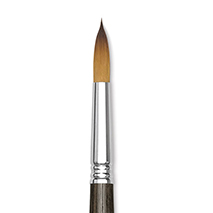
 Princeton Series 4050 Heritage Synthetic Sable Brushfrom ₹465 to ₹6860
-

-
Sale

-

-
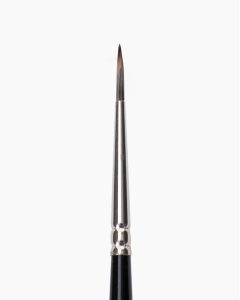
 Escoda Versatil Synthetic Kolinsky Sable Hair Brushfrom ₹870 to ₹4270
-

-


Shop India's Widest Range of Round Paint Brushes
The round brush is the most versatile brush shape an artist can own — pressed flat it makes a broad stroke, lifted to the tip it draws a fine line, loaded with colour it holds a substantial paint reserve. Art Lounge stocks round brushes from the brands Indian watercolourists, acrylic painters, and oil painters actually reach for — five Princeton series (Heritage, Aqua Elite, Neptune, Imperial, Catalyst), two Winsor & Newton ranges (Cotman and Galeria), five Escoda ranges (Perla, Prado Tame, Primera, Ultimo, natural Chungking bristle), the complete Art Essentials line (Kazan squirrel, Supremo bristle, Oyster synthetic), Koh-i-noor Chongqing, Liquitex Professional Free Style, and Factis School Paintbrushes for absolute beginners. Prices from ₹38 for the entry-level Factis through ₹6,860 for premium Princeton Heritage. Every brush ships fresh from authorised distributors with a price-match guarantee and 2–5 day delivery across India.
Related categories on Art Lounge
- Flat Brushes — for washes, edges, and rectangular strokes
- Filbert Brushes — the hybrid flat-round shape
- Mop Brushes — oversized soft rounds for large washes
- Liner Brushes — long thin rounds for fine-line detail
- Natural Hair Watercolour Brushes — sable, squirrel, and specialty natural hair
- Synthetic Watercolour Brushes — by-medium brush listings
- Natural Hair Acrylic Brushes — bristle brushes for acrylic work
- Synthetic Acrylic Brushes — Taklon and nylon for acrylics
- Natural Hair Oil Brushes — hog bristle for oils
- Acrylic Brush Sets — starter and professional sets
- Watercolour Brush Sets — curated watercolour collections
Round Brush Prices in India — Brand & Series
Round brush pricing reflects hair type (synthetic vs natural, with Kolinsky sable and pure squirrel at the top), country of origin, and series tier within each brand. Here's what the full range on Art Lounge actually costs:
| Brand / Series | Hair type | Price range | Best for |
|---|---|---|---|
| Factis School Paintbrush | 70% goat hair / 30% synthetic, short handle | ₹38 – ₹314 | School projects, children, first brushes |
| Art Essentials Oyster | White synthetic hair | ₹155 – ₹599 | Student watercolour, acrylic practice |
| Koh-i-noor Chongqing (Silver) | Hog hair (bristle) | ₹165 – ₹2,035 | Oil & heavy-body acrylic |
| Princeton Series 4850 Aqua Elite | Synthetic Kolinsky Sable imitation | ₹325 – ₹3,520 | Watercolour (currently out of stock — check availability) |
| Art Essentials Supremo | White hog bristle | ₹325 – ₹1,830 | Acrylic & oil, impasto, heavy-body work |
| Winsor & Newton Cotman Watercolour | Synthetic hair | ₹340 – ₹4,365 | Watercolour — the UK's student watercolour standard |
| Art Essentials Kazan | Synthetic squirrel hair imitation | ₹425 – ₹3,500 | Watercolour — soft snap, excellent water capacity |
| Princeton Series 4750 Neptune | Synthetic squirrel hair imitation | ₹425 – ₹4,700 | Watercolour — soft, thirsty, great for loose washes |
| Princeton Series 4050 Heritage | Synthetic sable hair | ₹465 – ₹6,860 | Watercolour & acrylic — the all-rounder professional |
| Princeton Series 6400 Catalyst | Polytip synthetic bristle | ₹490 – ₹5,000 | Acrylic & oil — alternative to hog bristle |
| Winsor & Newton Galeria | Synthetic hair, long handle | ₹510 – ₹2,875 | Acrylic — the standard acrylic long-handle round |
| Princeton Series 6600 Imperial | Synthetic mongoose hair imitation | ₹610 – ₹4,885 | Oil & acrylic — spring of bristle with smoother feel |
| Liquitex Professional Free Style | Synthetic | ₹699 – ₹1,049 | Acrylic — Liquitex's mid-range pro-quality synthetic |
| Escoda Perla | Synthetic white Toray hair | ₹710 – ₹4,410 | Watercolour, acrylic & gouache — Spanish-made, soft snap |
| Escoda Prado Tame | Synthetic sable hair | ₹745 – ₹5,930 | Watercolour — closest synthetic to red sable performance |
| Escoda Primera Teijin | Synthetic Teijin hair | ₹760 – ₹6,525 | Oil & acrylic — professional Japanese synthetic |
| Escoda Ultimo Tendo | Synthetic squirrel hair imitation | ₹890 – ₹5,410 | Watercolour — Escoda's Tendo synthetic squirrel flagship |
| Escoda Natural Chungking | Natural hog bristle | ₹1,375 – ₹5,620 | Oil painting (currently out of stock — check availability) |
Prices shown are per single brush; sets are priced separately. Verify live pricing on the category page.
Round Brush Hair Types — What Changes
Hair type is the biggest factor in how a round brush behaves. Two brushes of the same size and shape can feel completely different depending on the hair — here's what each type does:
| Hair type | Character | Medium | Our ranges |
|---|---|---|---|
| Synthetic Kolinsky sable | Snappy, crisp point, holds water well — the gold-standard synthetic for watercolour | Watercolour | Princeton Aqua Elite (4850) |
| Synthetic sable | Springy, holds a point, good water reservoir — classical all-rounder | Watercolour & acrylic | Princeton Heritage (4050), Escoda Prado Tame |
| Synthetic squirrel | Soft, thirsty (massive water capacity), less snap — ideal for loose washes | Watercolour | Princeton Neptune (4750), Art Essentials Kazan, Escoda Ultimo Tendo |
| Synthetic mongoose | Firmer spring than sable, smoother feel than bristle — intermediate stiffness | Oil & acrylic | Princeton Imperial (6600) |
| Polytip synthetic bristle | Tapered synthetic mimicking split-tip natural bristle — holds heavy-body paint well | Acrylic & oil | Princeton Catalyst (6400) |
| Synthetic Toray / Teijin | Japanese synthetic fibres, fine taper, good snap — engineered specifically for water media | Watercolour, acrylic, gouache | Escoda Perla, Escoda Primera |
| Synthetic nylon / Taklon | Firm, durable, affordable; holds thicker paints well | Acrylic, all media | W&N Galeria, W&N Cotman, Liquitex Free Style, Art Essentials Oyster |
| Natural hog bristle | Stiff, split-tipped, holds heavy-body paint | Oil & heavy-body acrylic | Escoda Chungking, Koh-i-noor Chongqing, Art Essentials Supremo |
| Goat / synthetic blend | Soft with some structure; inexpensive learning brush | School / learning | Factis School Paintbrush |
Natural pure Kolinsky sable is still considered the ultimate for watercolour — but modern synthetic-Kolinsky (Princeton Aqua Elite, Escoda Prado Tame) is now genuinely close enough that most serious watercolourists work with synthetic and reserve natural sable for signature pieces. Synthetic also costs a fraction of natural Kolinsky and is the only ethical option for artists avoiding animal-derived materials.
Round Brushes by Medium — Watercolour, Acrylic, Oil
Brushes for different paints are different products — handle length, hair stiffness, and ferrule size all change based on medium:
Watercolour round brushes have short handles (because you paint at a desk, not an easel) and soft, pointed tips with high water capacity. The best watercolour rounds hold a snappy point even when wet — the bead of water should bead cleanly at the tip, not flop. Our watercolour-first round brushes: Princeton Aqua Elite, Princeton Heritage, Princeton Neptune, W&N Cotman, Art Essentials Kazan, Escoda Prado Tame, Escoda Perla, Escoda Ultimo Tendo.
Acrylic round brushes typically have long handles (because you paint at an easel and distance helps composition) and firmer tips — acrylic is heavier than watercolour and needs more spring to push the paint. Our acrylic-first round brushes: W&N Galeria, Liquitex Professional Free Style, Princeton Heritage, Princeton Catalyst, Princeton Imperial, Escoda Primera Teijin, Art Essentials Oyster.
Oil round brushes have long handles and stiff hair (usually natural hog bristle or synthetic imitation) to handle the thick viscosity of oil paint. Hair stays stiff even when loaded with solvent. Our oil-first round brushes: Escoda Chungking (natural bristle), Koh-i-noor Chongqing, Art Essentials Supremo, Princeton Catalyst, Princeton Imperial, Escoda Primera Teijin.
Many round brushes work across multiple media — Princeton Heritage is labelled "watercolour & acrylic", Escoda Primera works in acrylic and oil. But a brush sold as "watercolour round" on a short handle should not be used for oil painting; the short handle forces you to paint too close to the canvas, and the soft synthetic hair will be damaged by repeated solvent cleaning.
Round Brush Sizes — The Number System
Round brushes are numbered by size, typically 000, 00, 0, 1, 2, 4, 6, 8, 10, 12, 14, 16, 18, 20. Larger number = larger brush. The scale is not standardised across brands — a Princeton #6 is not the same diameter as an Escoda #6, and sizes are typically smaller in premium brands. Use the number as a guideline, not an absolute measurement.
Common round brush sizes and their use:
- 000, 00, 0 — micro-detail, miniature painting, eyes, fine lines
- 1, 2, 4 — detail work, small shapes, letters, controlled stroke
- 6, 8 — the "all-rounder" sizes; most Indian art schools' starter sets are built around 6 or 8
- 10, 12 — medium washes, larger controlled strokes
- 14, 16, 18, 20 — large washes, sky / background work, wet-on-wet watercolour
Most serious painters own a small detail round (#2 or #4) and a medium all-purpose round (#8 or #10) as baseline kit, then add larger sizes as needed. A single well-chosen size-8 round brush of decent quality beats a cheap 12-piece set where no brush is actually good at anything.
Round Brush vs Flat Brush — What's the Difference?
Round and flat are the two fundamental painting brush shapes and they do complementary things.
A round brush has a conical shape that comes to a point. Press it flat and it makes a broad stroke roughly as wide as the brush diameter; lift to the tip and it draws a line as fine as the hair point. Strength: versatility — one round brush handles broad shapes and fine detail. Weakness: it doesn't make a clean straight edge on its own.
A flat brush has a rectangular cross-section with a square edge. It produces consistent parallel strokes of a fixed width (the width of the brush), and the chisel edge makes clean straight lines. Strength: washes and edges — clean lines, broad even coverage. Weakness: less versatile for detail.
Most painters own both shapes in multiple sizes — a round for organic shapes and detail, a flat for washes and architecture. Our Flat Brushes category has the matching range from the same brands. For a hybrid shape that combines some of both, see Filbert Brushes.
All Round Brush Brands We Stock — Detailed Guide
Princeton Round Brushes
American brush maker with the broadest round-brush range on Art Lounge — five distinct series engineered for different media and techniques. Princeton's specialty is high-quality synthetic hair that approaches natural performance at a fraction of the cost.
- Princeton Series 4050 Heritage (₹465–₹6,860) — synthetic sable, watercolour & acrylic all-rounder. The single most versatile Princeton round; our recommended "first serious round brush" if you don't know which medium you'll settle into.
- Princeton Series 4850 Aqua Elite (₹325–₹3,520, currently out of stock) — synthetic Kolinsky sable. Watercolour flagship. Holds a finer point than most synthetics and retains it longer.
- Princeton Series 4750 Neptune (₹425–₹4,700) — synthetic squirrel imitation. Enormous water capacity; ideal for loose wet-on-wet watercolour and large washes.
- Princeton Series 6400 Catalyst (₹490–₹5,000) — Polytip synthetic bristle; tapered filaments mimic split-tip natural bristle for holding acrylic and oil.
- Princeton Series 6600 Imperial (₹610–₹4,885) — synthetic mongoose. Firmer than sable with smoother feel than bristle; popular for oil and heavy-body acrylic.
Winsor & Newton Round Brushes
British brand with more than 250 years in artists' materials. Two round-brush ranges on Art Lounge covering student to intermediate:
- Winsor & Newton Cotman Watercolour (₹340–₹4,365, on sale) — synthetic hair, short handle, the UK's standard student-watercolour round. Good snap, good point retention, excellent value.
- Winsor & Newton Galeria (₹510–₹2,875) — synthetic, long-handled, designed specifically for acrylic. Firmer than Cotman; matches well with Galeria acrylic paints.
Escoda Round Brushes
Spanish brush maker from Barcelona, hand-making brushes since 1933. Cult following among serious watercolourists globally. Five ranges stocked:
- Escoda Perla (₹710–₹4,410) — synthetic white Toray; soft snap, pointed tip, water-holding capacity. Versatile across watercolour, acrylic and gouache.
- Escoda Prado Tame (₹745–₹5,930) — synthetic sable; Escoda's closest-to-natural-red-sable synthetic, engineered for watercolour.
- Escoda Primera Teijin (₹760–₹6,525) — synthetic Teijin hair for oil and acrylic. Long-handled, resilient to solvent.
- Escoda Ultimo Tendo (₹890–₹5,410) — synthetic squirrel imitation; the soft, thirsty watercolour flagship.
- Escoda Natural Chungking (₹1,375–₹5,620, currently out of stock) — genuine hog bristle, long-handled, for oil painting.
Art Essentials Round Brushes
Indian-market-focused brand with strong positioning at student and intermediate price points. Three ranges, each for a different medium:
- Art Essentials Oyster (₹155–₹599) — white synthetic, the most accessible "real" artist round brush on the site. Works for watercolour and acrylic student-level.
- Art Essentials Kazan (₹425–₹3,500) — synthetic squirrel imitation. The most affordable way into the "soft-thirsty-watercolour-brush" category.
- Art Essentials Supremo (₹325–₹1,830) — white hog bristle for acrylic and oil.
Koh-i-noor Hardtmuth Round Brushes
Czech art-supplies heritage brand. Koh-i-noor Chongqing (Silver Collection, ₹165–₹2,035) — hog-hair bristle brushes for oil and acrylic. Affordable natural bristle option for oil painters on an intermediate budget.
Liquitex Round Brushes
American acrylic-paint specialist. Liquitex Professional Free Style Traditional (₹699–₹1,049) — synthetic round brushes engineered specifically for acrylic work. Tighter price range than full series ranges; a focused choice when you know you're painting acrylic and want brushes matched to Liquitex paints.
Factis School Paintbrush
Spanish manufacturer. Factis School Paintbrush (₹38–₹314) — 70% goat hair / 30% synthetic on a short handle. Designed for schools, art classes, and children. Entry-level — not a brush for serious painting, but a completely reasonable starting point for first-time painters, classroom use, or kids' projects. ₹38 makes it the cheapest brush on Art Lounge by a wide margin.
Brands We Don't Stock — and What to Use Instead
If you've been shopping round brushes from the mass-market Indian brands, here's the equivalent in our range:
- Camel / Camlin Round Brushes — not stocked. Camel is India's heritage artist brush brand. Closest substitute at similar price: Art Essentials Oyster (₹155) for synthetic student work, Factis School Paintbrush (₹38) for the absolute-entry price point.
- Brustro round brushes — not stocked. Closest substitute: Art Essentials Kazan (₹425) for synthetic squirrel watercolour, Liquitex Free Style (₹699) for acrylic.
- Mont Marte round brushes — not stocked. Substitute: Art Essentials Oyster or W&N Cotman for watercolour.
- Faber-Castell round brushes — not stocked. Substitute: Art Essentials Oyster, Factis School Paintbrush, or step up to W&N Cotman.
- Artist's Den / ArtRight / Chrome — not stocked (Amazon / JioMart own-label brands). Substitute: Art Essentials Oyster or W&N Cotman.
The substitution strategy is: for school / budget, Factis or Art Essentials Oyster; for intermediate practice, step into W&N Cotman / Galeria; for serious work, Princeton Heritage or Escoda Prado Tame.
How to Choose Your First Round Brush
| You are… | Start with |
|---|---|
| A school student or child learning to paint | Factis School Paintbrush (₹38) — a #6 or #8 round |
| An intermediate student working in watercolour | W&N Cotman (₹340) or Art Essentials Oyster (₹155) — #6 and #10 |
| A serious watercolourist buying their first pro round | Princeton Heritage #8 (mid-range) or Escoda Perla #6 |
| Doing loose wet-on-wet washes (big, thirsty brush) | Princeton Neptune (4750) or Escoda Ultimo Tendo in #12+ |
| Painting in acrylic on canvas | W&N Galeria (long-handle) or Liquitex Free Style — #6 and #10 |
| Painting in oil (traditional or water-mixable) | Escoda Chungking bristle or Koh-i-noor Chongqing — #6 and #10 |
| Doing fine-line illustration or miniature | Princeton Aqua Elite or Escoda Prado Tame — #000, #0, or #2 |
| Avoiding animal-derived materials (vegan brushes) | Any Princeton / Escoda synthetic range — all are cruelty-free |
Starter round brush kit most teachers suggest: one small detail round (#2 or #4) and one medium all-purpose round (#8 or #10) in your chosen medium. A single high-quality #8 beats a 12-piece set of cheap brushes. Add larger sizes and specialty shapes (mop, rigger) only as techniques demand them.
Round Brush Care — Make Brushes Last
A good round brush should last 5+ years with proper care. The single most damaging habit is leaving a brush standing on its hair (in a water jar, for example) — permanently bends the hair, destroys the point. Other essentials:
Rinse during use. Don't let paint dry on the hair. For watercolour, rinse in clean water after each colour change. For acrylic, rinse frequently — dried acrylic destroys brushes in hours. For oil, keep a solvent jar nearby and swish the brush between colours.
Wash after every session with mild soap (or a dedicated brush cleaner from our Brush Cleaners range). Work the soap into the hair at the ferrule, rinse clean, gently shape the hair back to a point with your fingers, and lay the brush flat to dry.
Store flat or hair-up. Never hair-down. Brush rolls, jars with hair pointing up, or flat storage all work. Wet brushes should be laid flat so water drains away from the ferrule — water trapped at the ferrule eventually loosens the glue and the hair falls out.
Protect the point. When shipping or travelling, cover the hair with the plastic cap the brush came with, or use a brush roll that protects the tips. A bent hair on a round brush means the whole brush is less useful — the point won't come back sharp.
Why Buy Round Brushes from Art Lounge?
Premium round brushes (Princeton, Escoda, Winsor & Newton) are commonly counterfeited in India — fake Princeton 4050 Heritage brushes circulate through unauthorised channels, and the difference is visible the first time you paint with them: hair doesn't hold a point, ferrules are loose, handles are weight-mismatched. Art Lounge sources only from authorised distributors, so every brush is the genuine product with the performance characteristics the manufacturer intends. Our range is genuinely the widest round-brush catalogue in India — from the ₹38 Factis School Paintbrush through to ₹6,525 Escoda Primera Teijin — covering every medium, every price bracket, every hair type. Pricing is competitive against Amazon and Flipkart on identical SKUs with a price-match guarantee. Delivery reaches major cities in 2–5 business days in packaging designed to protect hair tips. If you want advice — whether synthetic-squirrel vs synthetic-sable will suit your style, or what size best matches your typical painting scale — our team works with these brushes daily.



