


Tracing Paper


Shop India's Curated Range of Artist-Grade Tracing Paper
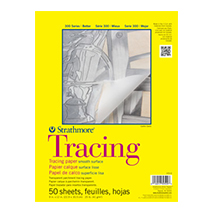
Tracing paper — also called trace paper, tracing sheet, translucent paper, calque paper, or in Hindi ट्रेसिंग पेपर / khaka paper (खाका — meaning template or outline) — is a thin, semi-transparent paper that lets you see the image underneath so you can copy, transfer, refine, or layer drawings on top. Art Lounge stocks a curated selection of artist-grade tracing paper from three of the most-recognised international brands taught in art and design schools: Winsor & Newton (UK — Light Grain 70 GSM glued pads), Strathmore (USA — 300 Series Tracing Pad in tape-bound and spiral-bound formats, 41 GSM transparent white), and Speedball / Bienfang (USA — the deepest range on this page, including the iconic Sketching & Tracing rolls in white and canary yellow at 29 GSM, the Parchment 100 40 GSM pad, and the Parchment 29 GSM roll for architectural overlay work). Formats run from 1 yd / 5 yd / 20 yd / 36 yd rolls for layout, drafting and pattern work, through 9×12 inch and A4 / A3 pads and glued blocks for studio sketching and tracing. GSM weights span 29 (ultra-thin parchment), 40 (mid-weight tracing), and 70 (light-grain heavyweight) — covering the full functional range from quick layout overlays through finished tracing-paper artwork that will take ink, marker, pencil, charcoal and even light watercolour washes. Prices currently start at ₹745 for the smallest in-stock Bienfang Sketching & Tracing roll and run to ₹3,665 for the largest 36-yard architectural roll. Every paper ships from authorised distributors with a price-match guarantee and 2–5 day pan-India delivery. (Also searched as tracing paper, trace paper, tracing sheet, tracing paper roll, tracing paper for drawing, yellow tracing paper, white tracing paper, tracing paper a4, tracing paper a3, parchment tracing paper, translucent paper, khaka paper, ट्रेसिंग पेपर, plus the Indian-keyboard mishears tressing paper, trasing paper, dressing paper, tracking paper, tresing paper, tracing papaer — all map to this page.)
Looking for printable tracing worksheets, preschool tracing sheets, or kids' alphabet tracing pages? Wrong page. Those are printable templates (PDFs you print at home for kids to trace letters or numbers) — try a worksheets / activity-printable site like Twinkl, Education.com, or a free PDF resource. The tracing paper on this page is physical translucent art paper for adult artists, designers, architects, and pattern-makers — sold by the roll, pad, or sheet for drawing, design, sewing patterns, and architectural overlay work.
Looking for tracing paper to print on with an inkjet or laser printer? Most artist tracing paper on this page is not designed for printer use — it's too thin and too smooth to feed reliably through a typical office printer and ink will smear or bead on the surface. If you need a translucent paper that takes laser-printer toner cleanly, ask for laser printable tracing paper or vellum sheets (a heavier coated translucent grade) — these are sold by stationery and reprographics suppliers, not artist-grade retailers. Some artists do successfully print on the heavier Winsor & Newton 70 GSM through a single-sheet manual feed at the lightest paper setting — test on one sheet before committing to a print run.
Related categories on Art Lounge
- Watercolour Paper & Pads — heavyweight cotton and cellulose papers for watercolour, gouache, and ink work
- Acrylic & Oil Painting Paper — primed surfaces for acrylic and oil paint
- Drawing & Sketch Pencils — graphite pencils for drawing on tracing paper
- Charcoal Pencils — for charcoal-tracing techniques and tonal transfer
- Drawing & Archival Pens — pigment fineliners and inks compatible with tracing paper
- Dip Pens & Holders — for ink-on-tracing-paper illustration and calligraphy
Tracing Paper Price in India — Brand by Brand
Tracing paper pricing in India splits cleanly by format (roll vs pad), GSM (thinner = cheaper, heavier = pricier), bound vs unbound, and country of manufacture (UK / USA artist brands carry an import premium over Indian mass-market). Here's exactly what each tracing paper SKU on Art Lounge costs:
| Brand / Product | Format | GSM | Price | Best for |
|---|---|---|---|---|
| Bienfang Sketching & Tracing — Translucent White Roll | Roll, multiple yardages | 29 | ₹745 – ₹3,665 | Layout, design overlay, sketch development, architectural drafting |
| Bienfang Sketching & Tracing — Translucent Canary (Yellow) Roll | Roll, multiple yardages | 29 | ₹745 – ₹1,440 | The classic "yellow tracing paper" / "trace yellow" architects' overlay roll — easier on the eye than white for long sessions |
| Bienfang Parchment Tracing Paper Roll | Roll, multiple yardages | 29 | ₹1,495 – ₹2,610 | Architect / drafting overlay, master copies, repeat-pattern layout |
| Bienfang Parchment 100 Tracing Paper Pad | Glued pad, 100 sheets, multiple sheet sizes | 40 | ₹795 – ₹1,730 | Studio sketching, life drawing, design refinement, finished tracing-paper work |
| Bienfang Tracing Paper Fine Tooth Pad (9×12 in) | Pad, 50 sheets, 9×12 inch | 40 | ₹415 | Entry-tier pad for drawing classes and studio practice — currently out of stock; check live page for restock |
| Strathmore 300 Series Tracing Pad — Transparent White | Tape-bound pad, multiple sheet sizes | 41 | ₹455 – ₹1,610 | Pencil, marker, ink — the global art-school standard tracing pad; currently out of stock |
| Winsor & Newton Tracing Paper — Light Grain | Glued pad, multiple sheet sizes | 70 | ₹950 – ₹1,580 | Heavy-duty tracing — takes ink, marker, watercolour wash and erasing without buckling; the heaviest tracing paper on this page |
Pricing reflects current Art Lounge listings; some sizes within each range are currently out of stock — verify live availability on each product page. The Bienfang range carries the most format options (rolls in three GSM weights and two colours; pads in two weights and several sheet sizes).
Tracing Paper Roll vs Pad vs Sheet — Which Format to Choose
Three formats, three different jobs. Most working artists, designers and architects keep at least two of the three — a roll for layout-and-overlay work, and a pad for finished tracing-paper drawings.
| Format | Strengths | Weaknesses | Best for |
|---|---|---|---|
| Roll (yardage on a core) | Custom-cut to any length; cheapest per square inch on long jobs; doesn't restrict you to a fixed sheet size; rolls flat under weight | Needs cutting; storage takes a tube or clip; tricky on small desks until you get a system | Architects, fashion / pattern-makers, layout designers, anyone tracing larger-than-A3 originals or doing iterative overlay sketching |
| Pad (glued or tape-bound, multiple sheets) | Rigid backing for clean drawing; sheet stays flat; tear-off when finished; portable | Fixed sheet size — won't suit very large originals; cost per sheet is higher than buying roll yardage | Drawing-class students, illustrators, studio sketching, life drawing, anyone tracing originals up to A3 |
| Single sheet / loose | Cheapest entry buy; flexible — pin to a board, slide under glass, layer freely | No backing; sheets can curl or wrinkle if not stored flat | Occasional users; one-off transfer jobs; testing a new GSM before committing to a pad or roll |
Indian search habit note. The most-converting query on this page (by some margin) is "tracing paper roll" — and the second is "tracing roll". If you searched either, you're probably working larger or doing iterative overlays, in which case any Bienfang roll on this page (white, canary, or parchment) is the right pick over a pad.
GSM Explained — 29, 40 and 70 GSM Tracing Paper
GSM (grams per square metre) is the international weight standard for paper — higher GSM means thicker, heavier paper. For tracing paper specifically, GSM trades off transparency (thinner = more transparent) against durability (heavier = takes more media without buckling, supports erasing, holds wet media).
| GSM | Character | Best for |
|---|---|---|
| 29 GSM (Bienfang Sketching & Tracing rolls; Bienfang Parchment Roll) | Ultra-thin, very high transparency, lightweight, slightly delicate | Layout sketching, repeat overlays, architects, designers iterating quickly through ideas, marker / fine-line pen — the "thinking paper" |
| 40–41 GSM (Bienfang Parchment 100 Pad, Bienfang Fine Tooth Pad, Strathmore 300) | Mid-weight, balanced transparency and strength, takes more media types | Studio drawing, finished tracing-paper artwork, pencil shading, charcoal, ink, marker — the standard art-school tracing pad weight |
| 70 GSM (Winsor & Newton Light Grain) | Heavy, slightly less transparent, very durable, holds light wet media | Finished work that must take ink + light watercolour, repeated erasing, marker bleeds; the only paper here that can take a light watercolour wash without buckling |
Most artists want 40 GSM as their default. 29 GSM is for layout-and-think sketching where you'll throw the sheet away, and 70 GSM is for finished work that needs to survive ink and wash. If you're new to tracing paper, start with the Bienfang Parchment 100 Pad (40 GSM) — it covers ~80% of normal tracing-paper work.
White vs Yellow (Canary) Tracing Paper — Which Colour
Two colours show up consistently in the tracing-paper world: clear / translucent white, and the iconic canary yellow (sometimes called "yellow trace" or "yellowtrace"). The functional difference is small but real.
Translucent white (Bienfang Sketching & Tracing White, Strathmore 300, W&N) — neutral, doesn't tint your drawing, easier to scan or photograph. The default for most artists, designers, and illustrators. Black ink and graphite read cleanly; coloured pencil and marker show their true hue.
Canary yellow (Bienfang Sketching & Tracing Canary roll) — the architects' standard since the 1950s. The slight yellow tint reduces glare from white surfaces underneath in long working sessions, gives a softer contrast for pencil sketches, and traditionally signals "this is a trace / overlay, not the master drawing" in a layered architectural workflow. Architects and interior designers in particular search for this specifically — about 720–1,400 monthly searches in India alone for "yellow tracing paper" and its variants. Bienfang's canary is the one most-stocked Indian retail option for this niche; we currently stock the canary roll though sizes may be out of stock — check the live page.
If you don't have a strong preference, start with translucent white. If you spend hours on architectural overlays or your studio has glaring overhead lighting, the canary roll is genuinely easier on the eyes.
Tracing Paper for Drawing & Sketching
For pure drawing — copying a reference, transferring a sketch to a final surface, layering compositions, or working out a complex design before committing to your "good" paper — tracing paper is one of the cheapest workflow upgrades you can buy. The technique is simple: place your reference under the tracing paper; lightly outline the contour with a 2H or HB pencil; flip the tracing paper over and shade the back of the lines with a softer pencil (2B or 4B); then place the tracing paper right-side-up onto your final surface and trace the original lines with firm pressure — the graphite on the back transfers a faint outline. From there, you draw on the final surface with confidence.
Recommended grade for drawing: the Bienfang Parchment 100 Tracing Paper Pad (40 GSM) in 9×12, A4 or A3 — takes pencil, charcoal, marker, and pen cleanly without bleed-through to the next sheet, and the 100-sheet glued pad gives you a full classroom term's worth of practice. For finished tracing-paper drawings (a rendered tracing-paper portrait, an architectural elevation overlaid in ink), step up to the Winsor & Newton 70 GSM Light Grain — heavier, more forgiving of erasing, and the only paper here that handles a light watercolour wash on top of an ink line without buckling.
For graphite-shading practice or tone studies, look at charcoal pencils and graphite drawing pencils — both work cleanly on 40 and 70 GSM tracing paper. Soft 4B / 6B / 8B grades will smudge slightly on the slick tracing-paper surface (this is normal — the paper is smoother than cartridge paper); fix the drawing with a light spray of fixative if it needs to survive transport.
Tracing Paper for Sewing & Pattern Making
If you searched tracing paper for sewing, sewing pattern paper, pattern tracing paper, tracing paper for fabric patterns, or fabric tracing paper — that's a substantial slice of Indian tracing-paper search demand (combined ~30,000 monthly searches) and we'll be straight: this page does not stock the dedicated dotted-and-numbered "pattern paper" used for tailoring (sometimes sold by the metre at fabric stores or through specialised pattern-supplies retailers). What we do stock that works very well for tracing existing sewing patterns onto reusable copies:
- Bienfang Sketching & Tracing Roll (29 GSM, white or canary) — large yardage for tracing big garment pieces, robes, full-skirt patterns. Cut to length. The 36-yard roll is the budget winner for high-volume pattern-makers.
- Bienfang Parchment 100 Tracing Paper (40 GSM) — heavier, more durable for patterns you'll re-use multiple times; better resistance to ripping at notches and pin holes.
- Winsor & Newton 70 GSM Light Grain — heaviest, most durable; for master copies of patterns you'll hand-cut, pin and re-use across many projects.
Trace the original pattern with a soft 2B pencil or a fine-tip pen. Mark all notches, dart points, and grain lines clearly. The 70 GSM W&N sheet survives the most uses; the 29 GSM Bienfang roll is cheapest if you're cutting and discarding for a single project.
For dressmaker's carbon / wax transfer paper (the coloured carbon paper used to transfer pattern markings to fabric — different product entirely) you'll want a sewing-supply retailer; we don't currently stock this.
Tracing Paper for Architects & Drafting
This is the page's deepest specialism. Architects, interior designers, and structural drafters in India use tracing paper for plan overlays, design iteration, presentation prints, sun-shadow studies, and design-development sketches over CAD plots — and the format that matters most is the roll, in lengths long enough not to interrupt the workflow.
Our Bienfang Sketching & Tracing rolls (29 GSM, white or canary, in multiple yardages up to 36 yd) are the dominant product in this niche on our page — and we already rank top-3 in Google search for "tracing paper roll for architects" and similar architectural-roll long-tails. The canary yellow roll is the historical standard for architectural overlay work for the reasons explained above (glare reduction, master-vs-overlay differentiation in a layered drawing). The Bienfang Parchment Roll (29 GSM, white) suits cleaner overlays where you'll later scan or print over the trace.
Roll yardage matters for studio economics: the 36-yard roll has a per-yard cost roughly half of the smaller rolls, which adds up fast in a busy practice. Drafting tables, parallel rules, T-squares and set squares all run cleanly across 29 GSM Bienfang surfaces; the paper holds pencil, marker, fineliner and ink consistently and tears cleanly along a straightedge.
For finished presentation drawings or competition boards, step up to the Winsor & Newton 70 GSM Light Grain pad in A3 or A4 — heavier, will hold a light marker rendering without showing through, and survives multiple erasing rounds during a presentation push.
Tracing Paper vs Butter Paper vs Parchment Paper — Different Products
Three commonly-confused translucent papers, three different jobs.
| Paper | What it actually is | Use for |
|---|---|---|
| Tracing paper | Specifically engineered translucent art paper, calendered (heavily smoothed) and sometimes acid-treated for transparency | Drawing, design, architectural overlay, sewing patterns, transferring images — the artist-grade product on this page |
| Butter paper (also called greaseproof paper) | Non-stick, grease-resistant baking / cooking paper made primarily for kitchen use | Wrapping butter and sandwiches; lining baking trays. Will sometimes work as emergency tracing paper for very basic outline tracing — but it's smoother, slightly waxy, and pencil / pen do not adhere as well as on real tracing paper. Erasing it tears the surface. Not a substitute for serious tracing work. |
| Parchment paper | Two meanings, often confused: (a) silicone-coated baking parchment (kitchen) — same family as butter paper, even less suited to tracing; (b) artist-grade "parchment tracing paper" (the Bienfang Parchment 100 / Parchment Roll on this page) — a specific tracing-paper grade with a slightly fibrous, semi-opaque character | Confusing branding aside, the artist-grade Bienfang Parchment products on this page are tracing paper — engineered for pencil, ink, and marker. Kitchen parchment paper is not. |
| Vellum / drafting vellum | Heavier translucent paper (typically 60–110 GSM), often calendered or treated, holds ink and toner extremely well | Technical drafting where the work will be reproduced photographically or printed; less common in fine-art workflows. Not currently stocked on Art Lounge — closest substitute is W&N 70 GSM Light Grain. |
Short version. If you searched "butter paper for drawing" or "butter paper for tracing" — what you actually want is real tracing paper. Butter paper is a kitchen product that can be pressed into emergency service for very light work, but a pad of Bienfang or W&N tracing paper is barely more expensive and works dramatically better.
Tracing Paper Brands We Stock — Detailed Guide
Speedball / Bienfang
American art-paper manufacturer, the deepest tracing-paper range on Art Lounge — five distinct SKUs covering rolls (29 GSM in white, canary yellow, and parchment) and pads (40 GSM Parchment 100, 40 GSM Fine Tooth 9×12). Bienfang's defining strength is roll yardage at sensible prices: their Sketching & Tracing rolls in white and canary are the standard architectural-overlay rolls in the global market, and we stock them in lengths up to 36 yards. The Bienfang Parchment 100 Pad is the everyday studio default for finished tracing-paper drawings — 100 sheets per pad at 40 GSM, takes pencil, ink, marker and light wash. The Bienfang Parchment Roll is the cleanest 29 GSM roll for high-quality overlay and overdrawing. (Note: the canary roll, the 9×12 Fine Tooth Pad, and some sizes within the Parchment range may be temporarily out of stock — verify availability on each product page before ordering.)
Winsor & Newton
UK artist-supplies brand, founded 1832 — their Tracing Paper Light Grain 70 GSM is the heaviest tracing paper on this page and the only one robust enough to take a light watercolour wash without buckling. Sold as glued pads in multiple sheet sizes from A4 through A3. The 70 GSM weight is genuinely uncommon in Indian retail — most Indian-market tracing paper sits at 28–45 GSM; the W&N pad gives finished-work durability that no other paper on this page matches. For artists who do their tracing-paper drawings as final pieces (rather than transfer-stage layouts), this is the upgrade.
Strathmore
American art-paper brand, founded 1893 — the 300 Series Tracing Pad is the global art-school standard tracing pad. Tape-bound or spiral-bound, transparent white, 41 GSM — designed for pencil, marker and ink. Available in multiple sheet sizes from 9×12 in upward. Currently out of stock on Art Lounge — we update inventory regularly; check the live page or sign up for an in-stock alert. While it's out of stock, the closest in-stock substitute is the Bienfang Parchment 100 Pad (40 GSM) — broadly comparable weight and surface, similar 100-sheet pad format.
Brands We Don't Stock — and What to Use Instead
Most-searched tracing-paper brands in India that Art Lounge does not currently carry, with the closest substitute from our range:
- Canson Sketching Tracing Paper (French, the global drafting / fashion-illustration default; sold in pads and rolls) — not currently stocked. Closest substitute: Strathmore 300 Series Tracing Pad (when in stock — comparable 41 GSM weight, similar artist-grade surface) or Bienfang Parchment 100 for the everyday equivalent. Canson and Bienfang sit in the same artist-grade tier; the substitution is genuinely close.
- Lakeer Tracing Paper (Indian-made A4 50-sheet packs at ₹150–₹250) — not stocked. We don't currently carry the Indian mass-market tracing-paper tier; for these specifically, look at Amazon, Flipkart, or Blinkit. Our range starts higher (₹745 in stock), which is the trade-off for stocking artist-grade international brands rather than mass-market generic.
- ikis / BIGFALCON / Aretor / Trendmaker / OpenFirst / Neelgagan / LRS Premium / Hunny-Bunch / Paraspapermart (Indian mass-market tracing paper at ₹100–₹500) — not stocked. Same trade-off as above; these are Amazon / Flipkart / Indiamart products, not artist-grade. Our closest in-spirit substitute is the Bienfang Fine Tooth 40 GSM 9×12 Pad at ₹415 (when restocked) — entry-tier price, artist-grade surface.
- Brustro Tracing Paper — Brustro India publishes a deep sketching-paper range but does not currently sell tracing paper; the closest Brustro-adjacent substitute in our range is the Bienfang Parchment 100 Pad.
- Daler Rowney Tracing Paper / Hahnemühle / Clairefontaine tracing papers — not stocked. Closest substitutes: Strathmore 300 (USA equivalent), W&N (UK equivalent for the heavyweight tier), Bienfang Parchment for the mid-weight 40 GSM equivalent.
- Industrial / engineering tracing cloth ("tracing cloth", "tracing cloth roll" — fabric-based drafting cloth used for ink master copies in pre-digital architecture) — not stocked. The product class is largely obsolete for digital workflows; Bienfang Parchment Roll (29 GSM) is the closest paper-based equivalent for hand-inked archival drawings.
How to Use Tracing Paper — Tips & Common Problems
How to transfer a drawing using tracing paper. (1) Place tracing paper over the original. Hold steady with low-tack tape or weights. (2) Trace the contour lines with a 2H or HB pencil — light but firm. (3) Lift the tracing paper, flip it over, and shade the back of every line with a softer pencil (2B or 4B) — covering the line itself plus a couple of millimetres either side. (4) Lay the tracing paper right-side-up on your final surface; tape lightly. (5) Re-trace the original lines with a sharp HB pencil, pressing firmly. The graphite on the back transfers a faint, accurate outline onto the final surface. (6) Lift the tracing paper away.
Tracing paper buckling or wrinkling under wet media. Most tracing paper (29 / 40 GSM) is too thin for direct watercolour or wet ink wash — the paper buckles and dries permanently rippled. For wet-media on tracing paper, use the heaviest grade you can (W&N 70 GSM is the only paper on this page that genuinely handles a light wash); for anything heavier, switch to a watercolour paper instead. See watercolour papers.
Tracing paper tearing at pin holes (sewing patterns). Use the 40 GSM Bienfang Parchment 100 Pad or the 70 GSM W&N pad. The 29 GSM rolls are too thin to take repeated pinning without tearing; they're for trace-and-discard work, not master patterns.
Pencil smudging on tracing paper. The calendered surface of tracing paper is smoother than cartridge paper, so soft graphite (4B+) smudges more easily — this is normal. Fix the drawing with a light spray of fixative if it has to travel, or use a harder grade (HB or 2H) for the line work and reserve the soft pencils for shading on a normal surface.
Marker bleed-through. Alcohol markers (Copic, Touch, Brustro Brush Marker etc.) bleed through 29 GSM tracing paper — always test on the corner first or work with a backing sheet underneath. The 40 GSM Bienfang Parchment 100 holds most markers cleanly; the 70 GSM W&N holds even heavy bleed without through-soak.
Storage. Tracing paper is stable but not archival-grade — keep rolls in a tube or hung from a clip (don't fold), and store pads flat and weighted to keep sheets crisp. Avoid direct sunlight (can yellow the paper over months) and high humidity (can soften the calendered surface).
Can I print on tracing paper? Most artist-grade tracing paper (this page) is not designed for inkjet or laser printer feeds — it's too thin, too smooth, and can jam in standard office printers. Toner does not always adhere reliably. The 70 GSM W&N can sometimes be hand-fed through a manual single-sheet feed at the lightest paper setting, but test on one sheet first. If you specifically need printable translucent paper, ask for "laser printable tracing paper" or "vellum" from a reprographics or stationery supplier — these are coated for printer compatibility.
Why Buy Tracing Paper from Art Lounge?
Tracing paper sourced from unauthorised channels in India is uneven — counterfeit Bienfang and Strathmore packs do circulate on the grey market, and Indian mass-market tracing paper varies wildly in transparency and surface finish from batch to batch. Art Lounge sources only from authorised distributors, which means every Winsor & Newton pad, Strathmore tape-bound block, and Speedball / Bienfang roll reaches you in original sealed packaging with the manufacturer's batch and date codes intact and the surface, GSM, and transparency exactly as the manufacturer specifies. We carry one of the only populated artist-grade tracing-paper category pages in Indian e-commerce — the W&N + Strathmore + Bienfang trio is taught in art and design schools globally and rare to find together on a single Indian retailer. Roll yardage spans 1 yd through 36 yd for architects and pattern-makers; pad sizes span 9×12 in, A4 and A3 for studio sketching; GSM weights span 29 / 40 / 70 for layout, drawing, and finished work. Pan-India delivery in 2–5 business days; price-match guarantee on every product. For Hindi-speaking customers searching ट्रेसिंग पेपर or khaka paper — yes, this is the page; all listings ship across India and the brand and quality information is the same regardless of language.



