


Oil Varnish
-
-
-
-
-
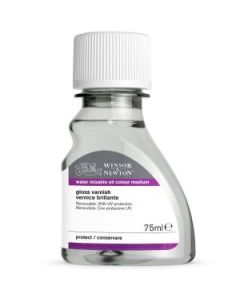 Winsor & Newton Water Mixable Oil Colour Varnishfrom ₹1099 to ₹1999
-
 Pebeo Extra Fine Auxiliaries - Varnish for Oil Coloursfrom ₹935 to ₹5740
Shop India's Curated Range of Varnish for Oil Painting
Varnish is the final protective coat on a finished oil painting — a clear, removable layer that seals the cured paint film, evens out the surface sheen, deepens colour saturation, and protects the work from dust, atmospheric pollutants, UV light, and accidental scuffs. Art Lounge stocks an internationally-curated range of artist-grade oil-painting varnishes built around the brands taught in art school and used in galleries: Gamblin GAMVAR Picture Varnish (USA — the modern game-changer that can be applied when the painting is touch-dry instead of waiting 6–12 months for traditional dammar varnish), Winsor & Newton Artists' Oil Painting Varnish and Oil Painting Varnish Spray and Water Mixable Oil Colour Varnish (UK — the global gallery standard, available in gloss, matt, and satin), Pebeo Extra Fine Auxiliaries Picture Varnish for Oil Colours (France — solvent-based spray and brush-on in gloss / matt / satin / retouching), and Camel Picture Varnish (Kokuyo Camlin India — our entry price at ₹300, suitable for both oil and acrylic). Three varnish types are covered on this page: retouch varnish (a thin temporary layer applied during the 6–12 month curing period), picture varnish (the final permanent removable coat applied once the paint is fully cured), and the modern synthetic alternatives like Gamblin GAMVAR that bypass the curing wait. Application formats include both brush-on liquid varnish and spray-can aerosol varnish — most professional oil painters keep at least one of each. Prices start at ₹300 for the Camel Picture Varnish 100 ml and run to ₹5,740 for the largest Pebeo bottle. Every varnish ships from authorised distributors with a price-match guarantee and 2–5 day pan-India delivery. (Also searched as oil varnish, oil painting varnish, oil paint varnish, picture varnish, artist varnish, damar / dammar varnish, retouch varnish, spray varnish for oil paintings, matt varnish oil painting, satin varnish for oil paintings, warnish, vanish paint, varnish oil paint — all the same product family covered on this page.)
Looking for varnish for wood, marine, floors, or furniture? Wrong page — those are polyurethane, nitrocellulose, spar / marine, or oil-based wood varnish products sold by hardware brands like Asian Paints Wood Tek, Pidilite, Sheenlac, and Dulux at any building-materials or hardware store. The varnish on this page is artist picture varnish for finished oil paintings on canvas, board, or paper — completely different chemistry, different removability (artist varnish is conservator-removable; wood varnish is permanent), different finish behaviour, and not designed to seal wood pores or weather-protect outdoor surfaces. The phrase "oil-based varnish" carries both meanings online — be sure which one you actually need before buying.
Looking for varnish for acrylic painting, watercolour, oil pastel, poster colour, fabric paint, or wall painting? Each medium needs a different protective product. Acrylic painting uses water-based acrylic varnish (Liquitex, W&N Professional, Pebeo) — different chemistry and a much shorter curing wait. Watercolour is traditionally framed under glass rather than varnished; if you must varnish, see Aqua Varnish. Oil pastel uses a fixative, not picture varnish — the buttery oil-pastel surface won't accept varnish cleanly and a fixative is the right tool. Poster colour is rarely varnished; varnishing changes its matte character fundamentally. Fabric paint is heat-set with an iron — see Fabric Paint. Wall painting uses interior emulsion paint plus optional sealer — a hardware-store product, not artist varnish.
Related categories on Art Lounge
- Traditional Oil Paints — the paint range these varnishes are designed to protect (Winsor & Newton, Holbein, Camel, Pebeo, Old Holland, Schmincke)
- Oil Paint Mediums — linseed oil, walnut oil, stand oil, Liquin, Galkyd, painting mediums (different category from varnish, which is the final top coat)
- Acrylic Varnish — separate range for finished acrylic paintings (water-based, much shorter curing wait, different chemistry)
- Aqua Varnish — water-based protection for finished watercolours and gouache
- Spray Paint Cans — for spray-medium painting; not the same as spray varnish
- Oil Painting Brushes — including wide flat varnishing brushes for clean brush-on application
- Canvas — stretched canvas and canvas boards for oil painting
- Acrylic & Oil Painting Paper — primed paper surfaces for oil work
Oil Varnish Price in India — Brand by Brand
Oil-varnish pricing reflects formulation type (synthetic conservator-grade vs traditional dammar vs water-mixable), country of manufacture (USA / UK / France / India), bottle / aerosol size, and finish family (gloss / matt / satin / retouch). Here's what each oil varnish on Art Lounge actually costs:
| Brand / Range | Origin | Format | Price | Tier |
|---|---|---|---|---|
| Camel Picture Varnish (oil & acrylic) | India (Kokuyo Camlin) | Bottle / spray, 100 ml | ₹300 | Entry — student / school / hobby oil & acrylic painting |
| Winsor & Newton Artists' Oil Painting Varnish | UK | Brush-on liquid, 75 ml / 250 ml / 500 ml | ₹915 – ₹3,690 | Artist-grade — UV-resistant, removable, gloss / matt / satin |
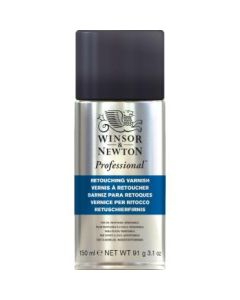
| Winsor & Newton Oil Painting Varnish Spray | UK | Aerosol spray, 75 ml / 400 ml | ₹1,150 – ₹2,070 | Artist-grade aerosol — picture varnish + retouch options |
| Winsor & Newton Water Mixable Oil Colour Varnish | UK | Brush-on liquid, multiple sizes | ₹975 – ₹1,730 | Specialist — paired with W&N Artisan Water Mixable Oils |
| Pebeo Extra Fine Auxiliaries — Varnish for Oil Colours | France | Solvent-based spray, 200 ml / 400 ml | ₹935 – ₹5,740 | Artist-grade — gloss / matt / satin / retouching, restorable thermoplastic film |
| Gamblin GAMVAR Picture Varnish | USA | Brush-on liquid, multiple sizes | ₹1,480 – ₹4,165 | Gallery / archival — apply when touch-dry, gloss / satin / matte |
Bottle / aerosol size and finish-specific pricing varies within each brand's range — verify exact prices on each product page. The Pebeo and Gamblin ranges carry the broadest size and finish options on Art Lounge.
The Three Varnishes: Retouch, Picture, and Final — and Where GAMVAR Fits In
Oil painting varnish isn't one product — it's a small family with different jobs. Knowing which is which prevents the most common mistake new oil painters make (varnishing too early and trapping uncured oil under a permanent coat).
1. Retouch Varnish — the temporary in-progress layer
Retouch varnish is a thin, dilute varnish applied to a touch-dry oil painting during the 6–12 month curing period — not as a final protective coat, but to even out sunken-in areas (where the oil has absorbed unevenly into the under-layers and the colour has lost its richness), to provide temporary dust and surface protection, and to refresh the saturation while you decide whether the painting is finished. It is fully reversible, dries fast, and is typically applied as a spray to avoid disturbing semi-cured paint. Retouch varnish does not replace final picture varnish — it can stay until you apply final varnish, and modern picture varnishes are designed to be applied directly over a retouch layer. Indian retouching demand on Keyword Planner: ~1,920/mo combined across "retouch varnish", "retouch varnish for oil paintings", "winsor newton retouch varnish", and "retouch varnish spray". Currently almost entirely uncaptured by Indian retailers — Himalaya stocks a single Daler Rowney Retouching Varnish 300 ml at ₹1,080.
2. Picture Varnish (final / permanent) — the traditional 6–12 month coat
Picture varnish (also called final varnish, permanent varnish, or simply oil painting varnish) is the proper protective top coat applied to a fully-cured oil painting. Traditionally — using damar / dammar resin varnish dissolved in turpentine, the standard from the 18th century into the 20th — the oil paint film must be fully cured before varnishing, which means waiting 6 months for thinly painted layers and up to 12 months or longer for impasto / thickly painted work. Apply too soon, and oil that's still oxidising under the surface is sealed in by the varnish — over years this can yellow, crack, or separate. The 6–12 month rule is non-negotiable for traditional dammar varnish. Pebeo Extra Fine Picture Varnish for Oil Colours and Winsor & Newton Artists' Oil Painting Varnish both follow this traditional approach.
3. The modern synthetic alternative — Gamblin GAMVAR
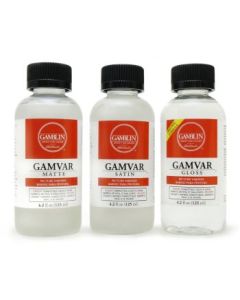
Gamblin GAMVAR Picture Varnish is the genuine game-changer in oil-painting conservation, developed by Gamblin in collaboration with the National Gallery of Art (Washington, D.C.). GAMVAR is a synthetic urea-aldehyde resin in a solvent base — it bypasses the 6–12 month wait by being safe to apply when the painting is dry to the touch, because the GAMVAR film is permeable enough to allow the oil paint underneath to continue oxidising and curing through the varnish. The result: same clarity, same removability, same UV protection as a traditional damar coat — but applied within weeks instead of after a year. It comes in gloss, satin, and matte finishes; brush-on application; fully removable with mineral spirits decades later by a conservator. Gamblin GAMVAR is the single biggest reason a serious oil painter buys from Art Lounge — we are the only Indian retailer carrying it. Indian Keyword Planner volume across the GAMVAR cluster is approximately 4,000–5,000 monthly searches and we are the lone shelf for it in the country.
Quick decision rule: if the painting is finished and touch-dry but you want to varnish in the next month or two, use GAMVAR. If you can wait the full 6–12 months and prefer the traditional approach, use Pebeo or W&N Artists' Oil Painting Varnish. If you need to display the painting before the cure window is over (gallery hand-in, commission delivery, exhibition), apply a retouch varnish for now and the final picture varnish later. If it's a hobby / school / decor piece and you don't want the wait or the cost, the Camel Picture Varnish (₹300) is fit for purpose.
Gloss vs Matte vs Satin — Which Finish to Choose
Three finishes; one decision. GAMVAR, Pebeo Extra Fine, and Winsor & Newton Artists' all offer the full gloss / matt / satin range. Camel is gloss / picture-finish only. Pick the finish by where the painting will live, the style of the work, and how it will be photographed.
| Finish | Visual character | Best for | Avoid when |
|---|---|---|---|
| Gloss | Mirror-clear, deepest colour saturation, reflective — the classic Old Masters / oil-painting look | Realism, traditional landscapes, portraits, still life, anywhere you want the rich glassy oil-painting depth | Painting will hang in a sunlit room or under direct gallery lighting — glare washes out the image |
| Satin | Soft sheen, slight reflectivity, full colour pop — the gallery-safe middle ground | The default for most exhibition and commission work; balances saturation and glare control across most lighting | You specifically want the deepest saturation (use gloss) or a deliberately flat / contemporary look (use matte) |
| Matte / matt | Flat, non-reflective, slightly muted colour | Photographing artwork (no glare in photos), contemporary minimalist work, portraits intended as flat compositions, brightly-lit display rooms | Saturation matters — matte mutes deep darks and rich colour by 5–15%; apply only 1–2 thin coats to avoid cloudiness |
Mixing finishes within a brand. GAMVAR Gloss and GAMVAR Matte can be intermixed to dial in any sheen between them — start with 50:50 for a satin-equivalent and adjust. The same applies within the W&N Artists' range. Don't mix finishes across brands (e.g. GAMVAR with W&N) — the resin systems differ slightly and may cloud or de-bond.
Indian climate note. Matte oil varnish layered too thick in humid coastal cities (Mumbai, Chennai, Kolkata, Goa) can dry slightly hazy — the matting agents in the formula need to release solvent fully or they flocculate. Apply matte in 1–2 thin coats only; if you want more protection, build a gloss base coat first and finish with one matte top coat. Avoid varnishing during peak monsoon weeks (June–September on the west coast).
Spray vs Brush-on — Which Format to Pick
| Format | Strengths | Weaknesses | Best for |
|---|---|---|---|
| Spray (aerosol) | No brush marks; even coverage; safe over impasto without dragging soft peaks; quick application; ideal for retouch varnish | Solvent fumes — must be applied outdoors or with strong ventilation; harder to control thickness; aerosol cost / can; not refillable | Smaller works, impasto / palette-knife paintings, mixed-media, retouch varnishing during cure period, anything where brush pressure could lift soft paint |
| Brush-on (liquid) | Total thickness control; cheaper per coat across larger paintings; better optical clarity (the GAMVAR brush-on is the gold standard for archival clarity); refillable bottles | Brush marks if applied wrong; needs a dedicated wide flat varnishing brush; technique-dependent; slower | Large canvases, traditional smooth surfaces, gallery-grade finishing where you want full control, GAMVAR or final dammar application |
Most professional Indian oil painters keep one of each. A bottle of GAMVAR or W&N Artists' brush-on for the main job, and a Pebeo or W&N spray can for retouch varnishing during the cure period and for impasto / textured pieces where a brush can't lay flat. The two formats handle different problems.
How Long to Wait Before Varnishing an Oil Painting — and Why
The single biggest mistake new oil painters make is varnishing too soon. Oil paint dries in two stages — surface drying (touch-dry, typically 1–14 days depending on pigment, paint thickness, medium, and humidity) and full cure (the linseed / safflower / poppy oil oxidising completely into a hard polymer film, typically 6–12 months for thin layers and longer for impasto). Varnishing during stage one — touch-dry but not cured — traps oxidising oil under a sealed coat. Over years, the trapped oil yellows, the paint film stiffens unevenly, and craquelure or varnish-paint separation can develop. The 6–12 month cure rule for traditional dammar / W&N / Pebeo final varnish is conservation orthodoxy.
The GAMVAR exception: Gamblin's synthetic urea-aldehyde resin film is permeable enough to allow ongoing oxidation through the varnish. Touch-dry-and-varnish is published in Gamblin's protocol. Most Indian oil painters who buy GAMVAR are buying specifically for this reason — they want to varnish a commission or exhibition piece on a real-world timeline rather than waiting a year.
Quick reference:
- Touch-dry test: press a fingernail into a heavy-paint area gently. If no impression remains and no paint comes off, the painting is touch-dry.
- Traditional dammar / W&N Artists' / Pebeo final varnish: wait 6 months for thin layers; up to 12 months or more for impasto.
- Gamblin GAMVAR: safe at touch-dry — typically 1–2 weeks for thin layers, 4–8 weeks for impasto.
- Retouch varnish (W&N, Pebeo, Daler Rowney) during the cure period: can be applied over touch-dry paint to even out sunken areas and provide temporary protection. Will be replaced by final varnish later.
If you've never let an oil painting cure before, mark the date on the back of the canvas and trust the timeline. The conservator-grade outcome depends on the discipline.
How to Varnish an Oil Painting — Step by Step
1. Confirm the painting is ready. Either touch-dry (for GAMVAR or retouch varnish) or fully cured 6–12 months (for traditional dammar / W&N Artists' / Pebeo final varnish). When in doubt for a traditional varnish, wait longer — the cost of an early varnish is decades of damage.
2. Clean the painting. Wipe with a clean dry soft cloth or a slightly damp lint-free cloth (water only, never solvents). Let the surface dry completely. Inspect for any sunk-in areas or surface debris.
3. Lay the painting flat. Always varnish horizontal — not on an easel. Vertical varnishing causes drips and uneven thickness, especially on larger canvases.
4. Apply 1–3 thin coats, not one thick coat. One coat suffices for GAMVAR if applied correctly. 2 coats is the standard for Pebeo / W&N final varnish. Three is the maximum — beyond that, the layer can crack or dull. Wait the recommended drying time between coats — usually 24–48 hours for solvent-based oil varnish.
5. Brush-on technique. Use a clean, soft, wide flat brush (1"–4" depending on canvas size) reserved only for varnishing. A natural-hair brush or a high-quality synthetic flat designed for varnishing — never the brush you used for painting. Load moderately. Apply with smooth, edge-to-edge horizontal strokes; immediately overlap with vertical strokes to even out; finish with a single direction of light final strokes. Don't go back over a setting layer — you'll drag the partly-tacky surface and get streaks.
6. Spray technique. Shake the can hard for 30–60 seconds. Hold 25–30 cm from the painting. Spray in continuous side-to-side passes, starting and ending the pass off the canvas (so the start / stop puddles don't land on the painting). Overlap each pass by 30%. Build up in 2–3 light passes — never one heavy spray that puddles. Apply outdoors, in a garage, or in a well-ventilated room with no children, no open flames, and good cross-airflow — solvent-based aerosol varnish is flammable.
7. Drying environment. Dust-free, low-humidity, cool-to-moderate temperature (22–28°C ideal). Avoid varnishing during peak monsoon humidity in coastal cities — humidity slows solvent evaporation and can cloud matte finishes. A fan helps gentle air movement but don't blast air directly onto the wet surface (that pulls dust). Cover the painting loosely with a clean dust shield (a cardboard box raised on supports) for the first 6–24 hours.
8. Drying timeline. Solvent-based oil varnish is touch-dry in 4–24 hours and recoatable in 24–48 hours; full hardness (handle, frame, ship) takes 1–4 weeks. GAMVAR specifically: touch-dry in 18–24 hours, fully hard in 3–4 weeks. Check each manufacturer's label.
Oil Varnish Brands We Stock — Detailed Guide
Gamblin GAMVAR Picture Varnish
American artist-grade picture varnish — Gamblin Artists Colors (Portland, Oregon, founded 1980) developed GAMVAR with Dr. Rene de la Rie at the National Gallery of Art conservation department. The defining property: GAMVAR can be applied when the painting is touch-dry, not after the 6–12 month cure, because the synthetic urea-aldehyde resin film is permeable enough for ongoing oxidation. Available in gloss, satin, and matte finishes across multiple sizes; brush-on application; fully removable with mineral spirits by a conservator decades later. On Art Lounge, ₹1,480 to ₹4,165 depending on size and finish. Art Lounge is the only Indian retailer carrying Gamblin GAMVAR. If you want the modern conservator-grade approach without the year-long wait, GAMVAR is the obvious pick. The Keyword Planner data shows roughly 4,000–5,000 monthly Indian searches across the GAMVAR brand cluster — none of which any Indian competitor catalogue serves.
Winsor & Newton Artists' Oil Painting Varnish
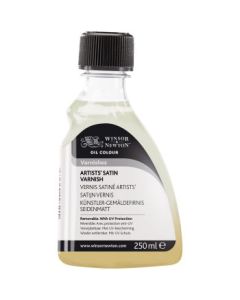
UK brand, gallery / archival tier, the British classic since the 19th century. Brush-on liquid varnish suitable for finished oil and oil-alkyd paintings. UV-resistant, removable with mineral spirits, available in gloss, matt, and satin, sized 75 ml (₹915), 250 ml (₹1,585), and 500 ml (₹3,605–₹3,690). The W&N protocol is traditional — apply only after the paint has fully dried (6–12 months). Works with Winsor & Newton Artists' Oil Colour, Winton Oil Colour, Griffin Alkyd, and Artisan Water Mixable Oil Colour. The dependable British studio default.
Winsor & Newton Oil Painting Varnish Spray
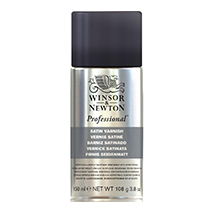
UK brand. Aerosol picture varnish for oil paintings. The W&N spray range covers both final picture varnish and retouch varnish in 75 ml and 400 ml cans, ₹1,150 to ₹2,070 on Art Lounge. The aerosol format is the right pick for impasto / textured paintings where a brush would drag soft peaks, and for retouch varnishing during the 6–12 month cure window. UV-resistant and removable; same chemistry as the brush-on Artists' range, just delivered as a spray.
Winsor & Newton Water Mixable Oil Colour Varnish
UK brand, specialist range. A varnish formulated specifically for finished paintings made with W&N Artisan Water Mixable Oil Colours. Brush-on liquid, ₹975 to ₹1,730 across sizes. If your studio runs water-mixable oils — which avoid the turpentine / mineral-spirit hazards of traditional oil painting — this is the matched varnish. Not a substitute for picture varnish on traditional oil colours; the formulation is tuned to the W&N Artisan paint film specifically. Captures the small-but-loyal "varnish for water mixable oils" search niche that no Indian competitor addresses directly.
Pebeo Extra Fine Auxiliaries — Varnish for Oil Colours
French artist-grade brand (Pebeo, founded 1919). Solvent-based aerosol varnish range with a thermoplastic film that allows full restoration / removal by conservators. Available in gloss, matt, satin, and retouching — making Pebeo the brand on Art Lounge that covers all four oil-varnish jobs in a single product range. Sized 200 ml and 400 ml, ₹935 to ₹5,740. The Pebeo Satin Picture Varnish for Oil Colours is "fast drying, transparent, with a uniform satin finish between gloss and matt"; the Matt Picture Varnish is "non-yellowing, opalescent". Traditional cure-period rules apply — wait 6–12 months for the final varnish — but the retouch varnish in the same range is designed specifically for the in-cure period.
Camel Picture Varnish (Kokuyo Camlin)
Indian-made entry varnish — 100 ml at ₹300, gloss / picture finish, suitable for both oil and acrylic paintings. Our entry price and the most affordable legitimate art-varnish in Indian retail, undercutting Brustro's ₹549 own-brand spray floor. Good for student work, school projects, hobby paintings, and final-coat varnishing where archival / gallery-grade isn't required. Performance is genuinely solid for the price tier — it won't match Gamblin GAMVAR's optical clarity or W&N's UV resistance over long display, but for non-archival oil work in domestic Indian conditions it's a fair pick. The Kokuyo Camlin formulation is recognised across Indian art schools and is what most Indian oil painters use for their first varnish before stepping up.
Synthetic vs Traditional Resin — What's in the Bottle
Modern oil-painting varnishes split into two resin families.
Traditional natural resin (damar / dammar) — the historical standard since the 18th century. Damar is a tree resin from the Dipterocarpaceae family of trees in Southeast Asia, dissolved in turpentine or mineral spirits. Optically clear when fresh, slightly amber. Yellows over decades; conservators routinely remove and replace damar varnish on valuable oil paintings every 50–100 years. Demands the full 6–12 month cure window. Indian Keyword Planner volume on damar / dammar variants is ~1,990/mo combined — significant search volume but the product class itself is being superseded by synthetics.
Modern synthetic resin (urea-aldehyde, polycyclohexanone, ketone-based) — Gamblin GAMVAR is the headline example; W&N Artists' Oil Painting Varnish and Pebeo Extra Fine Picture Varnish use modern synthetic resins of similar character. Don't yellow appreciably, optically clear, removable with mineral spirits, conservator-friendly. GAMVAR specifically allows touch-dry application; W&N and Pebeo synthetic-resin products generally still respect the 6–12 month cure rule.
For new oil paintings being varnished today, synthetic-resin varnish is the conservator-recommended choice — better long-term colour stability, easier removal, no yellowing risk. Damar is mainly used by artists who want the traditional approach for stylistic / lineage reasons or who are completing a painting in a Old Masters technique.
Brands We Don't Stock — and What to Use Instead
Most-searched oil-varnish brands in India that Art Lounge does not currently carry, with the closest substitute from our range:
- Brustro Artist Varnish Spray (200 ml ₹549, 400 ml ₹930 in gloss / matt / satin — the deepest Indian-made oil-varnish aerosol range) — not stocked on Art Lounge. Closest substitutes: Camel Picture Varnish at the entry tier (₹300 vs Brustro's ₹549), or Pebeo Extra Fine Picture Varnish for Oil Colours aerosol at the artist-grade tier (₹935+ for 200 ml). Brustro's strength is range depth at a mid-Indian price; ours is international gallery-grade brand depth — and we have the Gamblin GAMVAR brush-on that Brustro can't match at any price.
- Daler Rowney Retouching Varnish (300 ml ₹1,080 — Himalaya Fine Art's specialty pick) — not stocked. Closest substitute: Winsor & Newton Oil Painting Varnish Spray (Retouch) in the W&N spray range, or the Pebeo Extra Fine Retouching Varnish within the Pebeo Picture Varnish for Oil Colours line. Both are direct functional alternatives — temporary in-cure protective layers — sold from authorised distributors.
- Damar / Dammar Varnish (raw resin or pre-mixed bottles) — not stocked as a standalone traditional damar. Most Indian oil painters who specifically want a damar character should pick Pebeo Extra Fine Picture Varnish for Oil Colours (synthetic substitute with similar optics, no yellowing) or Winsor & Newton Artists' Oil Painting Varnish Gloss. For a true traditional damar, you'd need to dissolve damar resin crystals in mineral spirits manually — a niche conservator-tier process not common at Indian retail.
- Lefranc & Bourgeois (L&B) varnish, Sennelier Vernis à Tableau, William Mitchell varnish — not stocked. Closest substitutes: Pebeo Extra Fine (French equivalent for L&B / Sennelier; same country, same artist-grade tier) or W&N Artists' Oil Painting Varnish (UK gallery-tier). All three are direct functional alternatives.
- Wood / floor / marine varnish brands (Asian Paints Wood Tek, Pidilite, Sheenlac, Dulux Polylac, Sadolin) — these are wood / floor / outdoor / furniture varnishes, completely different chemistry, not appropriate for oil paintings. For wood, deck, or marine projects, see a hardware or building-materials store.
Common Mistakes & Troubleshooting
Varnish dried cloudy or hazy. Three likely causes: (1) Matte applied too thick — matting agents flocculate when over-layered; redo with 1–2 thin coats. (2) Varnished while paint was still curing — for traditional dammar / W&N / Pebeo final varnish the 6–12 month wait is non-negotiable on impasto and longer-than-thin layers; varnishing too early traps moisture and oxidising oil and clouds the varnish. (3) High humidity — Indian monsoon weeks (June–September on the west coast) are tough on solvent-based oil varnish; postpone if possible.
Sunken-in areas: dull patches in dark colours after curing. This is normal — heavy underpainting absorbs upper-layer oil unevenly, leaving "sunk-in" matte regions even though the surface looks finished. The fix is to apply a retouch varnish during the cure period to even out optical density temporarily; the final picture varnish (applied after full cure) restores the saturation permanently.
Brush marks visible after drying. Either too thick a coat, or going back over a tacky surface. Apply thinner; don't overwork the surface; let each coat fully dry before re-coating; use a wide soft varnishing brush dedicated to varnish (not a paint brush).
Yellowing or amber tone over years. Modern synthetic varnishes (GAMVAR, W&N Artists', Pebeo Extra Fine) don't yellow appreciably. If a painting has yellowed, the cause is usually traditional damar varnish (which yellows naturally over decades), or a non-art varnish like wood polyurethane that wasn't designed for paintings. The fix is conservator-grade removal and re-varnish with a modern synthetic product.
Spray varnish bubbling or pinholing. Sprayed too close, or sprayed onto a surface that's too cold (varnish hits the cold surface and contracts), or sprayed in too humid air. Hold 25–30 cm away, work in moderate room temperature (22–28°C is ideal), avoid direct AC airflow on the wet surface.
Varnish remover / how to remove old varnish. Modern synthetic oil varnish (GAMVAR, W&N Artists', Pebeo) removes with mineral spirits / odourless thinner and a soft cotton pad — but this is conservator-tier work; if a painting is valuable, hire a conservator rather than attempting it yourself. Never use household paint stripper, kerosene, acetone, or wood-varnish remover on a finished oil painting — they dissolve the paint film along with the varnish and can permanently destroy the work.
Why Buy Oil Varnish from Art Lounge?
Oil-painting varnish sourced from unauthorised channels in India routinely arrives expired, stored in heat (which destabilises the resin), or — in worst cases — refilled with cheaper formulations under counterfeit Winsor & Newton or Gamblin labels. Art Lounge sources only from authorised Indian distributors, which means every Gamblin GAMVAR, W&N Artists' Oil Painting Varnish, W&N Spray, W&N Water Mixable Oil Colour Varnish, Pebeo Extra Fine, and Camel bottle reaches you in original sealed packaging with the manufacturer's batch and date codes intact. We are the only Indian retailer carrying Gamblin GAMVAR Picture Varnish — the modern touch-dry-application picture varnish that bypasses the 6–12 month cure wait and is the National Gallery of Art's reference oil-painting varnish. We also carry the broadest international artist-grade oil-varnish range in Indian retail — Gamblin GAMVAR + the full Winsor & Newton oil-varnish line (Artists' + Spray + Water Mixable) + Pebeo Extra Fine for Oil Colours (gloss / matt / satin / retouching) + Camel entry-tier — so you can match the varnish type and finish to the painting's stage and intended display rather than being forced into one brand's compromise. Pan-India delivery in 2–5 business days; price-match guarantee on every bottle; orders ship in protective packaging since solvent-based aerosol cans require careful courier handling.



