


Painting & Palette Knives
-

-

-

-

-
 RGM Extra Large Spatulas For Murals & Constructionfrom ₹1715 to ₹2545
-
Italian-Made Palette Knives & Painting Knives at Art Lounge
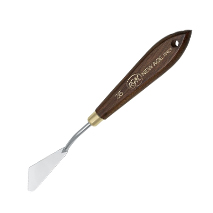
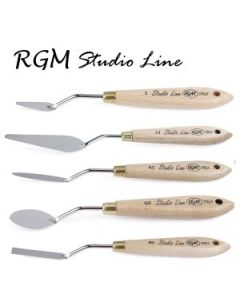
A palette knife is the artist's mixing tool with the offset (cranked) handle that lets you mix paint on a flat palette without your knuckles dragging through it. A painting knife is the application tool — diamond, trowel, pear, or pointed blade with an offset handle — used to lay paint directly onto canvas in thick impasto strokes, scrape it back through (sgraffito), or pull it across a surface in textured drags. Most artists end up with both. RGM, the catalogue we stock at Art Lounge, calls the whole family painting and palette knives together — and so do most painters in practice. Both share the same blade-on-handle construction; only the blade shape and the offset angle change. Art Lounge is the only Indian e-commerce retailer with the full RGM Italian range across five lines and 150+ blade shapes — Plus Line (₹320–₹765 entry-tier nickel-plated steel with Bubinga handle), New Age (₹320–₹1,050 water-resistant mirror-steel blades), New Age Pastrello (₹385 narrow-blade soft-flex from RGM's collaboration with Italian artist Franco Pastrello), New Generation (₹730–₹1,815 tempered-stainless professional pro-tier), New Studio Line (₹299 highly-flexible entry-floor) — plus the niche Extra Large Spatulas for Murals & Construction (₹805–₹1,225, 40–140 mm blade widths for large-scale mural and texture work). RGM is a 60-year-old Maniago, Italy maker (founded 1961 by Rosa Gastaldo Mario); blades are hand-tempered and ground, handles are Bubinga or Rosewood, ferrules are solid brass. (Also searched as painting knife, painting knife set, palette knife set, painting spatula, art spatula, spatula for painting, painting blade, artist knife, knife painting tools, oil painting knife, canvas painting knife, palette blade, pallet knife, pallete knife, palatte knife, palette knofe — same product family, all covered on this page.) Free delivery across India.
Related categories on Art Lounge
- Oil Paint — heavy-body tube oil paint is the classic medium for knife work; W&N Artists' Oil, W&N Winton, Camlin Artists' Oil, Maimeri Artisti
- Acrylic Paint — heavy-body acrylics (Camlin Studio HB, W&N Heavy Body, Liquitex Heavy Body) are what palette knives shine on for acrylic work; soft-body acrylics flatten under the blade
- Canvases & Painting Supports — pre-stretched cotton/linen canvas, canvas boards, MDF panels — what your knife strokes will actually live on
- Acrylic Mediums & Gels — heavy gel medium, modelling paste, light molding paste; palette knives are the standard application tool
- Round Brushes — for the parts of the painting you can't do with a knife
- Acrylic Brush Sets — bristle / synthetic sets that pair with knife work
- Watercolour Palettes & Mixing Trays — different palette family (mixing surfaces for watercolour, not knives)
- Oil Pastels — if you're searching "oil pastel knife" or "oil pastel palette knife", you may want oil pastel sticks themselves; palette knives are sometimes used to scrape/blend oil pastel but aren't the tool the search usually intends
Painting Knife vs Palette Knife — What's the Difference?
Strictly, they're two different tools. In Indian e-commerce both names get used interchangeably, and RGM's own catalogue treats them as one family — but the distinction matters when you're choosing a shape:
| Tool | Purpose | Blade shape | Handle |
|---|---|---|---|
| Palette knife (mixing knife) | Mixing colour on the palette; lifting and turning paint; cleaning the palette | Long, straight or slightly tapered blade — flat-edged, no point. Often called a "spatula" in Indian English. | Straight or slightly cranked handle — your hand sits in line with the blade |
| Painting knife (application knife) | Applying paint directly to canvas — impasto strokes, scumbling, sgraffito, palette-knife-painting technique | Diamond, pear, trowel, pointed or rounded blade with a defined point or edge | Strongly cranked (offset) handle — keeps your knuckles clear of the canvas while the blade lays paint flat |
In daily practice, most artists use both — and the same five RGM lines (Plus, New Age, Pastrello, New Generation, Studio) include both palette-mixing shapes and painting-application shapes within the same numbered design system. When buying, the question isn't really "palette or painting knife" — it's "what blade shape, in what flexibility, on what handle, do I need for the kind of marks I'm making?" Use the shape guide further down to choose.
A note on terminology: Indian customers also call painting knives "painting spatulas", "art spatulas", "paint spatulas" or "painting blades". Spelling-wise the words appear as palette knife, pallete knife, pallet knife, palatte knife, palatte knife, palete knife, palette knofe, painting knofe, palette blade, pellet knife. All variants land you here — the actual product range is the same.
RGM Painting & Palette Knife Range — Five Lines, ₹299–₹1,815
RGM organises its full catalogue (200+ models) into named lines, each with a different combination of blade construction, handle material, and intended grade. Art Lounge stocks five primary lines plus the niche Extra Large Spatulas. Here's exactly what each line is, what it costs, and what it's for:
| RGM Line | Blade construction | Handle | Designs available | Price per knife | Best for |
|---|---|---|---|---|---|
| New Studio Line | Highly flexible spring steel — returns to original shape after use | Wood | 24 designs, all in stock | ₹299 | Entry-tier; first palette knife; students; building a starter set on a budget |
| Plus Line | Nickel-plated steel — corrosion-resistant entry-pro blade | Bubinga (light red African hardwood) | ~65 designs, 38 in stock | ₹320 (small) / ₹765 (large 16-, 20-series) | Daily working knives; widest shape range in the catalogue at the entry price; the "default" for most painters |
| New Age | Water-resistant mirror steel — RGM's anti-rust treatment that keeps blades polished after wet cleanup | Bubinga + solid brass ferrule | 37 designs, 23 in stock | ₹320 – ₹1,050 | Mid-pro; painters who clean knives wet daily and want long-term blade finish to stay clean |
| New Age Pastrello | Extra-flexible water-resistant mirror steel — narrow blades, fine points | Bubinga + solid brass ferrule | 14 designs, 4 in stock (restock priority) | ₹385 (single price) | Detail work; fine-line scratching (sgraffito); narrow point work; the soft-knife range RGM developed with Italian artist Franco Pastrello |
| New Generation | Tempered stainless steel — heat-treated for stiffness and spring memory | Bubinga + brass rivets (premium fixings) | 21 designs (8001–8021), 18 in stock | ₹730 – ₹1,815 | Pro-tier; large-scale work; sustained-use studio knives; painters who want blade rigidity for heavy-impasto control |
| Extra Large Spatulas (Murals & Construction) | Tempered stainless mirror polish — 90° rounded curves, electrolytic rust protection | Rosewood + brass rivets | 6 sizes (40, 65, 80, 100, 120, 140 mm), 1 in stock (40 mm only — major restock priority) | ₹805 – ₹1,225 | Mural-scale work; texture mediums on large canvases; heavy gel/modelling-paste application; masonry-style mural surfaces |
Verify exact in-stock availability per blade design on each product page. Across all five lines combined, 100+ individual blade designs (specific shape × size combinations) are currently in stock at Art Lounge — the deepest single-page RGM range in Indian e-commerce.
RGM New Studio Line — ₹299, the Honest Entry Floor
RGM's New Studio Line is the most-affordable knife in the range — ₹299, all 24 designs currently in stock. The blade is genuinely flexible (RGM advertises it as "highly flexible blades that return to their original shape after use, allowing for smooth and controlled strokes") — which is what you actually want from an entry knife: enough spring to lay paint smoothly, enough recovery that the blade doesn't stay bent after sustained pressure. The handle is plain wood (not Bubinga), the ferrule construction is simpler than the Plus / New Age lines, and the blade isn't water-resistant treated — but at ₹299 per knife, you can build a personal kit of 5–8 different shapes for under ₹2,500 total. For students, hobby painters, first-time palette-knife buyers, and anyone testing whether knife painting is for them before committing to mid-pro pricing, the New Studio Line is the honest entry. Designs available cover the small / mid blade sizes (10–25 mm width × 21–96 mm length) — covers most general palette-mixing and small-impasto work. Build a starter set: pick a small mixing blade (Design 1 or 2 — 10–11 mm wide), a mid-trowel (Design 3 or 11 — 15–17 mm × 51–64 mm), and a larger application blade (Design 13 or 50 — 19–22 mm × 71–83 mm). Three shapes for ~₹900 covers most beginner needs.
RGM Plus Line — ₹320, Bubinga Handle, the Workhorse
The Plus Line is RGM's biggest line by shape count — ~65 designs available, 38 currently in stock. Blades are nickel-plated steel (entry-pro grade, corrosion-resistant), handles are Bubinga (a light-red African hardwood RGM has used since the line's launch), ferrules are nickel-plated. ₹320 for the small-and-mid sizes (Designs 1–14, 18–60 — 7–35 mm blade widths, 21–101 mm lengths); ₹765 for the larger 16-series and 20-series (16/1, 16/2, 16/3, 20/1, 20/2 — 19–22 mm × 122–155 mm — substantially longer blades for sweeping strokes on bigger canvases). The Plus Line covers the widest range of blade shapes in the RGM catalogue, including:
- Trowel-shaped knives (Designs 4, 5, 6, 13, 33, 34, 35) — flat-bottomed, slightly-pointed-tipped — the standard impasto-application knife
- Pear-shaped knives (Designs 70, 72, 73) — wider middle, pointed tip — for layering and dragging
- Diamond-pointed knives (Designs 11, 12, 14) — sharp-pointed for sgraffito and fine application
- Long-tongue painting knives (16-series, 20-series) — narrow-and-long for sweeping single-stroke laydowns
- Round-edge palette knives (Designs 33, 42) — soft rounded blade for mixing without scoring the palette
- Spatula-form palette knives (long, slim, flat-edged designs) — for traditional palette mixing
The Plus Line is what most working painters end up using day-to-day. Buy 4–5 designs across different shape archetypes for ~₹1,300–₹1,800 total — covers virtually every palette-knife or painting-knife task on a normal-sized canvas.
RGM New Age — ₹320–₹1,050, Water-Resistant Mirror Steel
The New Age line (37 designs, 23 in stock) sits one tier above Plus Line — same Bubinga handle, but the blade is water-resistant mirror steel, RGM's anti-corrosion treatment that keeps blades polished and rust-free after wet cleanup. Brass ferrules replace nickel (heavier, more durable). Pricing varies by design (₹320–₹1,050) — the small blade variants (Designs 32–37) sit at ₹385, mid-size at ₹790–₹890, and the larger studio shapes at ₹825–₹1,050. If you clean knives wet daily — which most acrylic painters do, washing under the tap immediately after use — the water-resistant mirror finish is the practical upgrade over Plus Line. After two years of daily use, a Plus Line nickel-plated blade will still work fine but show oxidation marks; a New Age mirror-steel blade will stay polished. Recommended for working acrylic painters and anyone who washes knives at the tap rather than wiping them dry.
RGM New Age Pastrello — ₹385, the Soft-Flex Detail Knife
The New Age Pastrello is RGM's collaboration with Italian artist Franco Pastrello — a 14-design line of narrow-blade fine-point soft-flex knives. Pastrello is known for the kind of fine textural work that needs a knife with both spring and a precise point — flowers, foliage, fabric folds, fine impasto edges, sgraffito scratching. The blades are extremely flexible water-resistant mirror steel; widths run as narrow as 3 mm (Design 43) up to 19 mm (Design 51); lengths from 23–106 mm. All 14 designs are ₹385. Currently only 4 in stock (Designs 042, 046, 050, 051) — restock priority flagged in action items. Buy a Pastrello if you want a knife that can do thread-fine sgraffito lines, paint individual leaves or grass blades with a pointed tip, or render fabric texture in oil — work the standard Plus / New Age shapes are too broad for. Pastrello + a Plus Line trowel + a New Generation pro knife is a complete three-knife professional kit.
RGM New Generation — ₹730–₹1,815, Tempered Stainless Pro Tier
The New Generation line is RGM's pro tier (21 designs, 8001–8021, 18 in stock). Blades are tempered stainless steel — heat-treated for stiffness and spring memory; thicker construction than Plus / New Age. Handles are Bubinga with brass rivets (premium fixings — rivets vs ferrule alone). Pricing reflects the construction grade — ₹730 (small) up to ₹1,815 (largest). Blade widths run 20–71 mm (significantly larger than other lines), lengths 65–220 mm. Use cases: large canvases (over 24" × 36"), sustained-use studio knives that need to hold edge integrity through years of impasto work, painters working in heavy oil or heavy-body acrylic where blade rigidity matters for control. The New Generation 8011 (35 mm × 167 mm) and 8012 (39 mm × 220 mm — currently OOS) are the longest blades in the RGM catalogue outside the Extra Large Spatulas. If you're building a single high-end professional knife — one that lasts a career — the New Generation is the line to buy from.
RGM Extra Large Spatulas for Murals & Construction — ₹805–₹1,225
The Extra Large Spatulas aren't really painting knives in the canvas sense — they're tempered stainless mural-and-construction blades, sized 40 / 65 / 80 / 100 / 120 / 140 mm wide, with rosewood handles and brass rivets, 90° rounded curves, and electrolytic rust protection. Use cases: large-scale mural application, texture-medium spreading on big canvases (heavy gel, modelling paste, light molding paste — see our Acrylic Mediums hub), masonry-style mural surfaces, and any work where a normal painting-knife blade is too small to lay paint efficiently. Currently only the 40 mm size is in stock; 65 / 80 / 100 / 120 / 140 mm are all out of stock — flagged as a major restock priority because the mural / texture-medium niche has no Indian-supply alternative. Pricing scales with blade width: 40 mm ₹805 / 65 mm ₹880 / 80 mm ₹950 / 100 mm ₹1,090 / 120 mm ₹1,155 / 140 mm ₹1,225.
Blade Shape Guide — What Shape for Which Mark
Within each RGM line, blades are catalogued by shape archetype. Choosing the right shape matters more than choosing the line — a Plus Line trowel and a New Generation trowel both make the same kind of mark; the difference is blade rigidity and handle finish, not the mark itself. Here's what each shape archetype is for:
| Shape archetype | What the blade looks like | What it's for | RGM examples |
|---|---|---|---|
| Trowel (the standard painting knife) | Flat-bottomed leaf-shape with a slightly pointed tip; offset cranked handle | Impasto application, layering, pulling paint across canvas, the default knife-painting stroke | Plus Line Designs 4, 5, 6, 13, 33, 34, 35; New Age Designs 17, 23; New Generation 8002, 8005 |
| Pear / leaf | Wider middle, narrowing to a pointed tip; like a leaf | Layering and dragging; building thick deposits then pulling them across; foliage and floral texture | Plus Line Designs 70, 72, 73; New Generation 8019, 8021 |
| Diamond / pointed | Sharp-pointed blade with crisp sides — pointed tip | Sgraffito (scratching back through wet paint), fine point application, individual leaf/petal/grass marks | Plus Line Designs 11, 12, 14; New Age 26; Pastrello 042, 043 (extra-narrow) |
| Long-tongue / sweep | Narrow-and-long, parallel sides, slight taper to tip | Single-stroke long laydowns; sweeping skies, water reflections, large flat planes | Plus Line 16/1, 16/2, 16/3, 20/1, 20/2; New Generation 8011, 8013 |
| Round-edge / spatula (palette mixing) | Long, slim, flat-edged blade; rounded or square tip; minimal handle offset | Mixing paint on the palette; lifting and turning paint without scoring the palette surface; cleaning palette of dried paint | Plus Line Designs 33, 42, 79; Pastrello 045, 047 |
| Square / rectangle | Flat squared-off blade; broad working face | Broad colour blocks; flat washes of impasto; modelling paste application; gels and texture mediums | New Age 7, 8, 9; Plus Line 27, 30; New Generation 8003, 8009 |
| Comma / curved-tip | Asymmetric curved blade; one side longer than the other | Curved scumbles; bowl-and-arc deposits; angled drags; non-rectilinear texture | Plus Line 56, 58, 68; New Age 30 |
| Mural spatula (Extra Large) | Very wide rectangular blade (40–140 mm), heavy construction, rosewood handle | Mural-scale paint application; heavy-gel modelling paste on large canvas; texture mediums on big substrates | Extra Large Spatulas SPE-VT040 / 065 / 080 / 100 / 120 / 140 |
Use Case Guide — Which Knife for What Painting
| If you want to… | Recommended shape | Recommended RGM line |
|---|---|---|
| Mix oil or acrylic paint on a palette without scoring the surface | Round-edge / spatula form | Plus Line (Design 33, 42, 79) |
| Apply paint in classical impasto strokes (Van Gogh / Bob Ross style) | Trowel | Plus Line (4, 5, 6) or New Generation 8002 / 8005 |
| Scratch fine lines back through wet paint (sgraffito — for hair, fur, grass) | Diamond / pointed, narrow | New Age Pastrello (042, 043, 044) |
| Paint individual flower petals or leaves with a single decisive stroke | Pear / pointed-tip | Pastrello (042, 050) or Plus Line (11, 12) |
| Lay down sweeping skies, water, or flat planes in single strokes | Long-tongue (parallel-sided) | Plus Line 16-series / 20-series, or New Generation 8011 |
| Build heavy texture across a large canvas with modelling paste | Mural spatula (40–80 mm) | Extra Large Spatulas (40 mm in stock; 65–140 mm restocking) |
| Paint a mural on a wall or large board (over 36" × 48") | Mural spatula (80–140 mm) | Extra Large Spatulas (currently restocking; 40 mm available meanwhile) |
| Build a "first palette knife" beginner kit on a budget | Trowel + diamond + round-edge (3 shapes covers most marks) | New Studio Line (3 knives × ₹299 = ₹897) |
| Buy one professional knife to last a career | Trowel or pear (whichever your dominant stroke is) | New Generation (₹730–₹1,815) |
| Clean dried paint off a palette without damaging the surface | Round-edge spatula | New Studio Line (₹299) or Plus Line Design 33 |
Acrylic vs Oil — Both Work; The Paint Body Matters More
Palette knives work on both oil and acrylic — but the real variable is paint body (consistency), not medium. Here's what behaves how:
| Paint type | Knife behaviour | Verdict |
|---|---|---|
| Oil paint — heavy body (W&N Artists' Oil, Camlin Artists' Oil, Maimeri Artisti) | Holds an edge and a peak perfectly; impasto strokes stay 3D weeks later as the oil cures slowly | The classical knife-painting medium. What palette knives were designed for. |
| Oil paint — student grade (W&N Winton, Camlin Student Oil) | Slightly thinner body, slightly less peak, but still excellent for knife work | Recommended starter; ₹100–₹400 per 37–60 ml tube |
| Acrylic paint — heavy body (Camlin Studio HB, W&N Heavy Body, Liquitex Heavy Body, Galeria HB, Pebeo Studio Acrylics) | Holds an edge well; peaks stay sharp once dry (acrylic dries fast — 20–60 min); impasto remains visible | The acrylic knife-painting standard. Faster than oil — texture is locked in within an hour. |
| Acrylic paint — soft body / fluid (Liquitex Soft Body, Camlin Acrylic Color, Fevicryl) | Doesn't hold an edge; flattens out; knife marks disappear within minutes | Use brushes instead. Or thicken with heavy gel medium (~₹400–₹700 per tube — see Acrylic Mediums) before knife work. |
| Acrylic paint — ink / liquid (Daler Rowney FW Acrylic Ink, Schmincke Aero) | Will not hold any knife mark | Wrong tool. Use airbrush, dropper, or brush. |
| Watercolour | Watercolour is too fluid to knife-paint at all; on dried watercolour you can scratch back with a pointed knife (sgraffito), but you can't apply watercolour with a knife | Wrong tool for application. See round brushes. |
| Gouache | Some bodies (matte heavy-coverage gouache) hold mild knife marks; most thin out | Possible but not ideal — pick a medium-flex knife (Pastrello or Studio Line) for control |
| Oil pastels | Knives are used to scrape and blend oil pastels (sgraffito on oil-pastel layers), not to apply them | Different use case — see oil pastels for sticks; a small Pastrello knife (Designs 042, 043) is the right scratching tool |
| Heavy gel medium / modelling paste | Behaves like very heavy-body paint — holds all knife marks beautifully; cures harder than paint | Excellent — palette knives are the standard tool for modelling paste application; large Plus Line shapes or Extra Large Spatulas for big work |
Bottom line: if you're new to knife painting, start with heavy-body acrylic — it's faster than oil (texture locks in within an hour vs days/weeks for oil) and forgiving (you can scrape back and redo while wet). Once the technique is comfortable, oil rewards patient knife work with deeper colour and longer working time. Don't try to knife-paint with cheap soft-body acrylic — the paint flattens within minutes and you'll think you can't do it, when actually the paint is wrong, not the technique.
Brands We Don't Stock — RGM Substitutes
If you've searched for one of these brands, here's what we'd recommend instead from the RGM range:
| If you searched for… | Substitute on Art Lounge | Why this works |
|---|---|---|
| Liquitex Freestyle Palette Knife | RGM Plus Line (₹320–₹765) | Same entry-pro grade — nickel-plated steel + Bubinga handle. RGM has 3× the shape range Liquitex offers. |
| Mont Marte Stainless Steel Palette Knives / Mont Marte Signature Set | RGM New Studio Line (₹299 per knife) or RGM Plus Line Designs 1, 4, 11, 13 (₹320 each — build your own 4-piece set for ₹1,280) | Mont Marte's 5-piece set is fixed; building from RGM gives you the exact shapes you'll actually use, made by a 60-year-old Italian house instead of an Australian-distribution generic. |
| Brustro Special Effects Palette Knife Set / Brustro Assorted Set | RGM Plus Line (4–5 designs) or RGM New Studio Line (4–5 designs) | Brustro Indian-imported sets vs RGM Italian individual selection — RGM lets you choose your shapes; Brustro decides for you. |
| Daler Rowney palette knives | RGM New Age (₹320–₹1,050) | Closest professional-tier match — water-resistant mirror steel + Bubinga + brass ferrule construction. |
| Da Vinci palette knives / Holbein palette knives / Winsor & Newton palette knives | RGM New Generation (₹730–₹1,815) | RGM's premium pro tier — tempered stainless + brass rivets — equivalent to the imports' top-line palette knives, made by an Italian specialist with deeper shape range. |
| Princeton Catalyst (silicone-tipped knives) | No direct substitute — Catalyst is silicone, RGM is steel | If you specifically need silicone (for working with very thick paint, or where you want a softer-edged release), Catalyst remains a different category. We don't currently stock silicone tools. RGM Pastrello is the closest analogue in steel for fine-detail work. |
| Kabeer Art / Canvazo own / Inkarto budget palette knives ₹40–₹220 | RGM New Studio Line (₹299) | Modest premium over the budget Indian generics for a knife you'll actually want to use again — RGM's flexibility is a notable upgrade vs unbranded stamped-steel construction. |
| Itsy Bitsy budget palette knives ₹99–₹219 | RGM New Studio Line (₹299) or RGM Plus Line (₹320) | ~50% premium for genuine spring-steel construction and Italian heritage; the ₹99 knives are usable but tend to bend permanently after a few months of pressure. |
| Construction painters' knives / drywall scrapers / putty knives | Different category — see Hardware India / Asian Paints / Bosch outlets | If you searched "painters knives" for construction (drywall, putty, decorating), those are wider-blade thicker tools sold through hardware/paint stores, not artist palette knives. |
Care & Cleanup — Making Knives Last
A good RGM knife will last 20+ years if cared for; treated badly, even a New Generation pro knife will rust within a year. Here's the maintenance:
- Clean immediately after use. Acrylic paint hardens within 30–60 minutes; once dried on the blade, it's a chore to remove. Rinse the blade under tap water (acrylic) or wipe with a turpentine / odourless mineral spirits cloth (oil) within 10 minutes of finishing.
- Dry the blade after washing. Even water-resistant mirror steel (New Age, Pastrello) will pit if left to air-dry with droplets sitting on it. Wipe down with a soft cloth.
- Don't soak the handle. Bubinga and rosewood handles tolerate brief water contact during washing but will warp / split if soaked overnight. Never leave knives in a water jar or sink.
- Store flat or hanging. Don't store knives blade-down in a jar — pressure on the tip can bend the blade permanently. A knife block, magnetic strip, or flat drawer compartment is ideal.
- Don't use as a cutting / scraping tool for hard surfaces (dried-on canvas blobs are fine; gesso scraping is fine; cutting cardboard or scoring wood will deform the blade).
- Dried oil paint on the blade can be removed with mineral spirits and patience — soak a cloth in spirits, wrap around the blade for 10–15 minutes, then wipe. Avoid metal scrapers.
- Dried acrylic paint on the blade is harder to remove than oil — try warm soapy water and a soft brush; for stubborn deposits, isopropyl alcohol or commercial acrylic-paint remover works.
- Bend recovery. Highly-flexible blades (New Studio Line, Pastrello) recover from light bending automatically. Tempered stainless blades (New Generation) don't recover from bending — handle gently. Plus / New Age fall in between.
Why Indian Painters Keep Coming Back to RGM
RGM was founded in Maniago, Italy in 1961 by Rosa Gastaldo Mario, in the Italian region historically known for blade-making (Maniago is to knives what Sheffield is to British steel). The company built its reputation through close collaboration with working painters — adding new shapes to the catalogue at painter request, refining handle ergonomics over decades, developing the water-resistant mirror-steel treatment specifically because acrylic painters were complaining about rust marks on their nickel-plated blades. The Pastrello collaboration with Franco Pastrello is a real artist-and-maker pairing — the soft-knife range exists because Pastrello asked for a fine-point flexible blade that didn't exist commercially.
What that translates to for an Indian buyer:
- Genuine shape range. RGM publishes 200+ models in its full catalogue; we stock 150+ at Art Lounge across the five lines. Indian budget brands typically carry 5–15 SKUs total — usually one set of generic Chinese-OEM trowels, possibly a 5-piece blister-pack assortment.
- Hand-tempered blades. RGM's blades are heat-treated and ground by hand for spring memory. Stamped imitations bend permanently after sustained pressure within the first few months of use.
- Bubinga and rosewood handles. Real African and Indian hardwoods, properly finished. Cheap imitations use stained pine or beech that splits along the grain after heavy wet-cleanup.
- Solid brass ferrules and rivets. Won't loosen, corrode, or crack the handle. Cheap nickel-pressed ferrules wobble within the first year.
- Replaceable line consistency. If you buy a Plus Line Design 4 today and need another in five years, the same exact spec is still in production. Generic imports are batch-to-batch inconsistent.
The price differential — ₹299 (Studio Line) to ₹1,815 (New Generation) per individual knife — buys you a tool that will outlast the canvas you paint on it, in shapes the Indian budget market doesn't carry.



