


Drawing & Sketching Pencils


Shop India's Curated Range of Drawing & Sketch Pencils
The graphite drawing pencil is the foundation of every artist's kit — line work, gesture sketching, value studies, portrait shading, technical illustration, and finished tonal drawings all start here. Art Lounge stocks a tight, curated range of drawing and sketch pencils built around heritage and artist-grade brands rather than the mass-market shelves you'll find on every other Indian retailer: Camlin Drawing Graphite (the Indian-market default, from ₹8), Artline Love Art Sketch Pencil (₹8–₹15), Lyra Rembrandt Artist Sketching & Drawing (German, ₹70–₹80), General's Artist Pencils & Flat Sketching (American, ₹80–₹155), Koh-I-Noor Hardtmuth 1538 Carpenter Flat (Czech heritage, ₹138), and Conte à Paris Sketching Pencils in open stock and blister-pack sets (French, ₹131–₹799). The lowest entry price on Art Lounge — ₹8 a pencil — is the cheapest legitimate drawing pencil price in Indian art retail, while the Conte and General's ranges sit at the artist-grade tier most Indian retailers don't carry. Every pencil ships fresh from authorised distributors with a price-match guarantee and 2–5 day delivery across India. (Also searched as sketch pencil, shading pencils, graphite drawing pencils, art pencils, drawing ki pencil — all the same product family covered on this page.)
Related categories on Art Lounge
- Drawing & Sketch Pencil Sets — curated 6-, 8-, 12-piece graphite kits in tin and blister packs, the fastest way to get a full grade range
- Charcoal Pencils — different medium (charred willow), darker blacks, dry-pastel feel; for separate use cases from graphite
- Mechanical Pencils & Leads — propelled pencils with replaceable graphite leads (0.3 / 0.5 / 0.7 / 0.9 mm), for technical drawing & consistent line widths
- Watercolour Pencils & Crayons — water-soluble graphite and pigment for paint-pencil hybrid work
- Drawing & Archival Pens — pigment ink fineliners (Sakura Pigma Micron, Faber-Castell Pitt) for inked finishes over pencil drafts
- Erasers — kneaded, plastic, vinyl, and electric — pencil-specific erasers
- Dip Pens & Holders — for traditional inked drawing
- Oil Pastels — coloured oil-based sticks for separate medium
Drawing Pencil Price in India — Brand by Brand
Drawing pencil pricing reflects manufacturing country, graphite quality, binder formulation, and pencil format (round vs flat, individual vs set). Here's exactly what each pencil brand on Art Lounge costs:
| Brand / Range | Origin | Format | Price | Tier |
|---|---|---|---|---|
| Artline Love Art Sketch Pencil | Japan | Single, round | ₹8 – ₹15 | Entry — schools, classes, first sketches |
| Camlin Drawing Graphite Pencil | India (Kokuyo Camlin) | Single, round | ₹8 – ₹10 | Entry — Indian-market default, art-school standard |
| Lyra Rembrandt Artist Sketching & Drawing | Germany | Single, round | ₹70 – ₹80 | Artist-grade — break-resistant, smooth lay-down, even tone |
| General's Artist Pencils | USA (Pennsylvania) | Single, round | ₹80 – ₹140 | Artist-grade — California cedar barrel, pure graphite core |
| Conte à Paris Sketching Pencil (open stock) | France | Single, round | ₹131 – ₹190 | Artist-grade — heritage 1795 brand, dense compressed graphite |
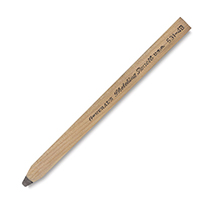
| Koh-I-Noor Hardtmuth 1538 Carpenter Flat | Czech Republic | Single, flat (rectangular) | ₹138 | Specialty — flat barrel for broad shading marks |
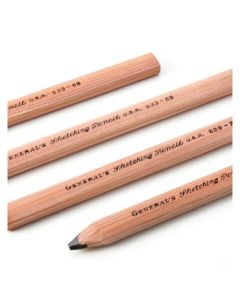
| General's Flat Sketching Pencil | USA | Single, flat | ₹155 | Specialty — wide flat lead for atmospheric tonal washes |
| Conte à Paris Sketching Pencils — Blister Pack Sets | France | Multi-pack (3-, 6-, 12-piece) | ₹350 – ₹799 | Artist-grade set — graded selection in fixed packs |
Prices shown are per single pencil except where noted as a set. Verify live pricing on the category page; some grades are sold individually so total set cost varies by selection.
The ₹8 entry price. Artline Love Art and Camlin Drawing Graphite both start at ₹8 a pencil — among the lowest legitimate prices for a real drawing pencil from a known brand on the Indian market. Useful for school assignments, art-class kits, gestural quick-draft work, and anyone wanting a tester before investing in artist-grade. The graphite is good enough to teach line, value, and shading fundamentals; the difference at the artist tier is consistency, point retention, and how dense the darkest grades reach.
For a pre-graded set in one purchase — typical 6 H/HB/2B/4B/6B/8B selections, or 12-piece 9H–9B kits — see the Drawing & Sketch Pencil Sets page; sets save effort and usually price below the same grades bought individually.
Pencil Grades Explained — 9H to 9B
Drawing pencils are graded on a hardness scale from H (Hard) to B (Black/soft), with HB (and sometimes F) sitting in the middle. The number in front of the letter intensifies the property — 9H is the hardest, palest, finest-line grade; 9B is the softest, darkest, smudgiest grade. Most Indian art schools teach with a 6-grade kit (typically 2H, HB, 2B, 4B, 6B, 8B), and most professional pencil ranges run 9H through 9B for the full spectrum.
| Grade | Hardness | Tone | Best for |
|---|---|---|---|
| 9H – 6H | Very hard | Very pale grey | Technical drafting, very fine guidelines, minimal-impression underdrawing |
| 5H – 3H | Hard | Pale grey | Architectural sketching, light underdrawing for watercolour or ink work |
| 2H – H | Slightly hard | Light grey | Initial proportion sketching, light contour line, schoolwork |
| F | Fine point | Mid-light grey | Slightly harder than HB; holds a sharper point longer |
| HB | Medium | Mid grey | All-purpose — writing, general drawing, default school pencil |
| B – 2B | Slightly soft | Mid-dark grey | Sketching, expressive line, light-to-medium shading, schoolwork |
| 3B – 4B | Soft | Dark grey | Mid-tone shading, hatching, gestural line — the "shading pencil" zone |
| 5B – 6B | Very soft | Very dark grey | Deep shadow shading, atmospheric tone, portraiture, hair |
| 7B – 8B | Extra soft | Near-black | Darkest accents, deepest shadows, dramatic value contrast |
| 9B | Maximum soft | Black | Final darkest darks, near-charcoal effect, smudgy lay-down |
The progression isn't linear — the perceived darkness jump from HB to 4B is much smaller than 4B to 8B. The softer the grade, the more graphite particles per stroke, which means more darkness, more smudge, less point retention, and faster tip wear. Hard grades (H range) hold a sharp point for fine line; soft grades (B range) lay down tone fast but blunt almost immediately.
Brand-to-brand grade calibration is not standardised. A Camlin 4B is not the same darkness as a Lyra 4B or a Conte 4B — each manufacturer formulates their graphite blend differently. European artist-grade pencils (Lyra, Conte, Faber-Castell, Staedtler) tend to run slightly softer than Indian and American mid-tier ranges at the same grade marking. Use the grade as guidance, not an absolute reference, and test how each brand's grade scale feels in your hand.
Choosing Pencil Grades for Your Drawing Goal
The fastest way to a working pencil kit is to think about what you're drawing and pick grades that match — not to buy a 24-piece set covering grades you'll never use.
| If you're doing… | Recommended grades |
|---|---|
| Sketching from life / gesture drawing | HB and 2B for line, 4B for quick value |
| Shading practice / value studies | 2B, 4B, 6B, 8B — the four-pencil shading kit |
| Portrait drawing | 2H, HB, 2B, 4B, 6B, 8B — full range for skin tones, hair, eyes, darkest shadows |
| Architectural / technical drawing | 3H, H, HB — clean fine lines without graphite spread |
| Underdrawing for watercolour / ink | 2H or H — light enough to disappear under washes / ink |
| Realistic / hyperrealistic finished drawings | Full 9H–9B range; multiple pencils per grade for long sessions |
| Mandala / fine-detail patterns | HB, 2B for the line itself, plus a sharp 2H for guidelines |
| Quick urban / landscape sketching | 2B, 4B alone — minimal kit, maximum expressive range |
| Schoolwork / day-to-day writing | HB or 2B singletons — Camlin or Artline at ₹8 |
The minimum starter: three pencils — 2H (light line), HB (mid-tone/general), 2B (shading/sketching). With these three you can already draw most subjects competently. Add 4B and 6B once you start working on value studies; add 8B when you need maximum darkness for portraits or dramatic lighting.
Best Drawing & Sketch Pencils in India — All Brands We Stock
Camlin Drawing Pencils — Drawing Graphite (Indian Heritage)
Camlin drawing pencils by Kokuyo Camlin (Mumbai) are the Indian-market default — the pencil most Indian art-school teachers recommend, the entry on every supplies list, the grade-range available in every art shop. Camlin Drawing Graphite Pencil at ₹8–₹10 per pencil. Wood barrel, smooth lay-down, decent point retention for a price-point pencil. Camlin's grade calibration runs slightly lighter than European artist-grade — a Camlin 6B is closer in darkness to a Lyra 4B-5B. The legitimate everyday pencil for sketching, schoolwork, classroom kits, and gesture practice. (Camlin sketching/shading-specific markings are stocked individually; pick by grade.) Searched as camlin drawing pencils (720/mo), camlin sketching pencils, camlin shading pencils, camlin pencil set, charcoal pencil camlin — the brand's spread covers schoolwork to art-school assignments.
Artline Sketch Pencils — Love Art Series
Artline sketching pencils from Shachihata Japan (Artline brand) — the Love Art Sketch Pencil at ₹8–₹15. Wood-cased pencil designed specifically for sketching with a soft graphite formulation. Good for first sketches, quick gesture work, classroom assignments, and as a tester before investing in a full set. Searched 880/mo as "artline sketching pencils" and another 720/mo each as "artline drawing pencils" / "artline shading pencil(s)" — the brand has surprisingly strong dedicated demand at this price.
Lyra Rembrandt Artist Sketching & Drawing
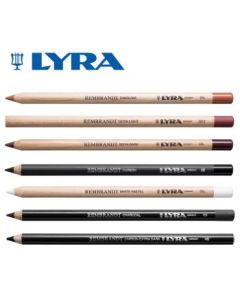
Lyra Rembrandt is the artist-grade range from Lyra Bleistift-Fabrik (Germany, founded 1806 — now under Fila Group). Lyra Rembrandt Artist Sketching & Drawing pencils, ₹70–₹80 per pencil. Break-resistant graphite core, smooth controlled lay-down, even tonal grading across the H–B range. For Indian artists stepping up from Camlin to imported artist-grade without the Faber-Castell 9000 / Staedtler Mars Lumograph price tag, Lyra Rembrandt is the value pick. Cedar-wood barrel, hexagonal grip, good point retention — comparable performance to higher-priced artist-grade ranges at roughly half the cost.
General's Artist Pencils — California Cedar Made
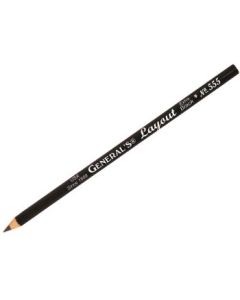
General Pencil Company — Pennsylvania, USA, founded 1889 — is one of the few American pencil makers still producing in-country. General's Artist Pencils, ₹80–₹140 per pencil. California cedar barrel (the same wood Faber-Castell 9000 uses), pure graphite-and-clay core, sourced from the same European graphite mines that supply most artist-grade pencil makers. Smooth even lay-down, dense darks at the soft end, holds a sharp point at the hard end. General's also makes the Flat Sketching Pencil at ₹155 — a wide rectangular barrel and wide flat lead designed for atmospheric tonal washes and broad shading marks; useful for landscape and gestural work where a round pencil's point is too restrictive.
Conte à Paris Sketching Pencils — Heritage 1795
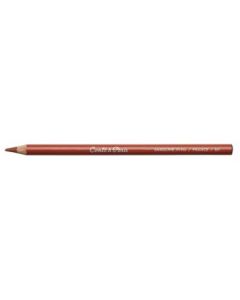
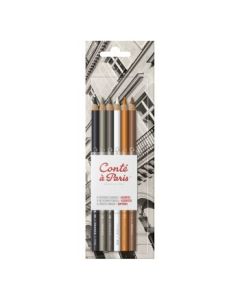
Conte à Paris is a French heritage brand, founded in 1795 by Nicolas-Jacques Conté — the chemist who invented the modern graphite-clay pencil itself. Conte à Paris Sketching Pencils, ₹131–₹190 per pencil (open stock); ₹350–₹799 for the blister-pack sets. Compressed graphite core (denser than wood-cased graphite), smooth controlled marks, exceptional darkness in the soft grades. Conte sits at the artist-grade tier alongside Faber-Castell 9000, Staedtler Mars Lumograph, and Caran d'Ache Grafwood — a brand bought specifically for the dense black-end shading. The blister-pack sets are graded selections (3-, 6-, 12-piece) and are usually the best-value way into the Conte range.
Koh-I-Noor Hardtmuth 1538 Carpenter Flat
Koh-I-Noor Hardtmuth is the Czech graphite-pencil pioneer (founded 1790) — they invented the hardness-grading system itself. Koh-I-Noor 1538 Carpenter Flat at ₹138. Flat rectangular barrel with a wide flat graphite lead — designed historically for carpenters marking timber but now widely used by artists for broad shading marks, gestural urban-sketching, and atmospheric tonal blocking that a round pencil cannot reproduce. The flat lead is sharpened to a chisel edge that produces both a wide stroke (held flat) and a fine line (held on edge). Different tool from a round drawing pencil; complements rather than replaces.
Drawing Pencils vs Sketch Pencils vs Shading Pencils — Same Product, Different Words
The terms drawing pencil, sketch pencil, sketching pencil, shading pencil, art pencil, and graphite pencil are used essentially interchangeably in Indian art retail and search. They all refer to the same product family — wood-cased graphite-and-clay pencils available in a range of hardness grades from H (hard, pale) to B (soft, dark).
The slight nuance some artists use:
- Drawing pencil — the umbrella term; any graphite pencil intended for fine art drawing rather than writing.
- Sketch pencil / sketching pencil — same thing; "sketch" emphasises quicker, gesture-driven mark-making.
- Shading pencil — typically refers to the softer B-grade end of the range (4B–8B), the grades most used for layering tonal value.
- Art pencil / artist pencil — generic descriptor; usually means an artist-grade pencil (Lyra, Conte, General's, Faber-Castell 9000) as opposed to a school-grade pencil.
- Graphite pencil — the technical term, distinguishing from charcoal pencils (different medium) or coloured pencils (pigment-based).
- Drawing ki pencil — Hindi-English hybrid for "drawing pencil"; same product, different language.
You can buy any pencil on this page for any of these purposes — the difference is grade selection, not the pencil category. For shading-focused work, weight your purchase toward 4B / 6B / 8B grades. For sketching, HB / 2B / 4B. For technical underdrawing, 2H / H. The pencils themselves are the same product family.
Drawing Pencils vs Charcoal Pencils — Different Mediums
Drawing pencils (graphite) and charcoal pencils are completely different mediums even though both come in pencil form. Picking the right one matters for what your drawing will look like.
Graphite drawing pencils use a graphite-and-clay mixture that lays down a slightly metallic, smooth grey-to-black mark. Reflective sheen at the dark end (visible especially in 8B/9B lay-down). Smudges with finger or stump; erases reasonably well; takes detail and fine line. Standard for portraiture, technical drawing, illustration, study sketching, and any work where you need full grade-range control.
Charcoal pencils use compressed willow or vine charcoal in pencil form — a totally matte, deeper, dustier black. Smudges aggressively (an asset for atmospheric shading); much harder to erase fully; produces darker darkest darks than graphite ever can. Standard for figure drawing, large-scale gestural work, atmospheric landscape, and any drawing where you want maximum tonal contrast and an expressive, slightly raw mark quality.
Many artists work with both — graphite for detailed structural drawing, charcoal for tonal masses and final shadow accents. They mix on the same paper as long as you fix charcoal first (a layer of fixative under the graphite stops smudging). See our Charcoal Pencils range for the dedicated charcoal-pencil category.
Drawing Pencils vs Mechanical Pencils — When to Use Which
Wood-cased drawing pencils on this page and propelled mechanical pencils serve different drawing needs. Some artists use both depending on the work; some pick one and never touch the other.
Wood-cased graphite pencils give you variable line — the line width changes naturally as you sharpen, blunt, or angle the pencil, which is part of the expressive quality of a hand-drawn graphite mark. Sharpening is required; the pencil shrinks as you use it; the grade is fixed (you swap pencils for different grades). The traditional drawing experience.
Mechanical pencils (also searched as "mechanical sketching pencils" — 12,100/mo on Keyword Planner) give you consistent line width with replaceable graphite leads in fixed diameters (0.3, 0.5, 0.7, 0.9, 2.0 mm) and fixed grades. No sharpening — click for fresh lead. Used heavily in technical drawing, manga drafting, urban-sketch line work over watercolour, fine illustration, and any work where line consistency matters more than expressive variation. See our Mechanical Pencils & Leads range.
Most artists who develop a serious practice end up owning both — a wood-cased set for finished drawing and tonal work, a mechanical pencil or two for line work and underdrawing.
Brands We Don't Stock — and What to Use Instead
Common drawing-pencil brands sold elsewhere in India that Art Lounge does not currently carry, with our nearest in-range substitutes:
- Faber-Castell 9000 / Faber-Castell Castell 9000 — the global pro-graphite reference standard, not stocked. Closest in-range substitute: Lyra Rembrandt Artist (₹70–₹80) for similar German artist-grade quality at lower price, or Conte à Paris Sketching (₹131+) for similar artist-tier dark-end performance. Both occupy the same artist-grade tier as Faber-Castell 9000.
- Staedtler Mars Lumograph / Staedtler 100 — German pro standard, not stocked. Closest: Lyra Rembrandt (most similar feel at lower cost) or General's Artist Pencils (₹80–₹140) for American-made artist-grade.
- Caran d'Ache Grafwood / Grafcube — Swiss premium, not stocked. Closest: Conte à Paris or Lyra Rembrandt at the artist-tier; nothing in our range matches Caran d'Ache's premium Swiss tier directly.
- Tombow Mono / Mono 100 — Japanese pro standard, not stocked. Closest: General's Artist Pencils for similar smooth lay-down, or Lyra Rembrandt.
- Mitsubishi / Uni Hi-Uni — Japanese premium, not stocked. Closest: Conte à Paris or Lyra Rembrandt.
- Apsara drawing pencils / Apsara Platinum — Indian mass-market, not stocked. Closest: Camlin Drawing Graphite (₹8–₹10) at the same Indian-market entry tier.
- Doms drawing pencils / Doms X1 — Indian schoolwork brand, not stocked. Closest: Camlin Drawing Graphite or Artline Love Art (₹8+).
- Nataraj drawing pencils — Indian school-grade, not stocked. Closest: Camlin Drawing Graphite.
- Brustro Fine Art Graphite — Indian artist-grade brand, not stocked. Closest: Lyra Rembrandt for the same artist-tier step up from Camlin.
- Mont Marte drawing pencils — Australian mass-market, not stocked. Closest: Lyra Rembrandt or Camlin depending on tier.
- Prismacolor Premier / Scholar Graphite — American, not stocked. Closest: General's Artist Pencils (also American, similar tier).
- Derwent Graphic / Procolour — British, not stocked. Closest: Lyra Rembrandt or Conte à Paris.
The substitution strategy: for entry / schoolwork, Camlin or Artline at ₹8; for artist-grade upgrade from school pencils, Lyra Rembrandt at ₹70–₹80; for top-tier artist work, Conte à Paris or General's. The Faber-Castell 9000 / Staedtler Mars Lumograph tier is genuinely missing from our range — Lyra Rembrandt is our closest practical substitute and many artists find it equivalent in everyday use.
How to Choose Your First Drawing Pencil Kit
| You are… | Start with |
|---|---|
| A school student or anyone drawing for the first time | 3 individual Camlin or Artline pencils — 2H, HB, 2B (₹8–₹15 each, total ~₹35) |
| A beginner serious about learning drawing | A 6-pencil pre-graded set — see Drawing & Sketch Pencil Sets — covering 2H to 6B |
| An intermediate student stepping up from Camlin | Lyra Rembrandt — pick HB, 2B, 4B, 6B individually (~₹300 total) |
| A serious sketch artist working in pencil daily | Conte à Paris Sketching Pencils — open-stock or a blister-pack set |
| Doing portrait or hyperrealistic drawing | Conte à Paris or General's Artist Pencils — full 2H–9B range, plus an 8B for darkest darks |
| Doing fast urban / landscape sketching | 2 pencils only — Lyra Rembrandt 2B + 6B, or one Conte 4B + one 8B |
| Doing technical / architectural drawing | Lyra Rembrandt or Conte 2H, H, HB; or a mechanical pencil from Mechanical Pencils |
| Looking for the wide flat shading effect | General's Flat Sketching Pencil (₹155) or Koh-I-Noor 1538 Carpenter Flat (₹138) |
| Buying for a gift / pre-graded set | Conte à Paris Blister Pack (₹350–₹799) or see Pencil Sets for boxed kits |
The minimum starter kit for drawing is three pencils: 2H, HB, 2B. With those three you have a light line (2H), a mid-tone all-purpose (HB), and a sketching/shading entry (2B). Total cost in Camlin or Artline: under ₹40. Total cost in Lyra Rembrandt: around ₹220. Add 4B and 6B once you're shading regularly; add 8B when you start working on darker subjects or portraits.
Pencil Care, Sharpening & Storage
Drawing pencils last longer and perform better with three small habits:
Sharpen with a long-taper sharpener or a knife. Standard short-cone sharpeners produce a stubby tip that wears down in one or two strokes. A long-taper sharpener (or a craft knife followed by sandpaper) produces a long exposed graphite tip — gives you both fine-line work (held vertical) and broad shading work (held flat) from the same point. The Carpenter Flat and General's Flat Sketching pencils are sharpened to a chisel edge with a knife rather than a rotary sharpener.
Don't drop them. Even high-quality artist-grade pencils break internally if dropped on a hard surface — the graphite core fractures inside the wood, and you'll find the lead breaking off in chunks every time you re-sharpen. Pencils stored in cases, rolls, or tin boxes last dramatically longer than loose pencils in a desk drawer.
Pair pencils with the right eraser. A kneaded eraser lifts graphite cleanly without abrading the paper — essential for shading work where you may want to erase highlights back into a tonal area. Plastic and vinyl erasers (Staedtler Mars Plastic, Faber-Castell Dust-Free) handle harder erasing. Avoid the rubber erasers on the back of school pencils — they smear graphite rather than lift it.
For shading and softer grades, work on a paper that can take graphite layering — Strathmore 300/400 series sketch paper, Canson XL, Bristol vellum. Cheap copy paper compresses under repeated layering and prevents you reaching the darkest values; serious shading needs paper with a slight tooth.
Why Buy Drawing Pencils from Art Lounge?
Mass-market e-commerce listings for drawing pencils in India are inconsistent — Camlin and Apsara grades vary by batch, sets sometimes ship with mismatched grades, and "premium" listings on marketplaces often turn out to be old stock that has lost its smooth lay-down. Art Lounge sources directly from authorised distributors for every brand on this page, so the Camlin you buy is the current-batch Indian-made stock, the Conte à Paris is the genuine French heritage product (not a repackaged lookalike), and the General's Artist Pencils are the authentic California-cedar barrel made in Pennsylvania. Our range is intentionally curated rather than exhaustive — we don't carry every pencil brand sold in India, but we do carry a balanced selection covering the ₹8 entry tier through to genuine artist-grade. Pricing is competitive against Amazon, Flipkart, and category specialists on identical SKUs with a price-match guarantee. Delivery reaches major Indian cities in 2–5 business days. If you want advice — which Lyra grades to pick first, whether Conte à Paris justifies its price over Lyra Rembrandt, what a 6-pencil starter kit should look like for portraiture — our team works with these pencils daily and will tell you honestly.



