


Oil Paints & Colors
-

-
-

-
-
-
-
Sale
Shop India's Widest Range of Artist Oil Paints & Oil Colours
Art Lounge stocks every major artist oil paint brand available in India — from Camlin Artists' Oil Colours at ₹95 to professional Winsor & Newton Artists' Oil Colour, Gamblin, and Holbein Vernét Superior. Traditional linseed-oil formulations for classical technique, plus Winsor & Newton Artisan Water Mixable Oil for solvent-free studios. Every tube ships fresh from authorized distributors with a price-match guarantee and 2–5 day delivery across India.
Note: These are artist oil paints for canvas painting and fine art — not wall paint or house paint. For wall or house paint, please see Asian Paints, Berger, or similar retailers.
Related categories on Art Lounge
- Oil Paint Sets — curated starter and professional collections
- Oil Painting Mediums & Solvents — linseed oil, Liquin, turpentine, OMS
- Oil Varnishes — gloss, matte, and satin finishes for finished paintings
- Oil Painting Brushes — bristle and synthetic brushes for oils
- Browse the full Oil Paint & Mediums hub
Oil Paint Prices in India — Brand by Brand
Artist oil paint pricing reflects pigment quality, oil content, grinding process, and country of origin. Here's what each brand we stock actually costs:
| Brand | Sizes | Price range | Best for |
|---|---|---|---|
| Camlin Artists' Oil Colours | 20 / 40 / 60 / 120 ml | ₹95 – ₹645 | Art schools, learners, affordable practice |
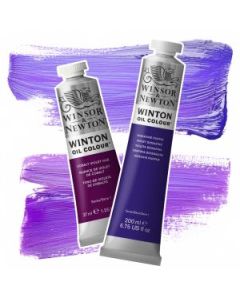
| Winsor & Newton Winton Oil Colour | 37 / 200 ml | ₹375 – ₹1,550 | Developing painters wanting imported quality |
| Pebeo Studio Fine XL Oil | 37 / 200 ml + iridescents | ₹280 – ₹940 | Quick-drying (3–6 day touch-dry), mixed media |
| Winsor & Newton Artisan Water Mixable Oil | 37 ml | from ₹765 | Solvent-free / water-cleanup workflows |
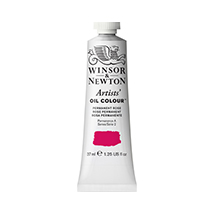
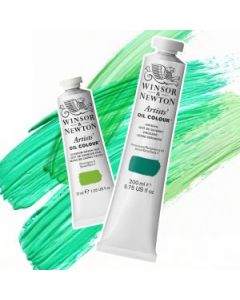
| Winsor & Newton Artists' Oil Colour | 37 / 200 ml | ₹799 – ₹8,999 | Professional exhibition work, Series 1–5 |
| Gamblin Artist's Oil Colors | 37 / 150 ml | ₹1,015 – ₹8,175 | Triple-roller-ground professional oils |
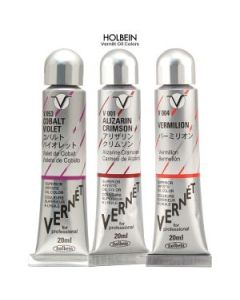
| Holbein Vernét Superior Artists' Oil Colour | 20 ml | ₹1,400 – ₹5,690 | Master / archival work, ultra-fine grind |
Within professional ranges, Series pricing reflects pigment cost, not markup. Series 1 colours (earth tones, synthetic ultramarine, iron oxides) are cheapest. Series 4–5 contain genuine cadmiums, cobalts, and rare earth pigments — these cost dramatically more because the pigments themselves are expensive. Building a palette of Series 1–2 earth and mixing colours with just one or two Series 4 specialty tubes is how most artists balance cost and colour range.
Traditional vs Water-Mixable Oil Paints — What's the Difference?
| Traditional oils | Water-mixable oils | |
|---|---|---|
| Binder | Linseed, walnut, poppy, or safflower oil | Modified linseed oil that emulsifies with water |
| Thinning | Turpentine or odourless mineral spirits (OMS) | Plain water |
| Brush cleanup | Solvent rinse, then soap & water | Soap & water only |
| Drying time | 2–14 days touch-dry; Pebeo XL 3–6 days | 2–12 days touch-dry (similar to traditional) |
| Working time | Hours to days (extended blending) | Hours to days (identical handling) |
| Archival quality | Standard for 500+ years of fine art | Identical — same pigments, same chemistry |
| Best for | Classical technique, glazing, fat-over-lean builds | Apartments, shared studios, ventilation-limited spaces |
| Brands we stock | Camlin, W&N Winton, W&N Artists', Pebeo XL, Gamblin, Holbein | Winsor & Newton Artisan |
Both produce professional-quality, archival artwork. Water-mixable oils aren't inferior — they use the same pigments and oil chemistry, just with a clever modification that lets water emulsify the binder. A finished painting in either medium is indistinguishable once varnished. Choose based on your workspace (apartment vs ventilated studio) and how much you're willing to deal with solvents.
Student, Artist-Grade Fine, and Professional — What Changes
Oil paint is sold in three quality tiers, all of which produce real paintings — the differences are about pigment concentration, binder quality, and colour strength, not whether the paint "works":
Student / entry-grade (Camlin Artists' Oil Colours, ₹95+): Suitable for learning fundamentals, underpainting, and large-scale background work. Uses some synthetic substitutes for expensive cadmiums and cobalts, plus slightly more filler. Tinting strength is lower — you'll use more paint for the same coverage. Perfect for developing brush handling, colour mixing, and technique.
Artist-grade fine quality (W&N Winton ₹375+, Pebeo Studio Fine XL ₹280+): The sweet spot for most painters. Uniform pigment load across the range, ASTM I lightfastness on many colours, proper oil binders. Winton uses Series 1 flat pricing (every colour costs the same regardless of pigment). Pebeo XL is notable for quick-drying formulation — useful if you work in layers.
Artist-grade professional (W&N Artists' Oil Colour ₹799+, Gamblin Artist's Oil Colors ₹1,015+, Holbein Vernét Superior ₹1,400+): Higher pigment concentrations, pure single-pigment formulations, ASTM I lightfastness across the full range, careful oil-to-pigment ratios preventing yellowing. Series pricing reflects actual pigment cost. For exhibition work, portrait commissions, or pieces intended to last generations, professional grade is what museums and galleries expect.
All Oil Paint Brands We Stock — Detailed Guide
Camlin Artists' Oil Colours
India's heritage artist brand by Kokuyo Camlin (Mumbai). 66 vibrant colours across 20 ml, 40 ml, 60 ml, and 120 ml tubes. Quick-drying formulation is notable — the paint sets up faster than imported traditional oils, which helps working in layers. Camlin uses an A / B / C lightfastness scale (not ASTM). Trusted across Indian art schools for five decades. The Indian artist's default entry point at ₹95 upwards.
Winsor & Newton Winton Oil Colour
British artist-grade fine quality since 1832. Only 37 ml and 200 ml sizes, uniform Series 1 flat pricing (every colour the same price), ASTM I lightfastness. Touch-dry in 2–12 days. Considered the workhorse for developing painters wanting imported quality without the Artists' Oil Colour premium. Compatible with all W&N mediums including Liquin, which speeds touch-dry by ~50%.
Winsor & Newton Artists' Oil Colour
The professional standard worldwide. 37 ml and 200 ml tubes, Series 1–5 pricing reflecting genuine pigment cost (Series 1 earth tones ₹799, Series 5 specialty pigments up to ₹8,999). ASTM I lightfastness. High pigment load delivers intense tinting strength — a little goes far, offsetting the higher per-tube cost. Touch-dry 2–14 days depending on pigment.
Winsor & Newton Artisan Water Mixable Oil
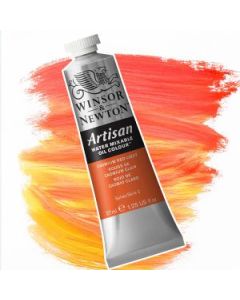
The global flagship water-mixable oil line. 37 ml tubes from ₹765. Handles identically to traditional oils — buttery texture, extended working time, rich colour — but thins and cleans up with water. Specially formulated Fast Drying Colours cure in ~2 days; medium colours 5 days; slow colours 5+ days. Artisan Fast Drying Medium speeds drying by ~50%. The natural choice for apartment studios and artists avoiding solvents.
Pebeo Studio Fine XL Oil
French artist-grade fine quality. 62 colours total — 52 traditional and modern colours plus 5 iridescent Dyna and 5 Glaze colours. Tubes in 37 ml and 200 ml (iridescents in 180 ml), ₹280–₹940. Quick-drying — touch-dry in 3–6 days. Adding the Pebeo siccative cuts overpaint time to as little as 3 hours. Explicitly positioned for both professionals and students of art — hybrid quality-accessibility.
Gamblin Artist's Oil Colors
American professional oils with triple-roller-ground pigments for consistent viscosity across the range. 37 ml and 150 ml tubes, ₹1,015 – ₹8,175. Uses carefully sourced pigments including rare cadmiums and cobalts. Gamblin is known for technical rigour — they publish detailed pigment composition for every colour. Popular among American realists and landscape painters.
Holbein Vernét Superior Artists' Oil Colour
Japanese premium artist oils. 40 brilliant colours, 20 ml tubes only, ₹1,400 – ₹5,690. Pigments ground approximately 50% finer than conventional artist oils — produces smoother application and exceptional covering power. Silver White uses poppy oil (non-yellowing) making it ideal for light passages. Star-based lightfastness rating (not ASTM). Favoured by realist painters, portrait artists, and anyone demanding the finest pigment-to-oil grinding available.
How to Choose Your First Oil Paint
| You are… | Start with |
|---|---|
| An art school student or a total beginner | Camlin Artists' Oil Colours — 40 ml tubes in the basic palette |
| An intermediate painter wanting imported quality at moderate prices | Winsor & Newton Winton or Pebeo Studio Fine XL Oil |
| A serious painter working toward exhibition or sale | Winsor & Newton Artists' Oil Colour or Gamblin Artist's Oil Colors |
| Working in an apartment, shared studio, or avoiding solvents entirely | Winsor & Newton Artisan Water Mixable Oil |
| A realist or portrait painter who wants ultra-fine grinding | Holbein Vernét Superior Artists' Oil Colour |
| Wanting quick-drying oils without moving to alkyd-specific paints | Pebeo Studio Fine XL Oil (3–6 day touch-dry) |
Basic starter palette for oil painting: Titanium White (largest tube — you'll use it most), Ivory Black, Ultramarine Blue, Cadmium Red (or Pyrrole Red substitute), Cadmium Yellow (or Yellow Ochre), Burnt Umber, Burnt Sienna. Add Viridian and Alizarin Crimson as you develop. Keep whites in 120 ml or 200 ml tubes; other colours in 37 ml or 40 ml.
Oil Painting Basics — Surface Prep, Layering, Cleanup
Surface preparation: Prime canvas or panels with oil-based primer or acrylic gesso (multiple coats). Never paint oils over unprimed canvas — the oil sinks in, cracks, and eventually rots the fabric. Acrylic gesso under oils is fine; oils over acrylic-painted passages is not fine (the non-porous acrylic surface causes adhesion problems).
Fat-over-lean: The classical rule preventing cracking. Early layers should contain less oil than later layers. Thin initial layers with solvent (turpentine or OMS). Gradually add more linseed or walnut oil in upper layers. Lean layers dry faster than fat ones — this differential prevents surface cracking as the painting cures.
Drying: Earth colours (umbers, siennas) dry within days. Ivory black, alizarin, and some blues remain workable for weeks. Thin applications dry faster than impasto. Adding Liquin or alkyd medium accelerates drying roughly 50%. Surface-dry ≠ fully cured — complete cure takes 6–12 months before varnishing.
Cleanup: Brush cleaner is gentler on bristles than straight solvent. Solvent rinse → brush cleaner → soap & water. Never let oil paint dry in brushes — dried paint destroys the bristles permanently. For palettes, scrape workable paint off before it hardens; disposable palette paper avoids cleanup entirely.
Why Buy Oil Paints from Art Lounge?
Sourcing authentic professional oil colours in India presents real challenges — many retailers stock expired tubes where oil has separated, colours that have skinned over, or counterfeit products masquerading as imported brands. Art Lounge maintains fresh inventory sourced exclusively from authorized distributors, guaranteeing you receive paints in optimal condition. We offer India's most competitive pricing on Camlin, Winsor & Newton, Pebeo, Gamblin, and Holbein without compromising authenticity. Delivery reaches major cities within 2–5 business days with packaging designed to prevent tube damage. Whether you need guidance on starter palettes, medium selection, or brand comparisons, our team provides support based on genuine painting experience.
Frequently Asked Questions About Oil Paints
What's the best oil paint brand for beginners in India?
Camlin Artists' Oil Colours for the most accessible Indian-made option — 66 colours starting at ₹95, trusted by art schools. For imported artist-grade quality at moderate prices, Winsor & Newton Winton Oil Colour (₹375+). Both teach real oil painting fundamentals without the premium price of professional-tier paints.
Oil paint vs oil colour — what's the difference?
Nothing — they're the same product. "Oil colour" is the preferred Indian English term; "oil paint" is more common in American usage. Both refer to pigment suspended in a drying oil (typically linseed) used for canvas painting.
How much oil paint do I need to start painting?
A basic 7-colour palette is enough for most subjects: Titanium White, Ivory Black, Ultramarine Blue, Cadmium Red (or Pyrrole Red), Cadmium Yellow (or Yellow Ochre), Burnt Umber, Burnt Sienna. Buy white in a 120 ml or 200 ml tube (you'll use the most); other colours in 37 ml or 40 ml. Total starter budget: ₹2,000–₹4,000 with Camlin, ₹4,000–₹8,000 with Winton.
Can I mix different oil paint brands together?
Yes — all oil paints use compatible oil binders and mix without chemical issues. You may notice slight handling differences (Gamblin is smoother than W&N; Holbein is more buttery than Winton) but the colours blend normally. Test unfamiliar combinations on scrap canvas before committing to finished work. For the most consistent handling, stick to one brand when possible.
Do oil paints work on canvas straight from the tube?
Yes — oil paint applies directly to primed canvas. Canvas must be primed first with oil-based primer or acrylic gesso (multiple coats) to prevent the oil from rotting the fabric. Avoid raw, unprimed canvas. Most stretched canvases sold in India come pre-primed; verify on the label if unsure.
Can I mix water with oil paints?
Traditional oil paints do not mix with water — they thin only with solvents (turpentine, mineral spirits) or additional oils (linseed, walnut, safflower). However, water-mixable oil paints like Winsor & Newton Artisan are specially formulated to thin and clean up with water while handling like traditional oils. Don't try to thin traditional oils with water — it causes separation and adhesion failure.
How long do oil paintings take to dry?
Surface-dry (touchable without smudging) takes 2–14 days depending on pigment and thickness. Winsor & Newton Winton and Artists' are touch-dry in 2–12 days; Pebeo Studio Fine XL is quick-drying in 3–6 days. Complete curing — where paint is ready for varnish — takes 6–12 months for normal applications, years for thick impasto. Adding Liquin or alkyd medium accelerates touch-dry by ~50%.
Do I need toxic solvents to paint with oils?
Not necessarily. Water-mixable oils like W&N Artisan eliminate solvents entirely. Odourless mineral spirits (OMS) like Sansodor offer low-fume alternatives to turpentine. Some artists work completely solvent-free using only oils for thinning (drying times extend significantly). Always work in ventilated spaces when using any solvent.
What's the difference between Series 1 and Series 5 oil paints?
Series pricing reflects pigment cost, not quality. Series 1 uses inexpensive pigments (earth tones, synthetic ultramarine, iron oxides) — still professional grade but cheap to manufacture. Series 4–5 contains genuine cadmiums, cobalts, and rare minerals that cost dramatically more raw. The paint itself is equally well-made; only the pigment cost differs. Build your palette around Series 1–2 colours and invest in Series 4+ only for pigments with unique characteristics you genuinely need.



