


Acrylic Paints

-

-
-
-
-
-
-
-

-
Sale

-

Buy Artist Acrylic Paints & Colours Online in India
Art Lounge stocks India's widest selection of artist-grade acrylic paints and colours — every major brand serving professional painters, art school students, and serious hobbyists. From Camel Artists' Acrylic Colours (India's most widely-used artist acrylic, from ₹25) to Winsor & Newton Professional Acrylic, Liquitex Professional Heavy Body, Pebeo High Viscosity Studio, and specialty ranges including metallic, pearl, neon, iridescent, chalk-effect, and ready-to-pour acrylics. Every tube, jar, and bottle ships fresh from authorized distributors with a price-match guarantee and 2–5 day delivery across India.
Note: These are artist and fine-art acrylic paints formulated for canvas, paper, wood, board, and mixed-media work — not wall paint, car paint, or house paint. For architectural coatings, please see Asian Paints, Berger, or similar retailers.
Quick links — related acrylic categories on Art Lounge
- Acrylic Paint Sets — curated starter and professional colour sets
- Acrylic Mediums — gels, pouring medium, retarders, glazing, modelling paste
- Acrylic Varnish — gloss, matte, satin finishes for finished paintings
- Acrylic Craft Paint — for DIY, decorative, multi-surface projects
- Acrylic Markers — pen-form acrylic for detail, lettering, line work
- Acrylic Brush Sets — synthetic brushes built for acrylic viscosity
- Browse the full Acrylic Paint & Mediums hub
Acrylic Paint Prices in India — Every Brand We Stock
Acrylic paint prices in India vary widely by brand tier, pigment grade, viscosity, and container size. Here's the complete Art Lounge price map for every artist acrylic range we carry — verified and updated regularly:
| Brand / Range | Origin | Sizes | Price range | Best for |
|---|---|---|---|---|
| Camel Acrylic Colours (standard) | India | 15/40/100/500 ml | ₹25 – ₹400 | School, beginner, practice painting |
| Camlin / Camel Artists' Acrylic Colours | India | 40/120 ml; 500 ml & 1 L jars | ₹100 – ₹1,200 | Art school, serious practice (60 colours) |
| Camel Artist HD Acrylics | India | 60 ml tube; 250 ml jar | ₹200 – ₹1,050 | Camel's higher-pigment HD range, artist-grade |
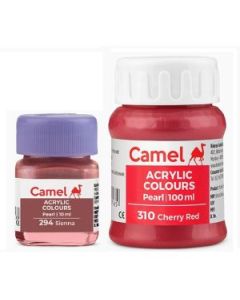
| Camel Acrylic Colours Pearl Range | India | 15/100 ml | ₹22 – ₹170 | Pearlescent sheen — decorative, mixed media |
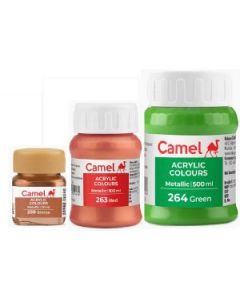
| Camel Acrylic Colours Metallic Range | India | 15/100/500 ml | ₹25 – ₹800 | Gold, silver, bronze, copper — decorative, religious art, calligraphy |
| Mont Marte Signature Acrylic Paint | Australia | 75 ml; 500 ml | ₹129 – ₹1,499 | Affordable imported artist-grade, wide colour range |
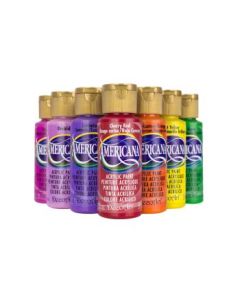
| DecoArt Americana Acrylic Paints | USA | 2 fl oz bottles (59 ml) | ₹225 – ₹1,025 | Multi-surface, craft, decorative, mixed media |
| DecoArt Americana Multi Surface Satin | USA | 2 fl oz bottles | ₹275 – ₹915 | Durable satin finish — wood, metal, fabric, ceramic, canvas |
| DecoArt Acrylic Craft Paint – Dazzling Metallics | USA | 2 fl oz bottles | ₹248 | Rich metallic finish — gold leaf, rose gold, pearl |
| DecoArt Multi Surface Acrylic – Black Light Neons | USA | 2 fl oz bottles | ₹292 | UV-reactive neons — blacklight displays, stage, festivals |
| DecoArt Media Fluid Acrylics | USA | 1 fl oz bottles | ₹285 – ₹660 | Artist-grade fluid — mixed media, glazing, detail |
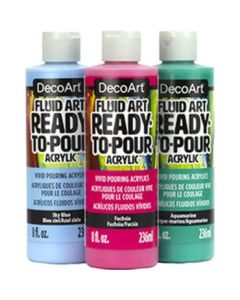
| DecoArt FluidArt Ready-to-Pour Acrylic | USA | 8 fl oz (236 ml) bottles | ₹755 – ₹800 | Acrylic pouring, fluid art — pre-mixed, no medium needed |
| Winsor & Newton Galeria Acrylic Colour | UK | 60/200 ml tubes; 500 ml jar | ₹250 – ₹1,990 | Fine-grade artist acrylic — bridge to professional |
| Winsor & Newton Professional Acrylic | UK | 60/200 ml tubes | ₹899 – ₹5,145 | Exhibition / professional commission work, ASTM I/II |
| Liquitex Basics Acrylic Colour | USA | 14/118/400 ml tubes/bottles | ₹360 – ₹2,099 | Student/beginner imported — Liquitex's entry line |
| Liquitex Professional Heavy Body | USA | 59/138/946 ml | ₹649 – ₹5,695 | Professional heavy body — impasto, palette knife, textural |
| Pebeo High Viscosity Studio Acrylics | France | 100/250/500/1000 ml | ₹320 – ₹1,550 | Studio-grade, high-volume work, ASTM I/II |
| Cosmos Easy Max Acrylic Paint Spray | India | 400 ml aerosol, 2 caps | ₹449 | All-surface acrylic spray — metal, plastic, wood |
| Cosmos Ultra Matte Chalk Effect Acrylic | India | 400 ml aerosol | ₹449 | Matte chalky finish — furniture, decor, upcycling |
Why prices range so widely: Professional-tier acrylics (Liquitex Professional, W&N Professional) use higher pigment concentrations, purer single-pigment formulations, and premium acrylic polymer binders — the same raw materials cost dramatically more. Student and artist-grade fine paints use a touch more filler and occasionally substitute synthetic equivalents for expensive pigments. Indian brands like Camel/Camlin keep pricing competitive by manufacturing locally. All are archival when used correctly — the difference is colour strength, handling feel, and long-term permanence.
Camel vs Camlin — The Same Brand, Just Different Names
A lot of painters in India search for "Camel acrylic colour" and others for "Camlin acrylic colour" — they're the same brand. The parent company is Kokuyo Camlin Limited, Mumbai, and the brand name on tubes and jars reads Camel or Camlin depending on the era and product line. Camel Artists' Acrylic Colours (60 colours, 40/120 ml tubes, 500 ml/1 L jars) is the core fine-artist range. Camel HD Acrylics (high-density pigment) is the step-up artist-grade line. Camel Pearl and Metallic ranges are specialty sheens for decorative and mixed-media work. All carry Camel's A (Absolutely Permanent) or B (Permanent) lightfastness rating.
Acrylic Paint Viscosities — Which Type Suits Your Technique?
| Viscosity | What it feels like | Best for | Brands we stock |
|---|---|---|---|
| Heavy Body | Thick, stiff, buttery — holds peaks from the palette knife | Impasto, palette knife, expressive textural work | Liquitex Professional Heavy Body, Pebeo High Viscosity Studio |
| Soft / Medium Body | Creamy, brushable, levels out moderately | General brushwork, smooth finishes, versatile all-round | Camel Artists', Camel HD, W&N Galeria, W&N Professional, Mont Marte Signature, Liquitex Basics |
| Fluid / High Flow | Cream-like, flows off a brush, self-levels | Detail work, glazing, staining, smooth coverage, calligraphy | DecoArt Media Fluid Acrylics |
| Pre-Mixed Pouring | Thinner, self-levels completely, flows in sheets | Acrylic pouring, fluid art, cells, resin-style finishes | DecoArt FluidArt Ready-to-Pour |
| Multi-Surface | Smooth, fast-drying, strong adhesion | Wood, metal, fabric, ceramic, glass, plastic — no prep | DecoArt Americana, DecoArt Americana Multi Surface Satin |
| Aerosol (Spray) | Atomised spray, fast-drying, no brush marks | Large surfaces, backgrounds, upcycling, stencilling, graffiti-style | Cosmos Easy Max, Cosmos Ultra Matte Chalk Effect |
One thing to know: fluid acrylics aren't just "heavy body with water added". Reputable fluid and heavy-body acrylics are formulated separately with different binder ratios — both carry full pigment loads. So choose based on the technique you want, not because you think fluid has less colour.
Student, Artist-Grade Fine, and Professional — What Changes Between Tiers
Student / entry-grade (Camel standard ₹25+, Camlin Artists' ₹100+, Liquitex Basics ₹360+): Suitable for learning fundamentals, colour mixing practice, underpainting, large-scale background work, and art education. Lower tinting strength than professional paints — you'll use more paint for the same coverage. Perfect for developing brush handling and technique before investing in professional materials. All student acrylics from reputable brands are still archival and will last decades when properly varnished.
Artist-grade fine quality (W&N Galeria ₹250+, Camel HD ₹200+, Mont Marte Signature ₹129+, Pebeo High Viscosity Studio ₹320+): The sweet spot for most painters. 60 colours per range, AA/A or ASTM I/II lightfastness, stronger pigment loads, consistent viscosity. W&N Galeria is explicitly positioned as a "fine grade acrylic" bridging beginner and professional. Camel HD uses higher-density pigments compared to standard Camel. Mont Marte Signature is the most affordable imported artist-grade option in India.
Artist-grade professional (Liquitex Professional Heavy Body ₹649+, W&N Professional Acrylic ₹899+): Highest pigment concentrations in the category, pure single-pigment formulations where possible, ASTM I or II lightfastness across nearly the full colour range. For exhibition work, gallery commissions, or pieces intended to last generations, this is the grade museums and conservation-minded artists expect. Single-pigment paints mix to cleaner, more predictable colours than multi-pigment equivalents.
Multi-surface & specialty (DecoArt Americana ₹225+, DecoArt FluidArt ₹755+, DecoArt Multi Surface Satin ₹275+): Formulated for specific purposes — multi-surface acrylics work on canvas, wood, metal, fabric, terracotta, and ceramic without additional preparation. Ready-to-pour acrylics arrive pre-mixed to pouring consistency. Specialty acrylics (Dazzling Metallics, Black Light Neons) deliver effects regular tube paints can't achieve.
Specialty & Effect Acrylic Paints
Beyond standard artist acrylics, Art Lounge stocks every specialty effect range fine artists and designers ask for:
- Metallic Acrylics — Camel Acrylic Colours Metallic Range, DecoArt Dazzling Metallics. Gold, silver, bronze, copper, rose gold, antique brass. Rich reflective finish for decorative, religious, and calligraphic work.
- Pearl / Iridescent Acrylics — Camel Acrylic Colours Pearl Range. Soft pearlescent sheen that shifts with light angle — used for highlights, mixed media, and luminous backgrounds.
- Neon / Fluorescent Acrylics — DecoArt Multi Surface Black Light Neons. UV-reactive under blacklight for stage, festivals, event signage.
- Chalk-Effect Acrylics — Cosmos Ultra Matte Chalk Effect. Ultra-matte chalky finish straight from the can — popular for furniture upcycling, upcycled decor, rustic finishes.
- Acrylic Spray Paint — Cosmos Easy Max (acrylic paint spray, 2 caps). Large-area coverage on metal, wood, plastic, ceramic. Use for backgrounds, stencilling, underpainting, upcycling.
- Ready-to-Pour Acrylics — DecoArt FluidArt. Pre-mixed for acrylic pouring and fluid art — skip the medium-mixing step.
- Fluid / High-Flow Artist Acrylics — DecoArt Media Fluid Acrylics. Artist-grade fluid viscosity for glazing, detail, staining on canvas and paper.
Every Acrylic Brand We Stock — Detailed Guide
Camel Acrylic Colours (standard) & Camlin / Camel Artists' Acrylic Colours
India's heritage artist acrylic brand by Kokuyo Camlin, Mumbai. The standard Camel Acrylic Colours range starts at ₹25 for 15 ml tubes — the entry point for school and beginner painters. The Camel Artists' Acrylic Colours range (also labelled Camlin on older stock) offers 60 colours in 40 ml / 120 ml tubes plus 500 ml and 1 L jars — ₹100 to ₹1,200. Soft, creamy, fast-drying, multi-purpose formulation. Lightfastness rated A (Absolutely Permanent) or B (Permanent) on Camel's proprietary scale. Trusted across Indian art schools for decades. Same brand whether you search "Camel" or "Camlin".
Camel Artist HD Acrylics
Camel's higher-density pigment artist-grade range. 60 ml tubes and 250 ml jars, ₹200 – ₹1,050. Stronger pigment load than standard Camel or Camel Artists' acrylics, with improved coverage and tinting strength. The in-between choice for painters wanting Indian manufacturing with a step up in quality.
Camel Acrylic Colours Pearl Range
Pearlescent acrylic from Camel. 15 ml & 100 ml sizes, ₹22 – ₹170. Soft, luminous sheen that shifts subtly with the viewing angle — ideal for backgrounds, highlights, religious art, and mixed-media accents. Mixes into any acrylic painting to add a dimensional pearl effect.
Camel Acrylic Colours Metallic Range
Metallic acrylic from Camel. 15 ml / 100 ml / 500 ml sizes, ₹25 – ₹800. Rich gold, silver, bronze, copper, and specialty metallics. Popular for calligraphy, decorative art, religious iconography, and mixed-media. Apply over a dark underlayer for maximum metallic richness.
Mont Marte Signature Acrylic Paint
Australian imported artist acrylic. 75 ml and 500 ml sizes, ₹129 – ₹1,499. The most affordable imported artist-grade option in India — Mont Marte positions Signature for developing artists wanting colour quality above Indian student grades without committing to professional tube pricing. Wide colour range, consistent viscosity, good coverage.
Liquitex Basics Acrylic Colour
Liquitex's student/entry line. 14 / 118 / 400 ml sizes, ₹360 – ₹2,099. American-brand chemistry at a student-friendly price. Intermix-compatible with Liquitex Professional Heavy Body — so painters can upgrade without colour-shift. Good starter acrylic for painters who plan to move to Liquitex Pro eventually.
Liquitex Professional Heavy Body Acrylic Colour
American professional-grade heavy body — globally considered the reference standard. 59 / 138 / 946 ml sizes, ₹649 – ₹5,695. Thick, buttery viscosity that retains brushstrokes and palette knife marks — the go-to for impasto and textural work. Lightfastness mix of Excellent and Very Good; some metallic/iridescent/fluorescent colours are not ASTM rated. Professional painters choose Liquitex for heavy-body work specifically because it holds shape and dries without significant colour shift.
Winsor & Newton Galeria Acrylic Colour
British artist-grade fine quality acrylic. 60 colours, 60 ml and 200 ml tubes plus 500 ml jars, ₹250 – ₹1,990. Positioned by Winsor & Newton as a "fine grade acrylic" delivering professional-quality results at accessible pricing. Lightfastness AA or A on W&N's own rating scale (except Opera Rose which is intentionally fugitive). Many individual colours also carry ASTM I or II ratings. The bridge brand for painters graduating from beginner into serious artist-grade practice.
Winsor & Newton Professional Acrylic Colour
British professional acrylic — the flagship W&N acrylic line. 60 ml and 200 ml tubes, ₹899 – ₹5,145. Highest pigment load in the W&N acrylic range. Lightfastness mostly W&N Permanence Rating; individual colours ASTM I (Excellent) or II (Very Good). For serious exhibition and commission work demanding the deepest colour saturation and archival permanence.
Pebeo High Viscosity Studio Acrylics
French high viscosity studio acrylics. 100 / 250 / 500 / 1000 ml sizes, ₹320 – ₹1,550. Developed with the same pigment precision as Pebeo's extra-fine artist acrylics. Positioned for professionals, mixed media artists, art students, and high-volume users (murals, large canvases). Lightfastness ASTM I (Excellent) or II (Very Good). Particularly useful for artists needing larger containers for coverage-heavy work.
DecoArt Americana Acrylic Paints
American multi-surface acrylic paint. 2 fl oz bottles, ₹225 – ₹1,025. Multi-surface, multi-use formulation — canvas, wood, terracotta, paper, fabric, metal, ceramic. Fast-drying, highly pigmented, self-sealing. A favourite for DIY, mixed media, home decor, and art journaling.
DecoArt Americana Multi Surface Satin Acrylic Paint
Durable satin-finish acrylic. 2 fl oz bottles, ₹275 – ₹915. All-surface adhesion with a soft satin sheen — designed for surfaces that see wear (furniture, planters, outdoor-friendly decor). No primer or sealer needed on most substrates.
DecoArt Acrylic Craft Paint – Dazzling Metallics
Rich metallic craft acrylic. 2 fl oz bottles, ₹248. Gold leaf, rose gold, splendid gold, champagne pearl, and other luxe metallics. Strong coverage, fast-drying, works on canvas, wood, terracotta.
DecoArt Multi Surface Acrylic – Black Light Neons
Fluorescent UV-reactive acrylic. 2 fl oz bottles, ₹292. Pops vividly under blacklight — for stage design, festivals, nightclub signage, party decor.
DecoArt Media Fluid Acrylics
Artist-grade fluid acrylic. 1 fl oz bottles, ₹285 – ₹660. Cream-like consistency for fine brushwork, staining, glazing, and mixed media. Highly pigmented despite fluid viscosity — the artist-grade fluid option for painters who need flow without diluted colour.
DecoArt FluidArt Ready-to-Pour Acrylic Paint
Pre-mixed pouring acrylic. 8 fl oz (236 ml) bottles, ₹755 – ₹800. Shake-and-pour consistency — skip the pouring medium, skip the thinning step. Designed specifically for acrylic pouring, cell creation, and fluid art.
Cosmos Easy Max Acrylic Paint Spray (2 Caps)
Indian aerosol acrylic paint. 400 ml can, ₹449. All-surface acrylic spray — metal, wood, plastic, ceramic. Ships with 2 spray caps for fan and detail control. Popular for upcycling furniture, backgrounds, stencilling, and large-area underpainting where brush marks aren't wanted.
Cosmos Ultra Matte Chalk Effect Acrylic Paint
Chalk-finish aerosol. 400 ml can, ₹449. Ultra-matte chalky finish straight from the can — no waxing or sanding needed. Ideal for furniture upcycling, rustic decor, and shabby-chic refinishing.
How to Choose Your First (or Next) Acrylic Paint
| You are… | Start with |
|---|---|
| A school student or total beginner on a tight budget | Camel Acrylic Colours (standard) 15 ml or 40 ml tubes — ₹25+ per tube |
| An art school student ready for serious practice | Camel Artists' Acrylic Colours 40 ml tubes — 6 colour starter palette |
| An intermediate painter wanting artist-grade quality | Winsor & Newton Galeria, Camel Artist HD, or Mont Marte Signature |
| A fine artist working toward exhibition or commission | Winsor & Newton Professional Acrylic or Liquitex Professional Heavy Body |
| Working in impasto, palette knife, or heavy texture | Liquitex Professional Heavy Body or Pebeo High Viscosity Studio |
| Working at large scale (murals, big canvases) | Pebeo High Viscosity Studio 1L or Camel Artists' 500 ml / 1 L jars |
| Doing acrylic pouring or fluid art | DecoArt FluidArt Ready-to-Pour — pre-mixed, no medium needed |
| Fine detail / glazing work where flow matters | DecoArt Media Fluid Acrylics |
| Painting on wood, terracotta, fabric, metal, or mixed surfaces | DecoArt Americana or Americana Multi Surface Satin |
| Upcycling furniture or rustic/chalk-effect decor | Cosmos Ultra Matte Chalk Effect Acrylic Spray |
| Covering large backgrounds fast, stencilling, or graffiti-style | Cosmos Easy Max Acrylic Paint Spray |
| Calligraphy, religious, or decorative art needing metallic finish | Camel Metallic Range or DecoArt Dazzling Metallics |
| Stage, festival, or blacklight-reactive effect work | DecoArt Multi Surface Black Light Neons |
Basic starter palette for acrylic: Titanium White (largest tube — you use the most), Mars Black or Ivory Black, Ultramarine Blue, Cadmium Red Hue (or Cadmium Red), Cadmium Yellow Hue (or Yellow Ochre), Burnt Umber. Add Phthalo Blue (Green Shade), Alizarin Crimson Hue, and Sap Green as you grow. Keep whites in 120 ml or 500 ml; other colours in 40 ml, 60 ml, or 75 ml to start. A full beginner kit with Camel Artists' Acrylic Colours runs roughly ₹800–₹1,500; with W&N Galeria roughly ₹2,500–₹4,000; with Liquitex Professional or W&N Professional ₹6,000–₹10,000 depending on tube sizes.
Individual Colours — What We Stock
Across the brands above, Art Lounge stocks the complete fine-artist colour palette: Titanium White, Zinc White, Ivory Black, Mars Black, Payne's Grey, Ultramarine Blue, Phthalo Blue (Green Shade & Red Shade), Cerulean Blue, Cobalt Blue, Prussian Blue, Cadmium Red, Cadmium Red Hue, Alizarin Crimson, Crimson, Permanent Rose, Magenta, Cadmium Yellow, Cadmium Yellow Hue, Lemon Yellow, Yellow Ochre, Chrome Yellow, Naples Yellow, Raw Sienna, Burnt Sienna, Burnt Umber, Raw Umber, Sap Green, Phthalo Green, Permanent Green, Viridian, Hooker's Green, Olive Green, Flesh Tint, Indian Red, Venetian Red, Pink, and metallic/pearl/neon specialties. Use the colour filter on this page to browse individual tubes, jars, and bottles — every major shade stocked fresh.
Acrylic Painting Basics — Surface, Thinning, Drying, Cleanup
Surface preparation: Prime raw canvas with acrylic gesso (2–3 coats, sanded between) for a slightly absorbent, tooth-textured surface. Acrylics adhere to nearly any non-oily surface — canvas, wood, paper (300 gsm+), board, fabric, and even metal and plastic with proper prep. Most pre-stretched canvases sold in India come pre-primed — check the label for "triple primed" or "gesso primed" and add another coat if you want more tooth.
Thinning with water: Water thins acrylics adequately for washes, staining, and light airbrushing — but excessive dilution (beyond 25–30% water) weakens the acrylic polymer binder, risking poor adhesion and a powdery, chalky finish when dry. For significant thinning, use acrylic mediums (flow medium, matte medium, glazing medium) or high-flow acrylics which maintain proper binder ratios. Fluid matte medium creates transparent glazes; gloss medium enhances colour depth.
Drying and curing: Acrylics feel dry to the touch in 15–30 minutes, but complete curing takes 1–2 weeks (up to 3 weeks for thick impasto). Acrylics dry darker than their wet appearance — the milky-translucent acrylic polymer binder clarifies as water evaporates, revealing the true pigment colour. Test colours on scrap and let dry before committing. Retarder mediums extend working time to an hour or more for smoother blending.
Cleanup: Clean brushes immediately — dried acrylic is nearly impossible to remove without destroying bristles. Keep a water container nearby and swish brushes between colours. Use stay-wet palettes or mist traditional palettes to extend working time. For dried paint on non-porous palettes, peel; on porous surfaces, scrape while workable.
Varnishing: Once the painting has cured for 1–2 weeks, apply acrylic varnish (gloss, satin, or matte) to unify surface sheen, protect against dust and UV, and make future cleaning possible. Use acrylic varnish — never oil varnish — and avoid varnishing in humid conditions.
Why Buy Acrylic Paints from Art Lounge?
We monitor competitor pricing daily and offer India's most competitive rates on authentic artist acrylic paints. Direct relationships with authorized distributors for every brand — Camlin Kokuyo, Winsor & Newton, Liquitex, Pebeo, DecoArt, Mont Marte, Cosmos — mean you get fresh stock at prices without middleman markup. Every tube, jar, and can ships fresh, never expired, never counterfeit. Delivery reaches Mumbai, Delhi, Bangalore, Hyderabad, Chennai, Kolkata, Pune, Ahmedabad, and other major Indian cities within 2–5 business days, packaged to prevent tube damage. Price-match guarantee: if you find a lower price on identical authentic products from an authorized retailer, we'll match it.



