


Acrylic Varnish

-
-
Sale
-
-
-
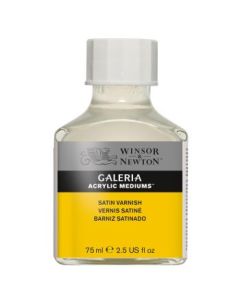

Shop India's Curated Range of Varnish for Acrylic Painting
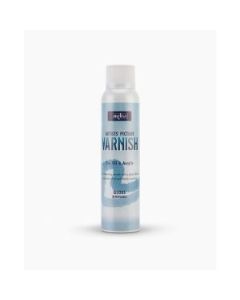
Varnish is the final protective coat on a finished acrylic painting — a clear, removable layer that seals the paint film, evens out the surface sheen, deepens colour saturation, and protects the work from dust, UV light, atmospheric pollutants, and accidental scuffs. Art Lounge stocks an internationally-curated range of artist-grade acrylic varnishes built around the brands taught in art school and used in galleries: Liquitex Professional Acrylic Varnish (USA — Liquitex invented modern water-based acrylic varnish in 1955 and remains the global reference), Winsor & Newton Professional Acrylic Varnish and the Galeria Acrylic Varnish series (UK), Pebeo Extra Fine Artist Acrylics Varnish (France), and Camel Picture Varnish Spray (Kokuyo Camlin India — our entry price at ₹300 for 200 ml). Finishes run from high-gloss (deepest colour saturation, mirror-clear surface) through satin (subtle sheen, the gallery default) to matte / matt (no glare, photographs cleanly). Application formats include both brush-on liquid varnish and spray-can aerosol varnish — most professional artists keep one of each. Prices start at ₹300 for the Camel Picture Varnish Spray 200 ml and run to ₹9,999 for the largest Liquitex Professional bottle. Every varnish ships from authorised distributors with a price-match guarantee and 2–5 day pan-India delivery. (Also searched as acrylic varnish, varnish for acrylic paint, picture varnish, artist varnish, gloss varnish, matt varnish, spray varnish for paintings, warnish, acrylic vanish, varnish for acrylic colour — all the same product family covered on this page.)
Looking for varnish for wood, walls, or furniture? Wrong page — those are polyurethane, nitrocellulose, or oil-based wood varnish products sold by hardware brands like Asian Paints, Pidilite, and Dulux at any building-materials store. The varnish on this page is artist varnish for finished acrylic paintings on canvas, paper, or board — completely different chemistry, different removability, and not designed to seal wood pores or weather-protect outdoor surfaces.
Looking for varnish for fabric paint, poster colour, or watercolour? Most artist varnishes on this page are formulated specifically for acrylic and oil paintings on canvas, board, and paper. Fabric paint usually doesn't need varnishing — it's heat-set with an iron instead. Poster colour and student watercolour are largely water-soluble and matte-bodied; varnishing them is rare and changes the look fundamentally. For watercolour archival protection, glaze the work behind glass instead of varnishing. If you specifically need a fixative (a light protective spray for graphite, charcoal, or pastel drawings), see Brustro Artist's Fixative or equivalent — that's a different product class from picture varnish.
Related categories on Art Lounge
- Acrylic Paint — the paint range these varnishes are designed to protect
- Oil Varnish — separate range for finished oil paintings (different chemistry, longer cure times)
- Spray Paint Cans — for spray-medium painting; not the same as spray varnish
- Acrylic Mediums & Gels — gloss / matte mediums for mixing into wet paint (different from varnish, which is the final top coat)
- Acrylic Brush Sets — wide flat varnish brushes for clean brush-on application
- Acrylic & Oil Painting Paper — surfaces compatible with acrylic varnish
- Canvas — stretched canvas and canvas boards for acrylic painting
Acrylic Varnish Price in India — Brand by Brand
Acrylic varnish pricing reflects pigment-resistance grade (gallery / archival vs studio), formulation (water-based polymer vs solvent-based), country of manufacture (UK / USA / France / India), and bottle size. Here's exactly what each varnish on Art Lounge costs:
| Brand / Range | Origin | Format | Price | Tier |
|---|---|---|---|---|
| Camel Picture Varnish Spray | India (Kokuyo Camlin) | Aerosol spray, 200 ml | ₹300 | Entry — student / school / hobby acrylic painting |
| Winsor & Newton Galeria Acrylic Varnish | UK | Brush-on liquid, multiple sizes | ₹735 – ₹3,330 | Mid — student-quality W&N range, gloss / matt available |
| Pebeo Extra Fine Artist Acrylics Varnish | France | Brush-on liquid, multiple sizes | ₹930 – ₹4,680 | Artist-grade — French acrylics specialist, gloss / matte |
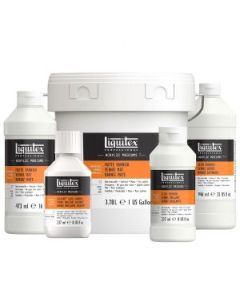
| Liquitex Professional Acrylic Varnish | USA | Brush-on liquid, multiple sizes (118 ml – 3.78 L) | ₹999 – ₹9,999 | Gallery / archival — global reference, gloss / matte / satin |
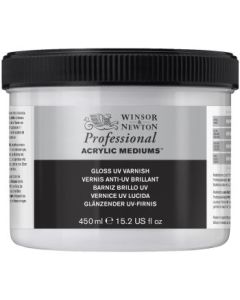
| Winsor & Newton Professional Acrylic Varnish | UK | Brush-on liquid, multiple sizes | ₹1,945 – ₹3,999 | Gallery / archival — UV-resistant, gloss / matt / satin |
Bottle-size and finish-specific pricing varies within each brand's range — verify exact prices on each product page. The Liquitex range carries the largest size-and-finish combinations on Art Lounge.
Gloss vs Matte vs Satin — Which Finish to Choose
Three finishes; one decision. Most varnish ranges (Liquitex, Winsor & Newton, Pebeo) come in all three; Camel is gloss-only. Choose by where the painting will live and the visual outcome you want.
| Finish | Visual character | Best for | Avoid when |
|---|---|---|---|
| Gloss | Mirror-clear, deepest colour saturation, reflective | Vivid colour work, abstracts, works displayed under controlled lighting, photo-shoots where saturation matters | Painting will hang in a sunlit room or near windows — glare washes out the image |
| Satin | Soft sheen, slight reflectivity, full colour pop | The gallery default — works in almost every setting, balances saturation and glare control | You want a deliberately flat / dry look (use matte) or a glassy mirror look (use gloss) |
| Matte / matt | Flat, non-reflective, slightly muted colour | Photographing artwork (no glare in photos), portraits, contemporary minimalist work, brightly-lit display rooms | Saturation matters — matte slightly mutes deep blacks and dark colours by 5–10%; apply only 1–2 thin coats to avoid cloudiness |
Mixing finishes. Most artist-grade acrylic varnishes (Liquitex Professional, W&N Professional) can be intermixed within the same brand to dial in any sheen between gloss and matte — start with 50:50 gloss/matte for satin, then adjust. Don't mix finishes across brands; the polymer formulations differ slightly and may cloud.
Indian climate note. Matte varnish layered too thick in humid coastal cities (Mumbai, Chennai, Kolkata) can dry slightly cloudy — the matting agent in the formula can flocculate if the layer can't release water vapour fast enough. Apply matte in 1–2 thin coats only; if you want more protection, do a gloss base coat first and finish with one matte top coat.
Spray vs Brush-on — Which Format to Pick
| Format | Strengths | Weaknesses | Best for |
|---|---|---|---|
| Spray (aerosol) | No brush marks; even coverage; safe over delicate / collage / pastel-mixed surfaces; quick | Solvent fumes (work outdoors / well-ventilated); harder to control thickness; aerosol cost / can | Smaller works, textured / impasto surfaces, mixed-media, anything where brush-pressure could lift the paint film |
| Brush-on (liquid) | Total thickness control; cheaper per coat; better for large works; water-based, low fumes | Brush marks if applied wrong; needs a dedicated wide flat varnish brush; technique-dependent | Large canvases, traditional smooth surfaces, gallery-grade finishing where you want full control |
Most pro Indian artists keep one of each. A bottle of Liquitex Professional brush-on for the main job, and a Camel or Winsor & Newton spray can for small touch-ups, framed pieces being re-finished, and works with raised texture. The two formats handle different problems.
How to Varnish an Acrylic Painting — Step by Step
1. Wait until the paint is fully dry. Acrylic paint dries to the touch in minutes, but the polymer film keeps curing for days or weeks. Thin acrylic layers: wait at least 24–48 hours. Heavy / impasto layers: wait 1–2 weeks. Varnishing too soon traps solvent in the paint film, which clouds the varnish and can crack later.
2. Clean the painting. Wipe with a clean dry soft cloth or a slightly damp lint-free cloth. Don't use solvents — they'll lift fresh acrylic. Let the surface dry completely.
3. Apply an isolation coat first (optional but recommended for archival work). An isolation coat is a thin layer of gloss medium applied between the paint and the varnish — usually a 2:1 mix of gloss medium and water for brush-on, or a thin gloss medium spray. The isolation coat seals the paint surface so that when you (or a future conservator) remove the varnish for re-varnishing or cleaning, the paint underneath stays untouched. Liquitex and Winsor & Newton both publish isolation-coat protocols. Skip if it's a casual / hobby piece; use it on works headed for sale, exhibition, or long-term display.
4. Lay the painting flat. Always varnish horizontal — not on an easel. Vertical varnishing causes drips and uneven thickness.
5. Apply 2–3 thin coats, not one thick coat. Thin coats dry clearer, faster, and without bubbling, dripping, or sagging. Wait the recommended drying time between coats — usually 4–24 hours depending on humidity and finish.
6. Brush-on technique. Use a clean, soft, wide flat brush (1"–4" depending on canvas size) reserved only for varnishing. Load the brush moderately. Apply with smooth, edge-to-edge horizontal strokes; immediately overlap with vertical strokes to even out; finish with a single direction of light final strokes. Don't go back over a setting layer — you'll drag the partly-tacky surface and get streaks.
7. Spray technique. Shake the can hard for 30–60 seconds. Hold 25–30 cm from the painting. Spray in continuous side-to-side passes, starting and ending the pass off the canvas (so the start / stop puddles don't land on the painting). Overlap each pass by 30%. Build up in 2–3 light passes — never one heavy spray that puddles.
8. Drying environment. Dust-free, low-humidity, cool. Avoid varnishing during peak monsoon humidity in coastal cities — high humidity slows drying and can cloud matte finishes. If the room is humid, a fan helps but don't blast air directly onto the wet surface (that pulls dust).
9. Wait between coats and after final coat. Most water-based brush-on varnishes are touch-dry in 2–6 hours and recoat-able in 8–24 hours; full cure (handle, frame, ship) takes 5–14 days. Check each manufacturer's label.
Acrylic Varnish Brands We Stock — Detailed Guide
Liquitex Professional Acrylic Varnish
American artist-grade brand founded 1955 — Liquitex chemists invented the first water-based acrylic paint and the first water-based acrylic varnish. The Professional Acrylic Varnish line is the global reference: water-based, removable, non-yellowing, UV-resistant, available in gloss, matte, and satin across sizes from 118 ml through 237 ml, 473 ml, 946 ml, and the 3.78 L gallon for studio / commission work. Liquitex also sells the Polymer Varnish (a different formulation, slightly different working properties — popular for pour artists) and a Spray Varnish (aerosol, gloss / matte / satin). On Art Lounge, the Liquitex range spans ₹999 to ₹9,999 depending on size and finish — by far the broadest single-brand depth in this category. If you're varnishing for sale or exhibition and you want the brand most museums and conservators reference, Liquitex Professional is the default.
Winsor & Newton Professional Acrylic Varnish
UK brand, gallery / archival tier. The Professional range matches Liquitex Professional in protection and removability — water-based, non-yellowing, UV-filtering — and runs gloss, matt, and satin finishes across multiple bottle sizes. On Art Lounge, ₹1,945 to ₹3,999. The Winsor & Newton finish carries a subtly warmer tone than Liquitex (a tiny shift, not a flaw); some artists strongly prefer it for skin tones and earth-palette work. UK studios and many British galleries use W&N Professional almost exclusively.
Winsor & Newton Galeria Acrylic Varnish
Galeria is Winsor & Newton's student-quality sub-brand — same broad chemistry as the Professional range but a slightly less fade-resistant pigment / additive package, sold at a friendlier price. Available on Art Lounge at ₹735 to ₹3,330 across gloss and matt finishes (with current sale pricing). The right choice if you're producing work in volume — class projects, decor commissions, gifting — where the gallery-grade premium of Liquitex / W&N Professional isn't required and the saving per bottle compounds.
Pebeo Extra Fine Artist Acrylics Varnish
French acrylics specialist (Pebeo, founded 1919) — the Extra Fine Artist range is the artist-grade tier. The varnish line covers gloss and matte finishes in multiple sizes, ₹930–₹4,680 on Art Lounge. Pebeo's signature is a very even, slightly silkier brush-on flow than Liquitex — French artists particularly favour it for figurative and traditional work. Less commonly seen on Indian shelves than Liquitex / W&N, which is part of the reason it's worth carrying.
Camel Picture Varnish Spray (Kokuyo Camlin)
Single-SKU Indian-made aerosol spray — 200 ml at ₹300, gloss finish, suitable for both oil and acrylic paintings. Our entry price and the most affordable legitimate art-varnish in Indian retail. Good for student work, school projects, and studio touch-ups. Performance is genuinely solid for the price tier — it won't match Liquitex Professional Spray's optical clarity or removability over time, but it's a fair pick for non-archival work and small-format paintings up to A3.
Water-Based vs Solvent-Based Varnish — What's in the Bottle
Modern artist acrylic varnishes split into two chemistry families.
Water-based polymer varnish (most Liquitex Professional, W&N Professional, Galeria, Pebeo brush-on) — acrylic-polymer dispersion in water. Removable with ammonia solution by a conservator, low odour, safe for indoor use, does not yellow with age, water-cleanup of brushes. This is what most acrylic paintings should be varnished with.
Solvent-based / mineral-spirit varnish (some specialty Liquitex MSA Varnish, traditional oil-painting varnishes like Damar) — synthetic resin in mineral spirits. Removable with mineral spirits, clearer optical finish, slightly more durable but higher fumes and only safe with proper ventilation. Usually reserved for oil paintings or for acrylic paintings being prepped for very long-term archival display. Most users will not need solvent-based varnish for normal acrylic work.
Spray cans (Camel, Liquitex Spray Varnish, W&N Spray) sit in a third category — usually solvent-based aerosol because water-based aerosol formulations don't atomise as cleanly. Use outdoors or in well-ventilated rooms.
What Is an Isolation Coat — and Do You Need One?
An isolation coat is a thin clear layer applied between the finished paint and the varnish. It's not the same as varnish: it's a permanent sealing layer (usually a gloss acrylic medium thinned with water), whereas the varnish on top is removable.
Why bother? Conservators occasionally remove old varnish from valuable paintings to clean them or re-apply fresh varnish — this is normal museum practice. Without an isolation coat, the solvent that lifts the varnish can also lift colour pigments from the paint surface beneath, especially in matte / under-bound regions. The isolation coat is a protective barrier: when the varnish is removed in 30 years, the isolation coat stays put and the paint stays untouched.
Standard recipe: 2 parts gloss medium + 1 part water, brushed on smoothly in one to two thin coats, fully dry before varnishing. Both Liquitex and Winsor & Newton publish detailed isolation-coat protocols — follow the brand-specific instructions if you're working towards exhibition or sale.
Skip if: the painting is for hobby / home / gift use only, or if you're using a low-removal-risk spray and don't anticipate the work being conservation-cleaned. Use if: the painting is for sale, gallery exhibition, or long-term collection. The Keyword Planner shows ~590 monthly searches for "acrylic isolation coat" and 320/mo for "isolation coat for acrylic painting" — the question is on enough Indian artists' minds to be worth knowing the answer to. We carry compatible gloss mediums in Acrylic Mediums.
Brands We Don't Stock — and What to Use Instead
Most-searched acrylic-varnish brands in India that Art Lounge does not currently carry, with the closest substitute from our range:
- Brustro Picture Varnish Spray / Professional Varnish (gloss / matte / satin in 200, 400, 500, 1000 ml — the deepest Indian-made acrylic-varnish range) — not stocked on Art Lounge. Closest substitutes: Camel Picture Varnish Spray at the entry tier (₹300 vs Brustro's ₹499–₹930), or Liquitex Spray Varnish / Winsor & Newton Spray Varnish at the artist-grade tier. Brustro's strength is range depth at a mid-Indian price; ours is international gallery-grade depth.
- Fevicryl Varnish (Pidilite consumer-craft brand) — not stocked. Closest substitute: Camel Picture Varnish Spray (₹300). Both sit at the student / hobby tier; performance is broadly comparable for non-archival work.
- Golden Polymer Varnish / Golden Acrylic Varnish (American artist-grade, Liquitex's main international competitor) — not stocked. Closest substitute: Liquitex Professional Acrylic Varnish. Golden and Liquitex are direct equivalents — same chemistry, same finish options, comparable removability and UV protection. Liquitex Polymer Varnish specifically matches Golden Polymer Varnish almost feature-for-feature.
- Daler Rowney Cryla Varnish / Schmincke Akademie / Talens Amsterdam Varnish — not stocked. Closest substitutes: Liquitex Professional (USA equivalent), Winsor & Newton Professional (UK equivalent), Pebeo Extra Fine (French equivalent). All three of our stocked artist-grade brands are direct functional alternatives.
- Wood-finish brands (Asian Paints Wood Tek, Pidilite Hardware, Dulux Polylac, Rangoli Polyurethane) — these are wood / floor / furniture varnishes, completely different chemistry, not appropriate for paintings. For wood projects, see a hardware store.
Common Mistakes & Troubleshooting
Cloudy / hazy varnish after drying. Three causes, in order of likelihood: (1) matte applied too thick — matting agents flocculate when layered heavy; redo with 1–2 thin coats. (2) Varnished while paint was still curing — for thick paint, the 1–2 week wait isn't optional; varnish has to be applied over fully-cured paint. (3) High humidity at application — Indian monsoon weeks are tough on water-based varnish; if you can, varnish in winter or early summer.
Brush marks visible after drying. Either too thick a coat, or going back over a tacky surface. Apply thinner; don't overwork the surface; let each coat fully dry before re-coating; use a wide soft varnishing brush, not a paint brush.
Yellowing or amber tone over time. Modern water-based artist varnishes (Liquitex, W&N, Pebeo, Galeria) don't yellow appreciably. If a painting has yellowed, the cause is usually old solvent-based varnish (Damar, copal) used decades ago, or a non-art varnish like wood polyurethane that wasn't designed for paintings. The fix is conservator-grade removal and re-varnish with a modern product.
Spray varnish bubbling or pinholing. Sprayed too close, or sprayed onto a surface that's too cold (varnish hits the surface and contracts), or sprayed in too humid air. Hold 25–30 cm away, work in moderate room temperature (24–28°C is ideal), avoid direct AC airflow on the wet surface.
Varnish remover / how to remove old varnish. Modern water-based artist varnish is removable with a 50:50 ammonia / water solution and a soft cotton pad — but this is conservator-tier work; if a painting is valuable, hire a conservator rather than attempting it yourself. Solvent varnish removes with mineral spirits. Never use household paint stripper, kerosene, or wood-varnish remover on a finished painting — they'll dissolve the paint film along with the varnish.
Why Buy Acrylic Varnish from Art Lounge?
Acrylic varnish sourced from unauthorised channels in India routinely arrives expired, stored in heat (which destabilises the polymer dispersion), or — in the worst cases — refilled with cheaper formulations under counterfeit Liquitex and Winsor & Newton labels. Art Lounge sources only from authorised Indian distributors, which means every Liquitex, W&N Professional, Galeria, Pebeo, and Camel bottle reaches you in original sealed packaging with the manufacturer's batch and date codes intact. We carry the broadest international artist-grade acrylic-varnish range in Indian retail — Liquitex Professional + Polymer + Spray, Winsor & Newton Professional + Galeria, Pebeo Extra Fine, and the Camel entry-tier spray — so you can match the finish and tier to the painting rather than being forced into one brand's compromise. Pan-India delivery in 2–5 business days; price-match guarantee on every bottle; orders ship in protective packaging since aerosol cans require careful courier handling. For studio-volume buyers, large 1 L and 3.78 L sizes are stocked in the Liquitex range — uncommon on most Indian art retailers.



