Drawn to the same scale from Koh-i-noor's published dimensions. Yellow is the wooden casing,
black is the graphite — which is why the 8971 stick and the 4390 block are black right
through.
✓Koh-i-noor Hardtmuth — Czech pencil makers since 1790
✓Every grade adds to cart here, no product-page detour
✓Sold singly — pencils, sticks and blocks
✓Art Lounge is an authorised Koh-i-noor stockist in India
✓ All four are in stock and dispatched from Mumbai.
Or take one of each shape
The 6B jumbo, the 6B woodless stick, the 4B flat pencil and the 6B block, in one tap.
₹494
1
Choose a shape and a grade
Four formats above; every grade further down.
2
Tap add — the cart opens here
Nothing reloads; the cart slides out so you can keep adding.
3
Check out when you are done
UPI, cards, net banking or wallets. Dispatched from Mumbai.
What you get
What changes when the graphite gets bigger
Four things a standard drawing pencil, sharpened to a point, cannot do.
01
A whole shadow in one pass
Wide graphite fills large areas quickly and evenly, instead of dozens of overlapping
strokes you then blend. Useful for life drawing, gesture studies and large demonstration
drawings.
Best at it: the 4390 block, the 8971 stick
02
You can use the side, not only the tip
The woodless stick and the square block have no casing, so the whole tool is drawing
surface. Sharpen the stick for detail, then turn it on its blunt end or edge for broad
shading. You are not paying for a wooden casing.
Only the woodless formats do this
03
Broad and thin from the same pencil
The flat 1538 has a rectangular core, 5.0 mm across the face and 2.0 mm across the edge.
Roll it a quarter turn mid-stroke and the band becomes a hairline — the effect of a
flat calligraphy nib, in a pencil.
The 1538: the only core with two different dimensions
04
Bold marks that still behave like graphite
Charcoal-scale marks without charcoal's mess. Koh-i-noor rate the 8971 for high opacity
and lightfastness, and it erases cleanly: dark, wide coverage you can still lift
highlights out of.
The 8971 woodless stick
To scale
How much graphite you are holding
Each bar is drawn at the same scale as the cross-sections, six pixels to the millimetre.
1820 Jumbo pencilround lead, inside wood
5.6 mm
8971 Woodless sticksolid graphite, no wood
10.5 mm
1538 Flat pencilrectangular lead, inside wood
5.0 x 2.0 mm
4390 Graphite blocksolid graphite, no wood
7 x 7 mm
Bars show the graphite itself, not the barrel. The 8971 and the 4390 are graphite
throughout, so every millimetre draws; on the 1820 and the 1538 only the core makes a mark.
1820 Jumbo
8971 Woodless
1538 Flat
4390 Block
Graphite core
5.6 mm round
10.5 mm, solid through
5.0 x 2.0 mm rectangle
7 x 7 mm, solid through
Casing
10 mm hexagonal wood
Lacquer coat, no wood
11.7 x 7.5 mm flat oval wood
None
Length
175 mm
115 mm
174 mm
70 mm
Grades on this page
2B, 4B, 6B, 8B
HB, 2B, 4B, 6B
2B, 4B, 6B
2B, 4B, 6B
Keeping a working end
Arrives pre-sharpened
Pre-sharpened; re-shape with a craft knife or sandpaper block
Cut the chisel end back with a craft knife
Nothing to sharpen — faces and edges
Price
₹122 each
₹172 each
₹138 each
₹62 each
Dimensions as published by Koh-i-noor Hardtmuth. Grade lists are those currently sold on
artlounge.in, not always the whole factory range.
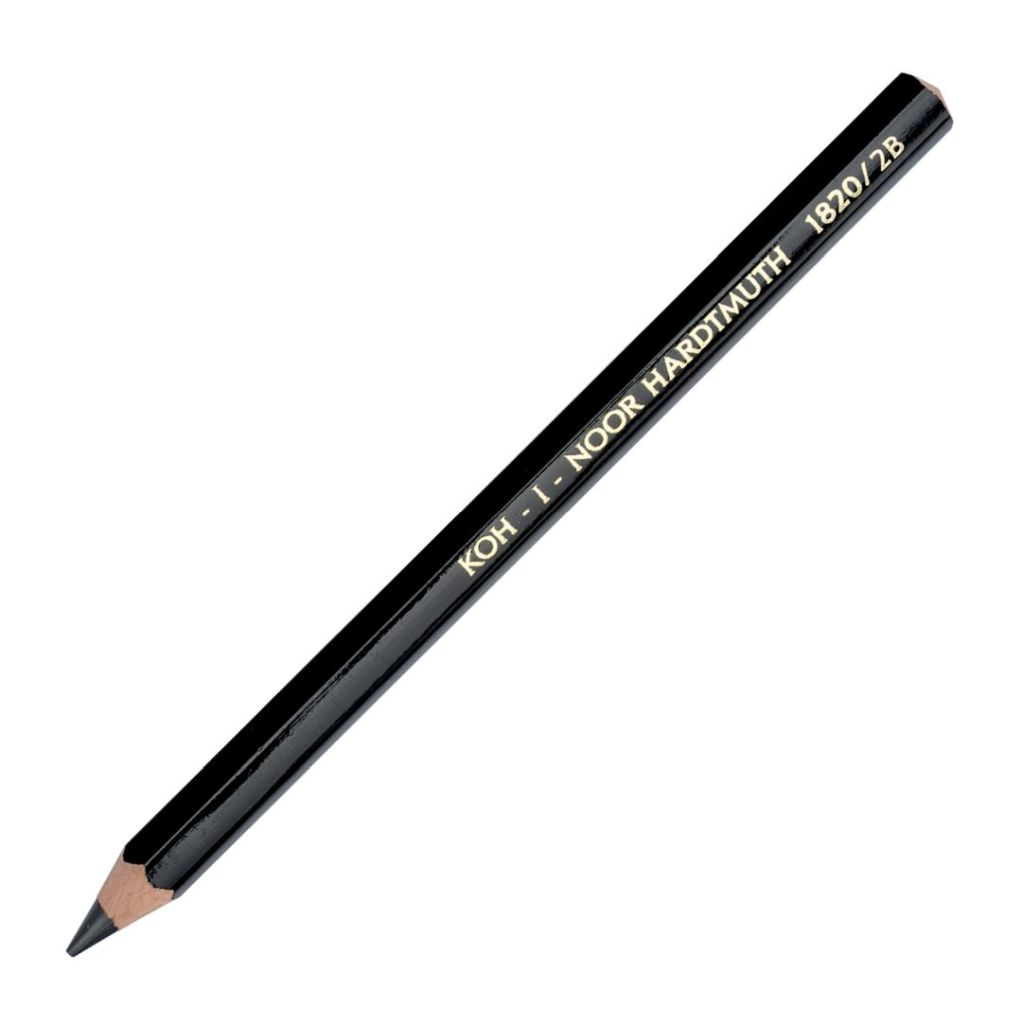
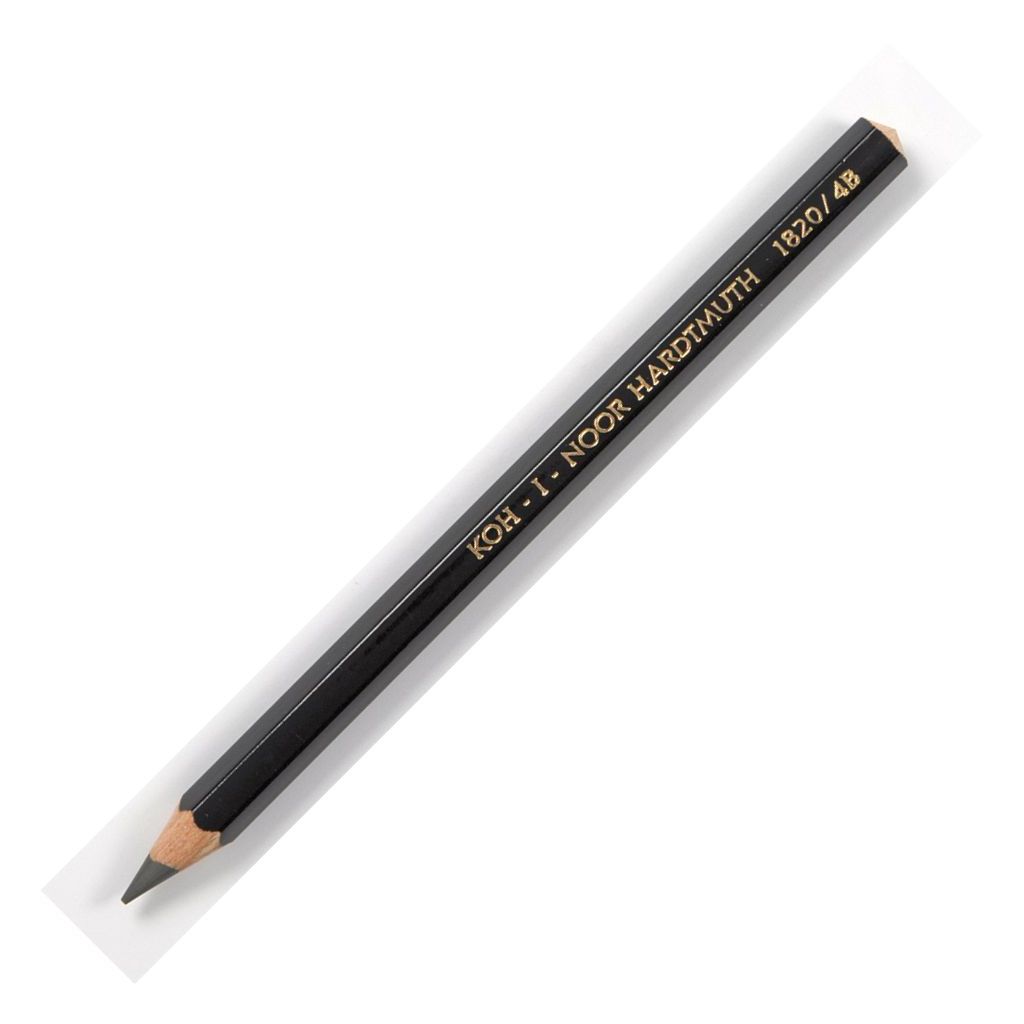
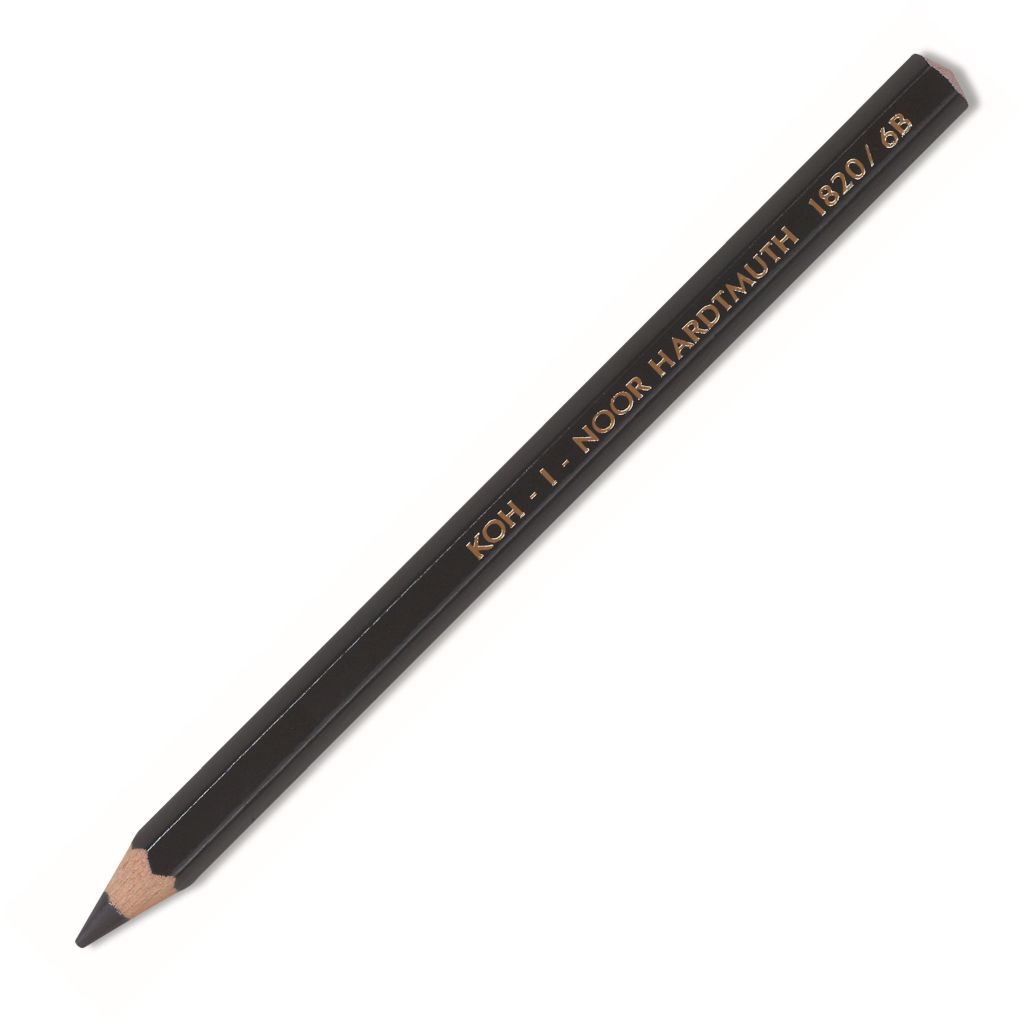
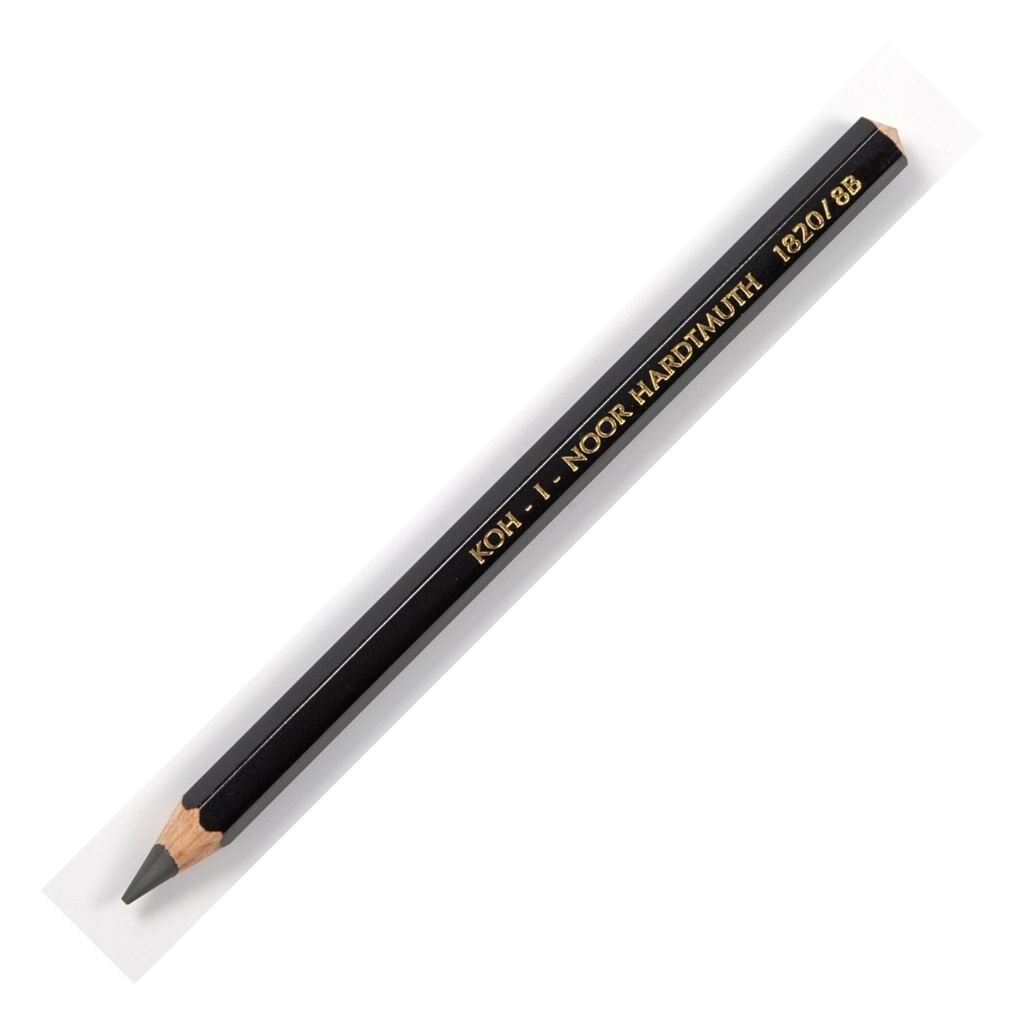
1820
The jumbo graphite pencil
A 5.6 mm round lead in a 10 mm hexagonal barrel: a wider, heavier mark from a tool you
still hold and sharpen like a pencil. The deliberately massive profile gives grip and
guidance for classroom demonstrations, beginners and large drawings.
5.6 mm lead10 mm hex body175 mm longPre-sharpenedMade in the Czech Republic₹122 in every grade
2B lightest here
Jumbo graphite pencil — 2B
Wide marks that still lift with an eraser. For laying out a large drawing before the
dark grades go down.
₹122In stock
4B mid
Jumbo graphite pencil — 4B
The middle of the four: everyday shading with real weight, short of black.
₹122In stock
6B dark
Jumbo graphite pencil — 6B
Soft and dark: shadow masses and quick tonal blocks, covered in one or two passes.
₹122In stock
8B darkest here
Jumbo graphite pencil — 8B
The darkest jumbo grade sold here. Soft grades wear faster, so it needs re-sharpening
more often than the 2B.
₹122In stock
The tone strip on each card is a guide, not a printed sample. Higher B numbers are softer
and darker. All four jumbo grades are the same price.
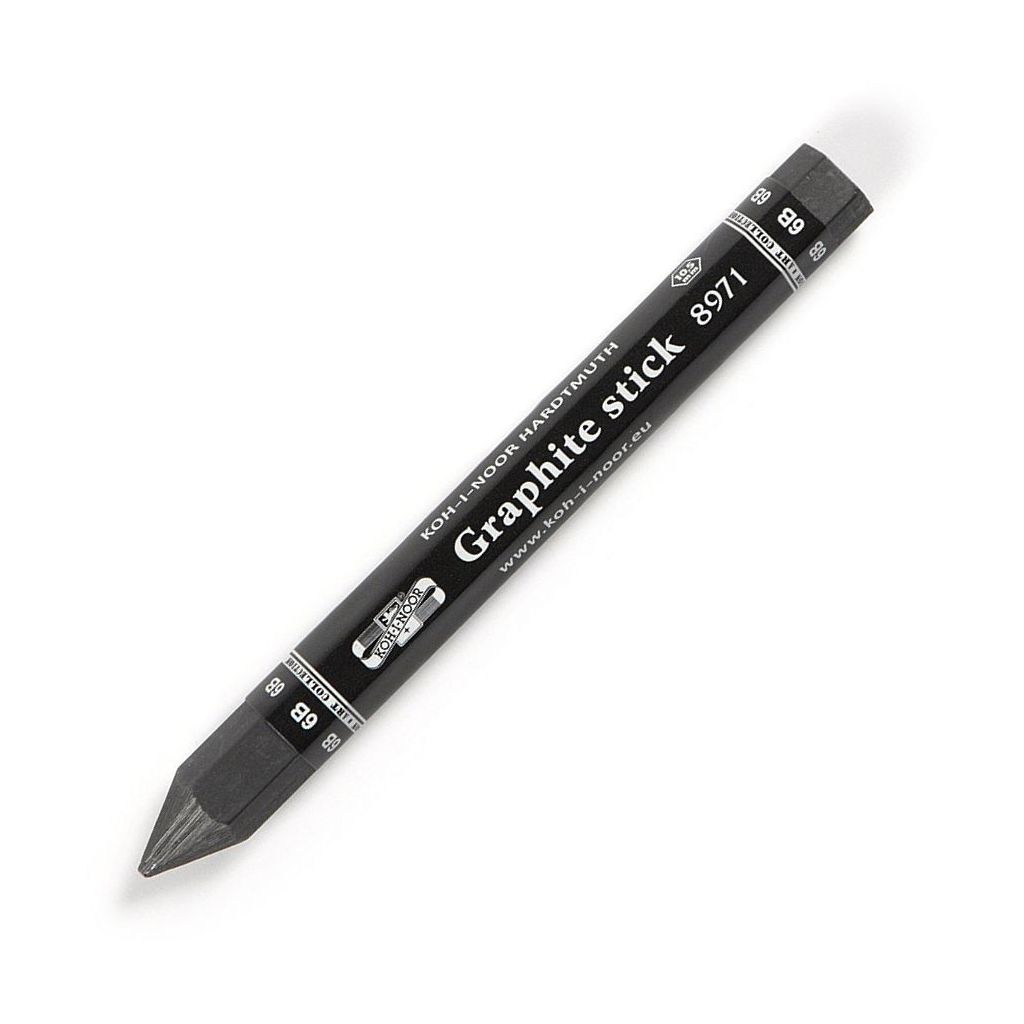
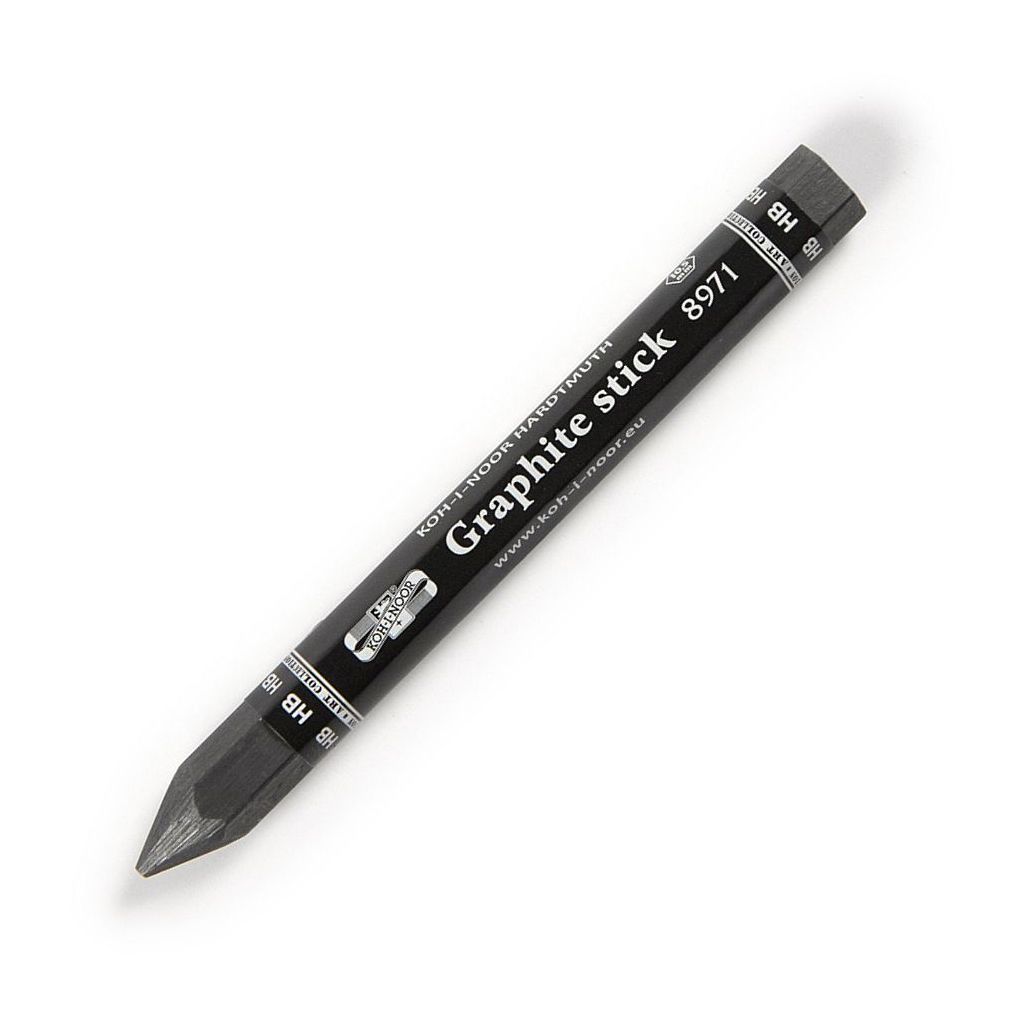
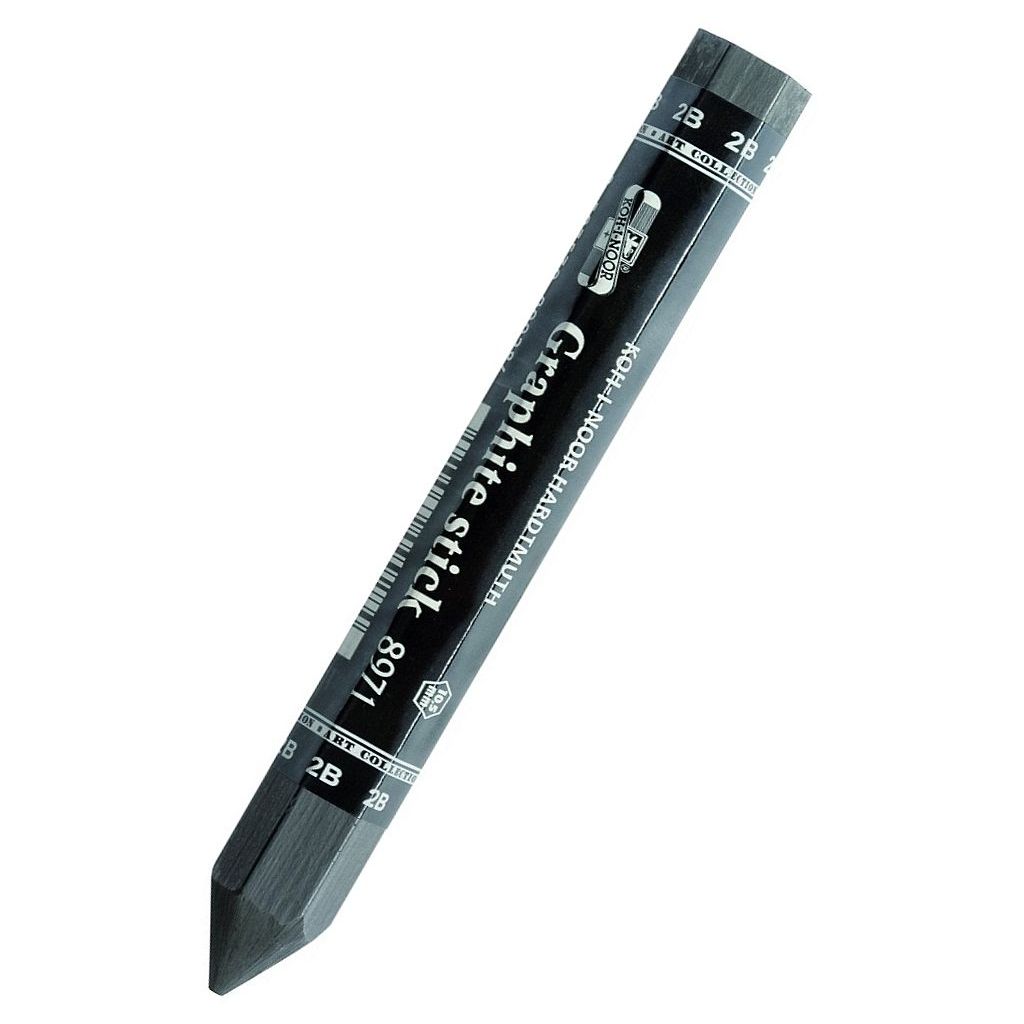
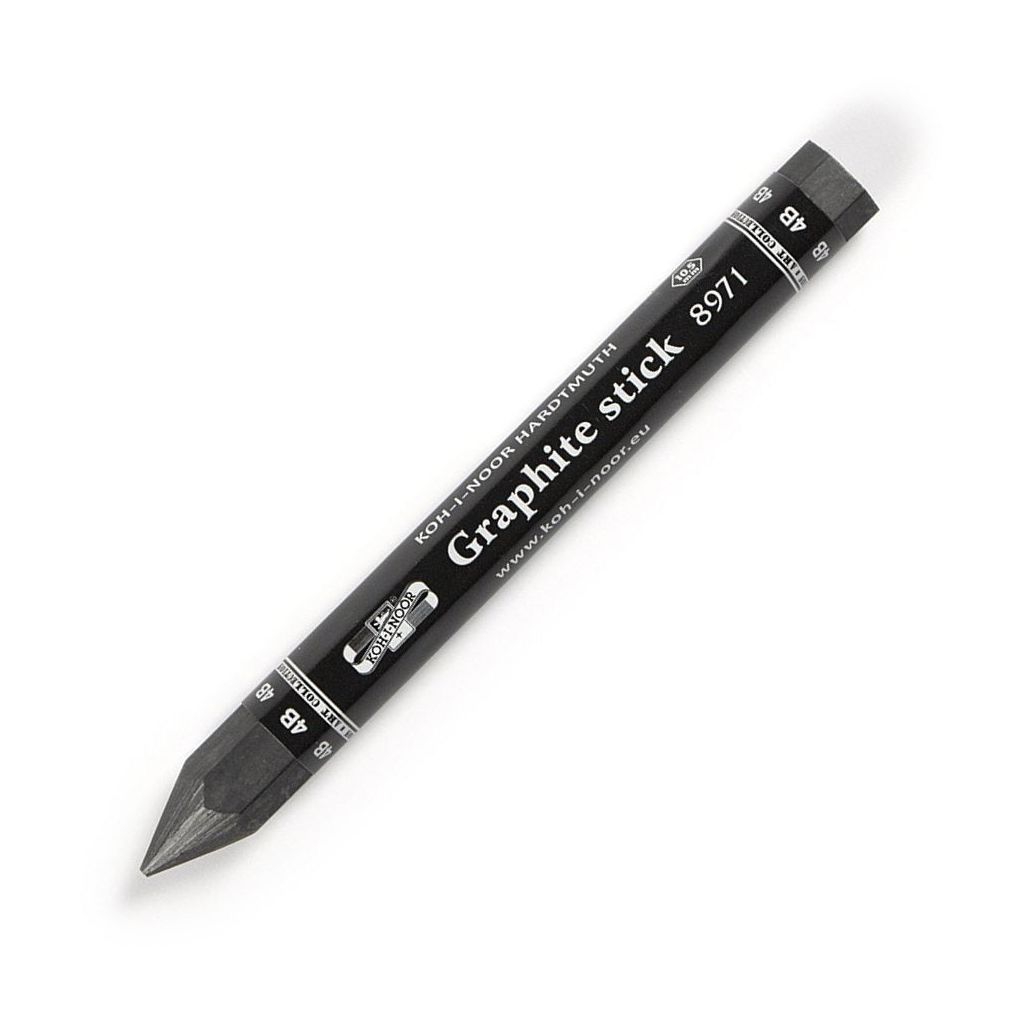
8971
The woodless graphite stick
The 8971 is a 10.5 mm hexagonal bar of solid graphite in a lacquer coat, 115 mm long,
and the whole of it draws: sharpen one end for detail, then shade with the blunt end or
the edge. There is no wooden casing, so none of what you paid for is packaging.
Koh-i-noor rate it for high opacity and lightfastness, and it erases cleanly —
which separates it from charcoal at the same scale of mark.
10.5 mm solid graphiteHexagonal, no wood115 mm longPre-sharpenedLightfast · erases cleanlyMade in the Czech Republic
HB firmest here
Woodless graphite stick — HB
Koh-i-noor put HB and 2B on the writing side of the range. The hardest grade here, so
it holds a point longest — for line work and lettering.
₹172In stock
2B soft
Woodless graphite stick — 2B
The other half of Koh-i-noor's writing pair: dark enough for drawing, controlled
enough that a wide side-stroke does not go straight to black.
₹172In stock
4B broad sketching
Woodless graphite stick — 4B
Koh-i-noor list 4B and 6B for broad dark sketching; the 4B is the one to start on.
₹172In stock
6B darkest here
Woodless graphite stick — 6B
The darkest woodless grade sold here, and the one recommended above: a side-stroke
lays a wide dark band you can lift back into with an eraser.
₹172In stock
All four grades are ₹172. To try the format with one stick, take the 6B.
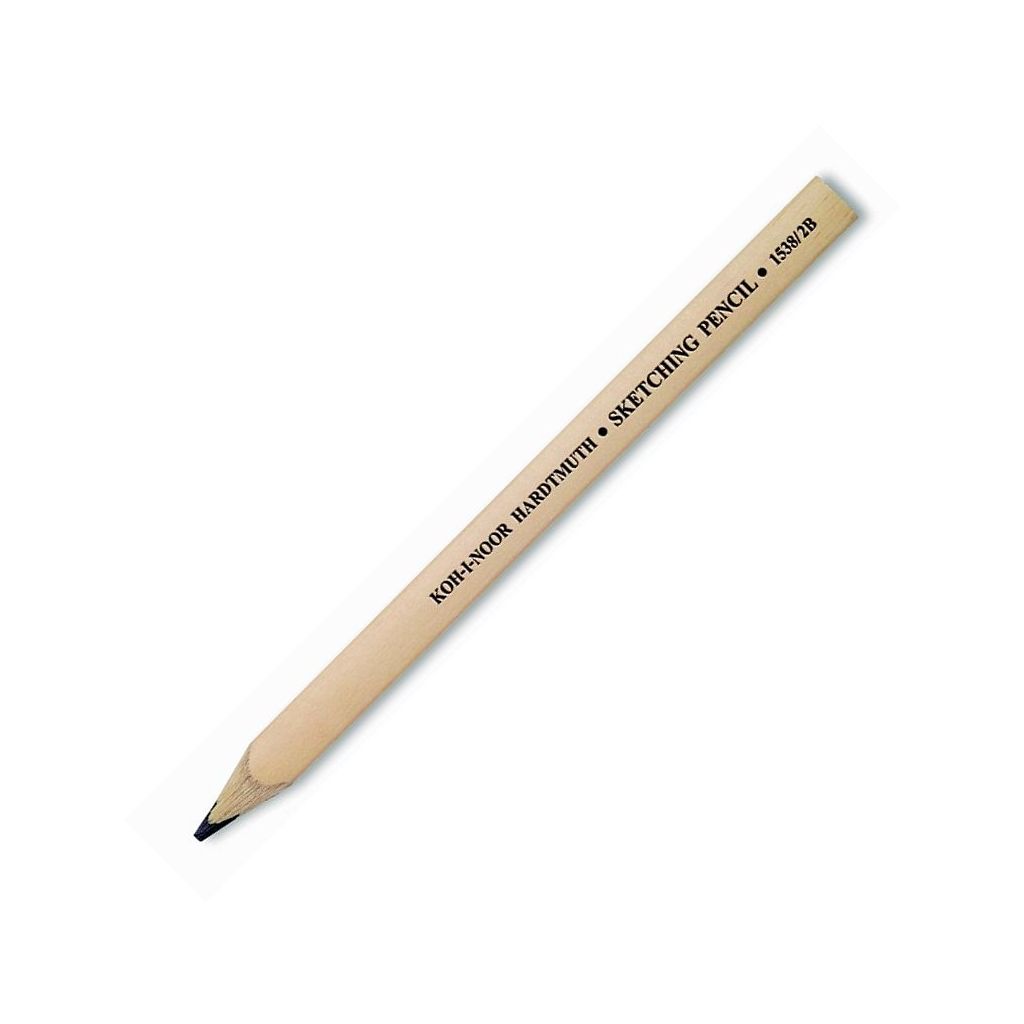
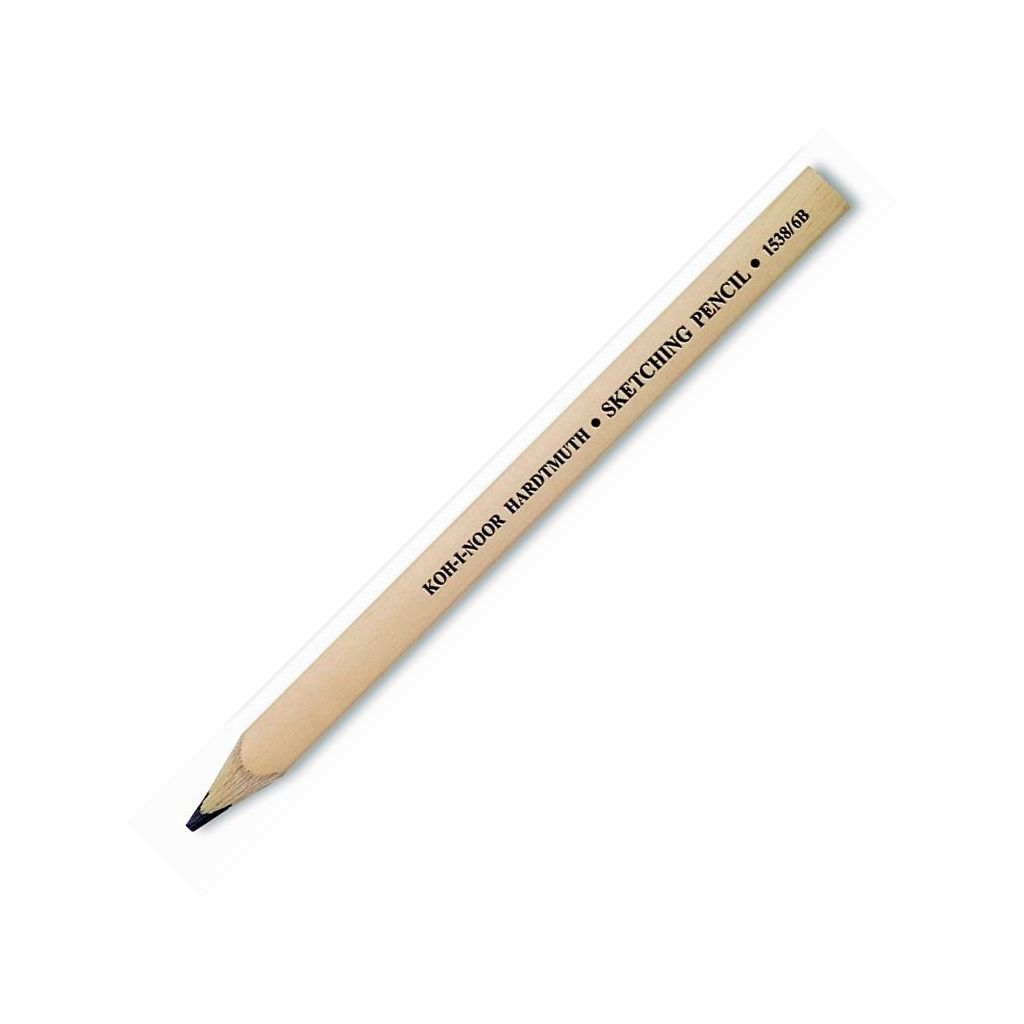
1538
The flat carpenter sketching pencil
This is the only one of the four whose core measures two different dimensions: a
rectangular lead of 5.0 mm by 2.0 mm, inside a flat oval body 11.7 mm across and 7.5 mm
thick. The wide face gives a 5 mm band; a quarter turn gives a 2 mm line. That is the
broad-and-thin stroke calligraphers buy a flat nib for, and the flat body is why a joiner
can put it down on a plank without it rolling off.
5.0 x 2.0 mm rectangular lead11.7 x 7.5 mm flat oval body174 mm longWill not roll₹138 in every grade
2B lightest here
Flat sketching pencil — 2B
For lettering and marking out, where the stroke needs a crisp edge more than darkness.
₹138In stock
4B mid
Flat sketching pencil — 4B
The middle of the three grades, and the one in the four-shape set above: loose
sketching and quick fills.
₹138In stock
6B darkest here
Flat sketching pencil — 6B
The darkest of the three, for broad-face shading that has to read strongly against the
paper.
₹138In stock
A round sharpener hole is the wrong shape for a flat oval body. Cut the chisel end back with
a craft knife — that is also how you set the working edge wide or narrow.
4390
The graphite block
Seven millimetres square, seventy millimetres long, solid graphite end to end — no
barrel, no point, nothing to sharpen. Lay a face flat and one pull covers a 7 mm band;
a corner gives a line. With four faces and four edges, going from a fill to a line is a
turn of the fingers.
7 x 7 mm square70 mm longSolid graphite, no casing₹62 in every grade
2B lightest here
Graphite block 7 x 7 — 2B
Mid grey in a single pass, for blocking in the big shapes before the darks go down.
₹62In stock
4B mid
Graphite block 7 x 7 — 4B
The middle grade: dark enough to matter, still light enough to layer over.
₹62In stock
6B darkest here
Graphite block 7 x 7 — 6B
The darkest block sold here, and the one in the four-shape set above: deep masses laid
in one movement.
₹62In stock
Koh-i-noor advise securing finished carre work with a fixative: a block lays down a lot of
loose material.
The same 7 x 7 block, in something other than graphite
Koh-i-noor make the carre in four more materials on the same square profile, so it holds
and marks the same — only the colour and the feel change. Useful on toned paper,
where graphite cannot reach the light end.
Charcoal soft
Artificial charcoal carre — soft
Matt black instead of graphite's sheen, for the darkest area on the page to stay dead
flat.
₹73In stock
Silky black hard
Silky black chalk carre — hard
The hard grade of the silky black: firmer than the soft and medium versions, so the
corner holds for a line.
₹58In stock
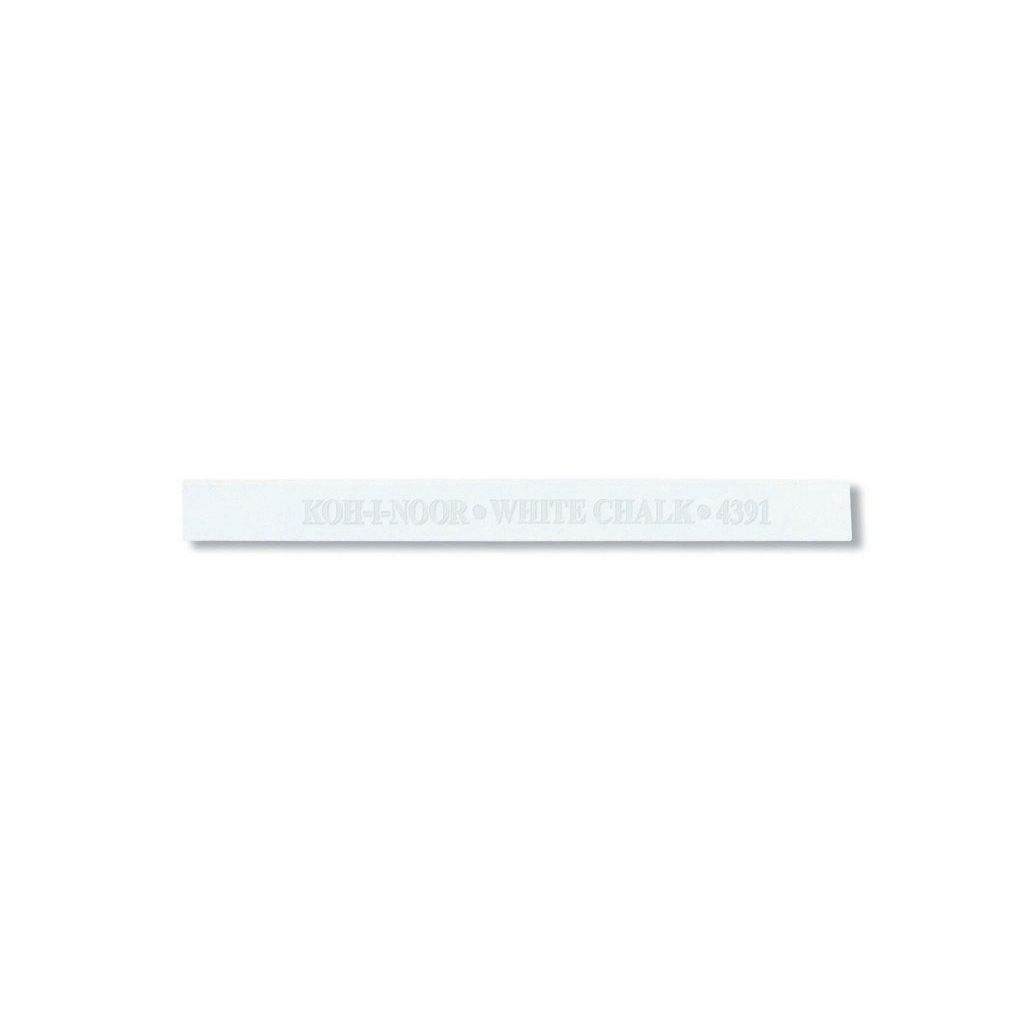
White carre
White chalk carre
On toned or coloured paper, this puts the highlights back in after the graphite has
done the shadows.
₹36In stock
Sepia brown
Sepia brown chalk carre
A warm brown on the same square profile, for figure and portrait studies with the
white and the charcoal.
₹61In stock
Two things worth having next to them
Big graphite covers ground fast, so the two jobs you do most are taking tone back out and
pushing it around.
6423 putty eraser
Kneadable putty eraser
Press it onto the drawing to lift graphite out rather than rub it off — how
highlights go back into a broad side-stroke.
₹70In stock
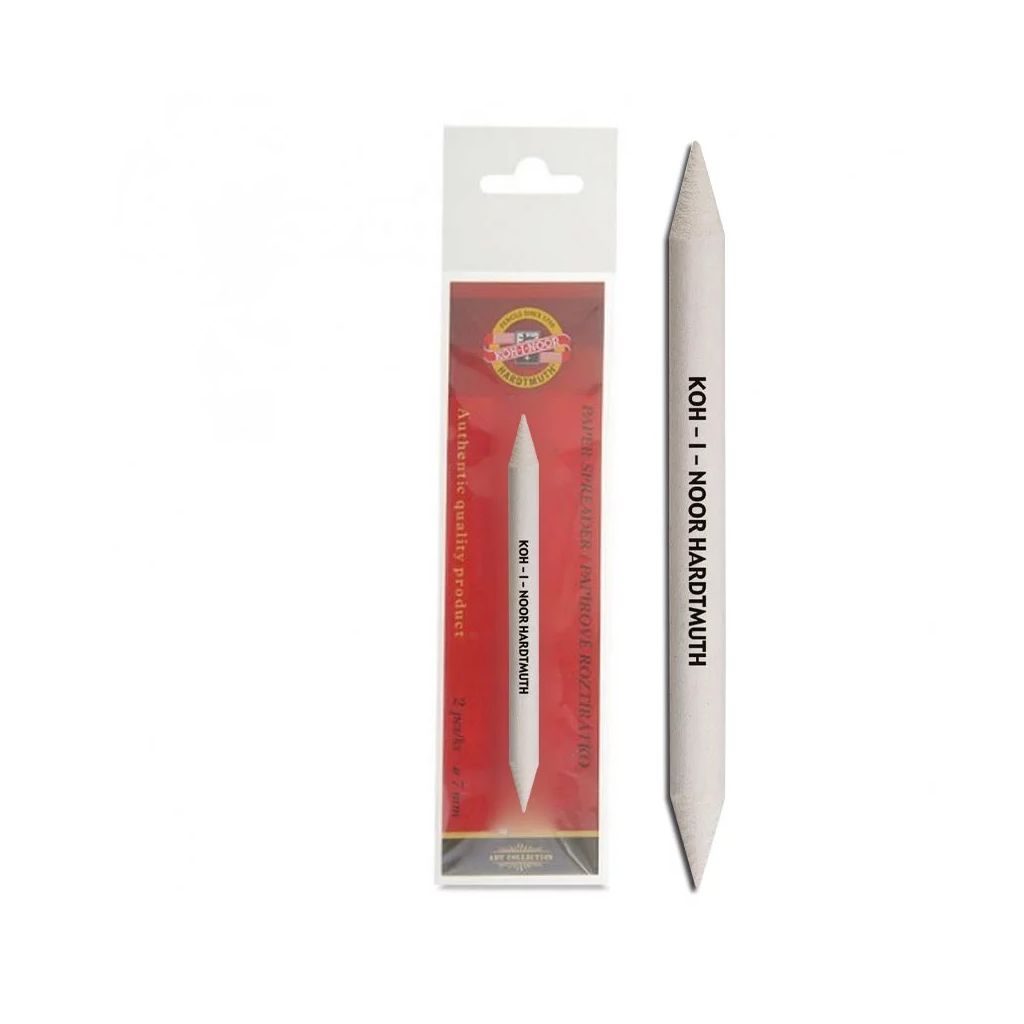
9478 paper stump
Paper stump — 12 mm x 147 mm
A tightly rolled paper point for smoothing a large graphite area into an even tone.
At 12 mm, the wider of the two Koh-i-noor stumps sold here.
₹136In stock
Who makes them1790Koh-i-noor Hardtmuth · Czech Republic
Koh-i-noor Hardtmuth have been making pencils since 1790. The two
formats here with a stated origin — the 1820 jumbo and the
8971 woodless stick — are made in the Czech Republic.
Koh-i-noor grade every format on the same graphite-to-clay scale, so
moving from a pencil to a stick to a block changes the shape, not the system: four kinds
of mark without stitching four makers together.
The square carre profile alone is made in five materials — graphite, artificial
charcoal, silky black, white and sepia — all stocked here. One 7 x 7 mm format
takes you from a graphite study to a three-tone chalk drawing on toned paper.
Art Lounge is an authorised Koh-i-noor stockist in India. Everything
here is genuine Koh-i-noor Hardtmuth, in stock and dispatched from Mumbai.
Drawing at speed
Gestural work, where what matters is how much paper a tool covers before the pose
changes. The stick and the block are built for that.
Coming across from charcoal
Charcoal-scale marks that still erase and behave like graphite: the 8971, at 10.5 mm
wide.
Joiners, makers, calligraphers
The 1538 is a trade pencil first: flat so it will not roll, with a rectangular core that
gives a broad face and a thin edge.
Teaching and workshops
The 1820 jumbo is the one to hand a room of beginners: a thick barrel to hold, and a
5.6 mm lead sized for large demonstration drawings.
Before you buy
Grades, sharpening, delivery and returns
Product questions first, then ordering, delivery and returns.
Take the 8971 woodless stick in 6B. It is the one format here you can
both sharpen to a point and draw with on its side: the 1820 and the 1538 sit in a
wooden casing, and the 4390 block has no point to sharpen.
To keep holding a normal pencil, take the 1820 jumbo. For the
broad-and-thin calligraphic stroke, the 1538 flat. The
4390 block is the lowest-priced of the four at ₹62.
It arrives pre-sharpened. At 10.5 mm across it is wider than an ordinary barrel, so a
small hand sharpener may not take it; a craft knife or a sandpaper block will shape it.
What you cut back is the drawing material itself, not a wooden casing.
No — a round sharpener hole is the wrong shape for its flat oval body, 11.7 mm
one way and 7.5 mm the other. Cut the end back with a craft knife instead: that is how
you set the working edge wide or narrow.
It erases. Koh-i-noor rate the 8971 for clean erasing as well as high opacity and
lightfastness — the difference between a graphite stick and a charcoal stick at
the same width of mark. Press a kneadable putty eraser onto the shaded area to lift
graphite out.
The artificial charcoal carre above is matt, darker and less willing
to come back off.
B is the soft, dark end of the scale, and the higher the number the softer and darker
the mark. HB sits at the firm end and holds a point longest.
For broad tonal work, 4B and 6B do most of the job. Add a 2B for laying out lightly,
and an 8B for the darkest area. Within each format every grade is the same price, so
grade is a choice about the mark, not the budget.
Broad soft graphite puts a lot of loose material on the sheet, and it moves under your
hand. Work with a spare sheet under your drawing hand, and fix the finished piece
— Koh-i-noor advise a fixative for carre work.
The blocks and the charcoal carre are the loosest here; the wooden 1820 and 1538 are
the most controlled, because only the core touches the paper.
No. Every Add to cart button adds that exact grade from this page: nothing reloads, and
the cart slides out so you can carry on adding. The "Full product details" links are
optional reading.
When you are done, open the cart and check out.
Everything on this page is in stock and dispatched from Mumbai. Delivery is free
anywhere in India on orders over ₹799; on an order of ₹799 or less it is a
flat ₹79, added at checkout. Order value is counted after any discount.
Delivery times depend on your pin code and are shown at checkout. The shipping policy
is linked in the footer of every page on artlounge.in.
Returns are handled under the Art Lounge returns and refunds policy, linked from every
page of the site. If an item arrives damaged or is not what you ordered, send us your
order number and photographs and we will replace or refund it.
Because these are sold singly, the quickest fix for a wrong grade is to order the one
you meant.
Yes. Art Lounge is an authorised Koh-i-noor stockist in India. The 1820 jumbo and the
8971 woodless stick are made in the Czech Republic, where Hardtmuth have been making
pencils since 1790.
Ready when you are
Every shape is sold singly
Everything here adds to your cart from this page.
Start with the woodless stick
10.5 mm of solid graphite in 6B — the one format here you can both sharpen to a
point and draw with on its side.
₹1728971 · 6B
Or keep holding a pencil
The 1820 jumbo in 6B: a 5.6 mm lead in a 10 mm hexagonal barrel, pre-sharpened. Only the
width of the mark changes.
₹1221820 · 6B
Or take one of each shape
Jumbo 6B, woodless 6B, flat 4B and block 6B — four profiles, one tap.
₹494four items
✓ All in stock · dispatched from Mumbai — or go back to
the size comparison.